
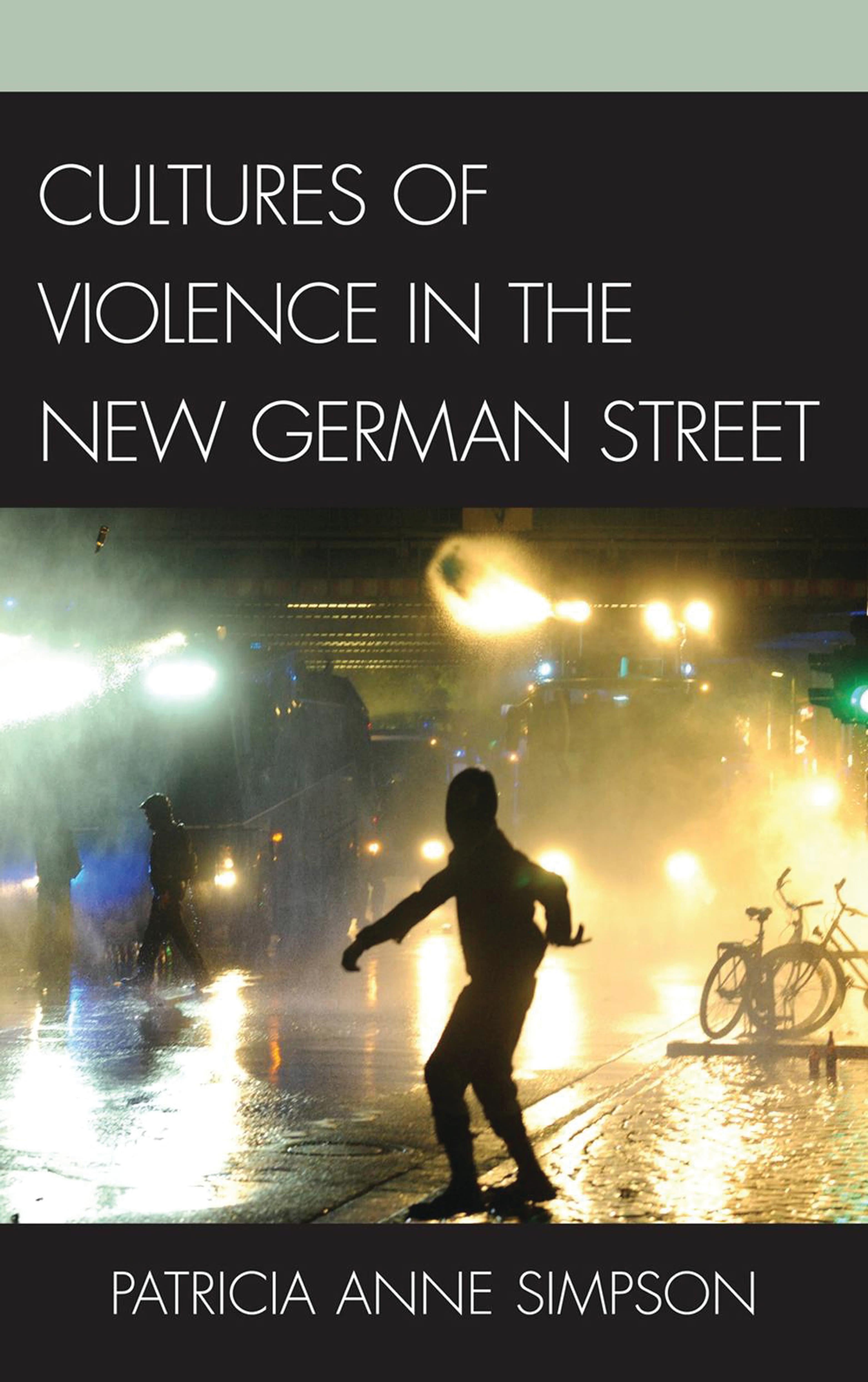
In post-Wall Germany, violence—both real and imagined—is increasingly determining the formation of new cultural identities. Patricia Anne Simpson’s book focuses on the representation of violence in three youth subcultures often characterized by aggression as they enact a rivalry for supremacy on the new German “street”—the author’s operative metaphor to situate the cultural discourse about violence. The selected literary texts, films, and music exemplify the urgent need for a sustained debate about violence as an aspect of both social reality and the national imaginary. Simpson’s study discloses the relationship between narratives of violence and issues of immigration, ethnic difference, and poverty. Her lucid readings examine the ways in which violence is grounded in the asphalt of Germany’s new street.
This interdisciplinary study identifies the motivations, decisions, and consequences of violent acts and the stories that convey them. Simpson draws examples from popular genres and subcultures, including punk, hip hop, and skinhead sounds, styles, and politics. With theoretical sophistication and analytical clarity, the author locates the contested territory of the street within larger European contexts of violence while paying careful attention to the particularities of German history. She reveals new insights into the construction of citizenship, masculinity, and contemporary ethics. In addition, Simpson demonstrates the importance of concepts embedded in the representation of violence, including revised definitions of heroism, community, and evolving ideas of fraternity, family, and home.
This interdisciplinary study identifies the motivations, decisions, and consequences of violent acts and the stories that convey them. Simpson draws examples from popular genres and subcultures, including punk, hip hop, and skinhead sounds, styles, and politics. With theoretical sophistication and analytical clarity, the author locates the contested territory of the street within larger European contexts of violence while paying careful attention to the particularities of German history. She reveals new insights into the construction of citizenship, masculinity, and contemporary ethics. In addition, Simpson demonstrates the importance of concepts embedded in the representation of violence, including revised definitions of heroism, community, and evolving ideas of fraternity, family, and home.
Sider: 268
Kategori: Sociologi
e-ISBN: 9781611474565
Forsendelsesvægt: 1.2 kg
Sendes inden for: 1-2 dage
Betal nemt med kort, Klarna, Apple Pay eller Google Pay. Ikke tilfreds? Du har altid 14 dages fortrydelsesret. Læs mere i vores vilkår. Har du spørgsmål, så send os en mail på hello@memmo.org.
Memmo gør det nemmere at studere – uanset hvor du er i verden. Hos os samler du dine kursusbøger og smarte studieværktøjer ét sted: resuméer, quizzer, podcasts og flashcards. Og så er der Ted, din studieven, der svarer på alt, du undrer dig over. Over 50 000 studerende studerer allerede her – bygget til at hjælpe dig med at lære hurtigere og stresse mindre.