
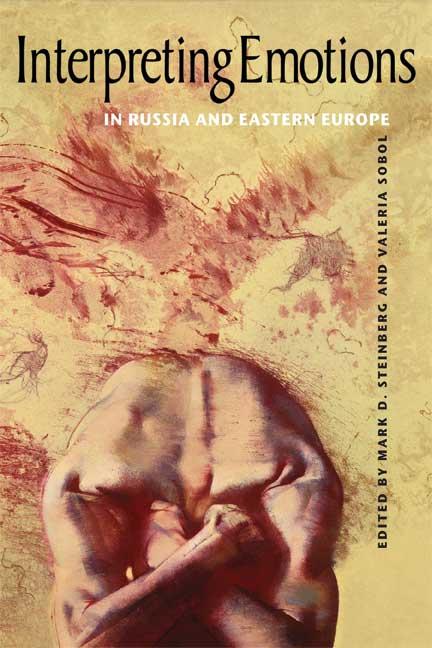
Bringing together important new work by an international and interdisciplinary group of leading scholars, Interpreting Emotions in Russia and Eastern Europe approaches emotions as a phenomenon complexly intertwined with society, culture, politics, and history. The stories in this book involve sensitive aristocrats, committed revolutionaries, aggressive nationalists, political leaders, female victims of sexual violence, perpetrators and victims of Stalinist terror, citizens in the former Yugoslavia in the wake of war, workers in post-socialist Romania, Balkan Romani "Gypsy" musicians, and veterans of the Afghan and Chechen wars. These essays explore emotional perception and expression not only as private, inward feeling but also as a way of interpreting and judging a troubled world, acting in it, and perhaps changing it. Essential reading for those interested in new perspectives on the study of Russia and Eastern Europe, past and present, this volume will appeal to scholars across the social sciences and humanities who are seeking new and deeper approaches to understanding human experience, thought, and feeling.
Betal nemt med kort, Klarna, Apple Pay eller Google Pay. Ikke tilfreds? Du har altid 14 dages fortrydelsesret. Læs mere i vores vilkår. Har du spørgsmål, så send os en mail på hello@memmo.org.
Memmo gør det nemmere at studere – uanset hvor du er i verden. Hos os samler du dine kursusbøger og smarte studieværktøjer ét sted: resuméer, quizzer, podcasts og flashcards. Og så er der Ted, din studieven, der svarer på alt, du undrer dig over. Over 50 000 studerende studerer allerede her – bygget til at hjælpe dig med at lære hurtigere og stresse mindre.