
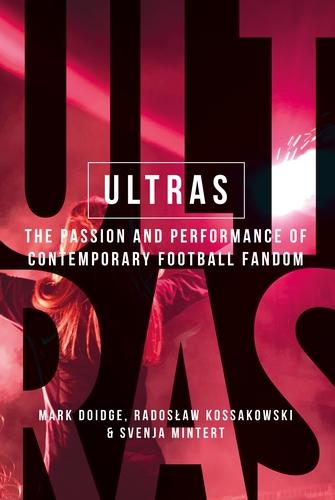
Since its emergence in Italy in 1968, one model of football fandom has become the most dominant in the world: the ultras. Producing complex choreography, chants, banners and pyrotechnics, ultras represent a highly organised style of fandom that has an increasing global reach and visibility. Over the last fifty years, ultras fandom has spread from Southern Europe across North Africa to Northern and Eastern Europe, South East Asia and North America. Their collective performance, unity and harmonisation not only distinguish ultras from other football fans, but from many other forms of group behaviour. By focusing on the common form of expression through the performance of choreographies, chants and sustained support throughout the match, this book shows how members build an emotional attachment to their club that valorises the colours and symbols of that team while mobilising members against opponents.
This volume seeks to make a clear theoretical shift in studies of football fandom by asking fundamental sociological questions concerning group formation, collective performance and emotional relationships. As a collective that pride themselves on having a shared, coherent sense of identity based on an act of consumption, ultras represent an important site of enquiry into masculinity and nationalism in contemporary society.
Betal nemt med kort, Klarna, Apple Pay eller Google Pay. Ikke tilfreds? Du har altid 14 dages fortrydelsesret. Læs mere i vores vilkår. Har du spørgsmål, så send os en mail på hello@memmo.org.
Memmo gør det nemmere at studere – uanset hvor du er i verden. Hos os samler du dine kursusbøger og smarte studieværktøjer ét sted: resuméer, quizzer, podcasts og flashcards. Og så er der Ted, din studieven, der svarer på alt, du undrer dig over. Over 50 000 studerende studerer allerede her – bygget til at hjælpe dig med at lære hurtigere og stresse mindre.