
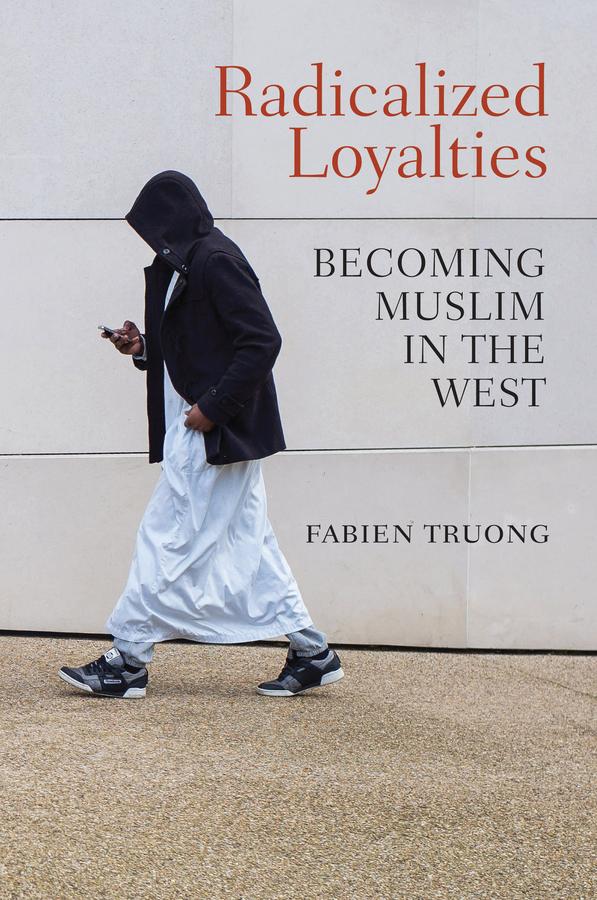
There is widespread concern today about the “radicalization” of young muslim men, and the deprived areas of Western cities are believed to have become breeding grounds of home-grown extremism. But how do young Muslims growing up in the cities of the West really live?
This book takes us beyond the rhetoric and into the housing estates on the outskirts of Paris to meet Adama, Radouane, Hassan, Tarik, Marley, and a shadowy figure whose name suddenly and brutally became known to the world at the time of the Charlie Hebdo shootings: Amédy Coulibaly. Seeing Amédy through the eyes of close friends and other young Muslim men in the neighbourhoods where they grew up, Fabien Truong uncovers a network of competing loyalties and maps the road these youths take to resolve the conflicts they face: becoming Muslim. For these young men, Islam stands, often alone, as a resource, a gateway – as if it were the last route to “escape” without betrayal and to “fight” in a meaningful and noble way.
Becoming Muslim does not necessarily lead to the radicalized “other”. It is more like a long-distance race, a powerful reconversion of the self that allows for introspection and change. But it can also lead to a belligerent presentation of the self that transforms a dead-end into a call to arms.
This book takes us beyond the rhetoric and into the housing estates on the outskirts of Paris to meet Adama, Radouane, Hassan, Tarik, Marley, and a shadowy figure whose name suddenly and brutally became known to the world at the time of the Charlie Hebdo shootings: Amédy Coulibaly. Seeing Amédy through the eyes of close friends and other young Muslim men in the neighbourhoods where they grew up, Fabien Truong uncovers a network of competing loyalties and maps the road these youths take to resolve the conflicts they face: becoming Muslim. For these young men, Islam stands, often alone, as a resource, a gateway – as if it were the last route to “escape” without betrayal and to “fight” in a meaningful and noble way.
Becoming Muslim does not necessarily lead to the radicalized “other”. It is more like a long-distance race, a powerful reconversion of the self that allows for introspection and change. But it can also lead to a belligerent presentation of the self that transforms a dead-end into a call to arms.
Sider: 220
Kategori: Sociologi
e-ISBN: 9781509519385
Forsendelsesvægt: 1.2 kg
Sendes inden for: 1-2 dage
Betal nemt med kort, Klarna, Apple Pay eller Google Pay. Ikke tilfreds? Du har altid 14 dages fortrydelsesret. Læs mere i vores vilkår. Har du spørgsmål, så send os en mail på hello@memmo.org.
Memmo gør det nemmere at studere – uanset hvor du er i verden. Hos os samler du dine kursusbøger og smarte studieværktøjer ét sted: resuméer, quizzer, podcasts og flashcards. Og så er der Ted, din studieven, der svarer på alt, du undrer dig over. Over 50 000 studerende studerer allerede her – bygget til at hjælpe dig med at lære hurtigere og stresse mindre.
Du kan måske også lide
Køb bogen0