
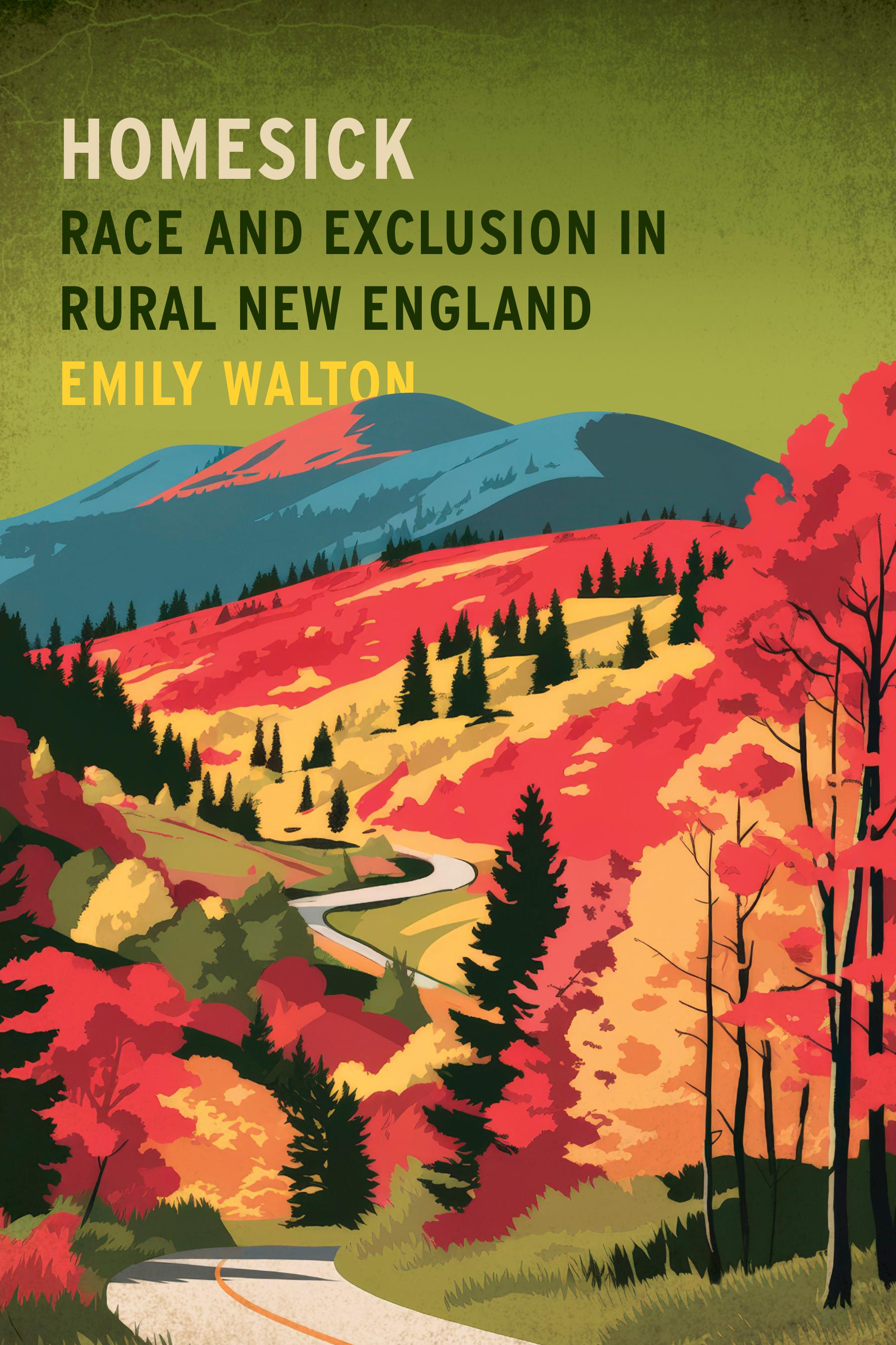
A racial demographic transition has come to rural northern New England. White population losses sit alongside racial and ethnic minority population gains in nearly all of the small towns of the Upper Valley region spanning New Hampshire and Vermont. Homesick considers these trends in a part of the country widely considered to be progressive, offering new insights on the ways white residents maintain racial hierarchies even there.
Walton focuses on the experiences of mostly well-educated migrants of color moving to the area to take well-paid jobs – in this case in health care, higher education, software development, and engineering. Walton shows that white residents maintain their social position through misrecognition—a failure or unwillingness to see people of color as legitimate, welcome, and valuable members of the community. The ultimate impact of such misrecognition is a profound sense of homesickness, a deep longing for a place in which one can feel safe, wanted, and accepted.
Tightly and sensitively argued, this book helps us better understand how to recognize and unsettle such processes of exclusion in diversifying spaces in general.
Betal nemt med kort, Klarna, Apple Pay eller Google Pay. Ikke tilfreds? Du har altid 14 dages fortrydelsesret. Læs mere i vores vilkår. Har du spørgsmål, så send os en mail på hello@memmo.org.
Memmo gør det nemmere at studere – uanset hvor du er i verden. Hos os samler du dine kursusbøger og smarte studieværktøjer ét sted: resuméer, quizzer, podcasts og flashcards. Og så er der Ted, din studieven, der svarer på alt, du undrer dig over. Over 50 000 studerende studerer allerede her – bygget til at hjælpe dig med at lære hurtigere og stresse mindre.