
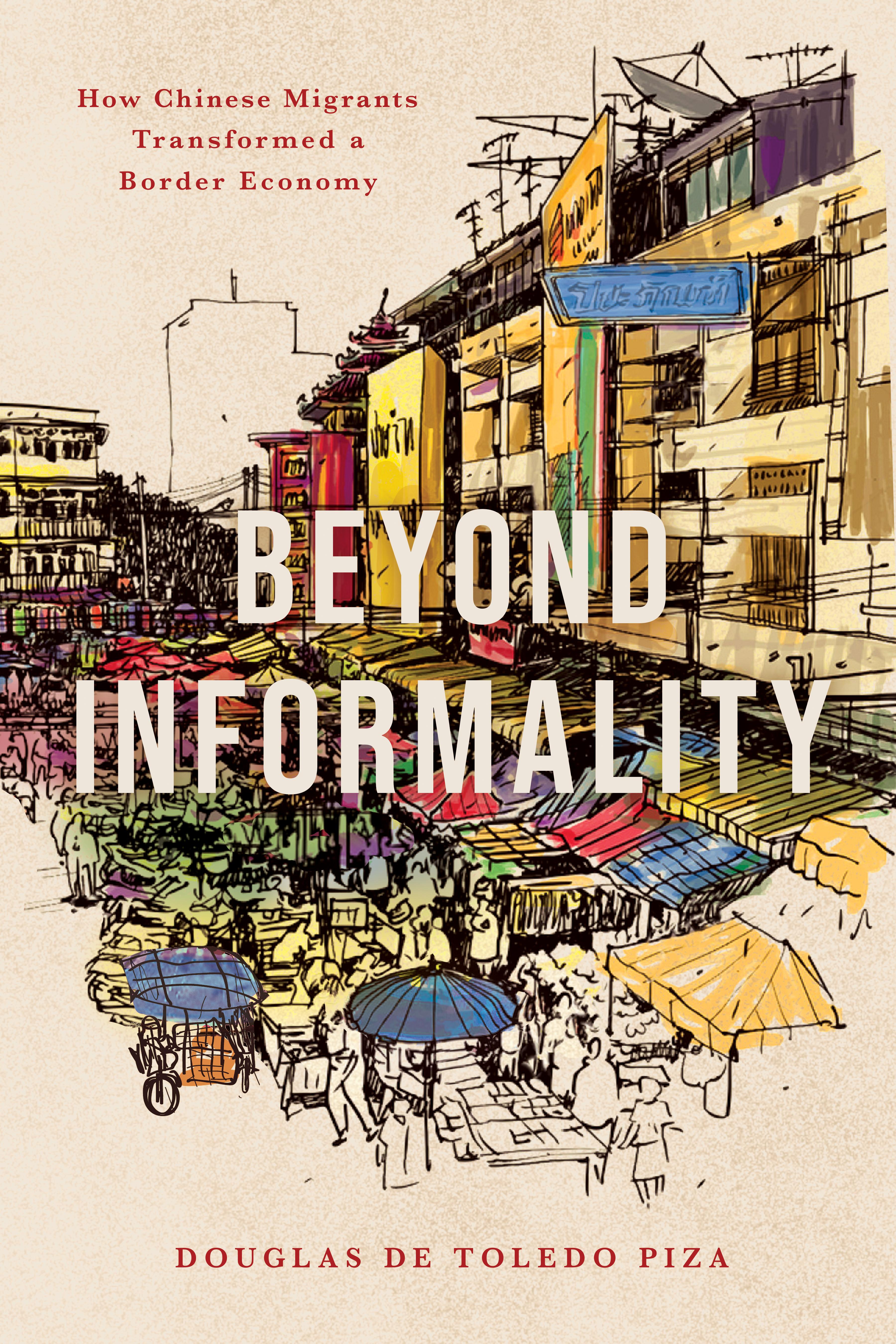
Chinese migrants are playing increasingly large, stratified roles in the informal economies of South America. One of the clearest examples of this phenomenon is in the region's largest informal economy of counterfeit and smuggled goods, spanning from Ciudad del Este, the Paraguayan border city, to São Paulo, Brazil's largest metropolis. Here, Chinese vendors, on the one hand, are some of the most marginalized workers facing a doubly difficult landscape due to their precarious immigration status and their illegal economic activities. They bear the brunt of working on the margins of the law, and as a result do not always reap the benefits of their own labor. A transnational elite of Chinese businesspeople, on the other hand, profits and profiteers from the booming market. They leverage their economic, social, and political power to bend the law to their favor and get away with irregularities, violations, and criminal behavior. In Beyond Informality Douglas de Toledo Piza reveals the complex ways these actors interact with each other, and how the law shapes those interactions. He argues that structural inequalities in the global economy push Chinese migrants to South America, while placing them, surprisingly, in positions to overhaul markets and tip the scales of deep-seated power structures in the Global South.
Betal nemt med kort, Klarna, Apple Pay eller Google Pay. Ikke tilfreds? Du har altid 14 dages fortrydelsesret. Læs mere i vores vilkår. Har du spørgsmål, så send os en mail på hello@memmo.org.
Memmo gør det nemmere at studere – uanset hvor du er i verden. Hos os samler du dine kursusbøger og smarte studieværktøjer ét sted: resuméer, quizzer, podcasts og flashcards. Og så er der Ted, din studieven, der svarer på alt, du undrer dig over. Over 50 000 studerende studerer allerede her – bygget til at hjælpe dig med at lære hurtigere og stresse mindre.