
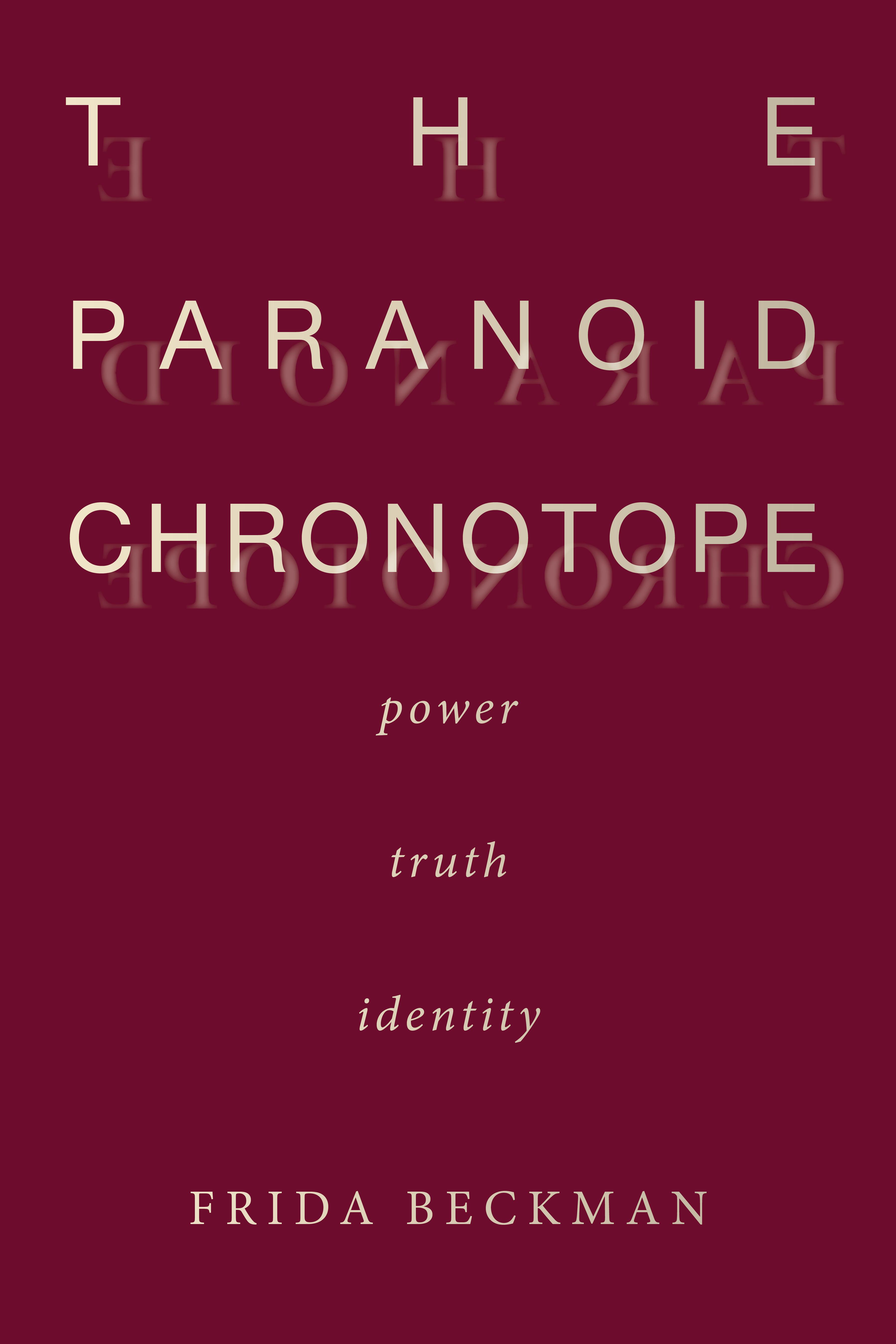
Why does it seem like our everyday life is shadowed by something menacing? This book identifies and illuminates paranoia as a significant feature of contemporary American society and culture. Centering on what it identifies as three key dimensions – power, truth, and identity – in three different contexts – society, literature, and critique – the book explores and explains the increasing influence of paranoid thinking in American society during the second half of the twentieth century and first decades of the twenty-first, a period that has seen the rise of control systems and neoliberal ascendency.
Inquiring about the predominance of white, male, American subjects in paranoid culture, Frida Beckman recognizes the antagonistic maintenance and fortification of a conception of the autonomous individual that perceives itself to be under threat. Identifying such paranoia as emerging from an increasingly disjunctive relation between this conception of the subject and the changing nature of the public sphere, she develops the concept of the paranoid chronotope as a tool for the theoretical analysis of social, literary, and critical practices today. Investigating twenty-first century paranoid fictions, New Sincerity novels, conspiracist online culture, and postcritique, Beckman shows how the paranoid chronotope constitutes a recurring feature of modern consciousness.
Betal nemt med kort, Klarna, Apple Pay eller Google Pay. Ikke tilfreds? Du har altid 14 dages fortrydelsesret. Læs mere i vores vilkår. Har du spørgsmål, så send os en mail på hello@memmo.org.
Memmo gør det nemmere at studere – uanset hvor du er i verden. Hos os samler du dine kursusbøger og smarte studieværktøjer ét sted: resuméer, quizzer, podcasts og flashcards. Og så er der Ted, din studieven, der svarer på alt, du undrer dig over. Over 50 000 studerende studerer allerede her – bygget til at hjælpe dig med at lære hurtigere og stresse mindre.