
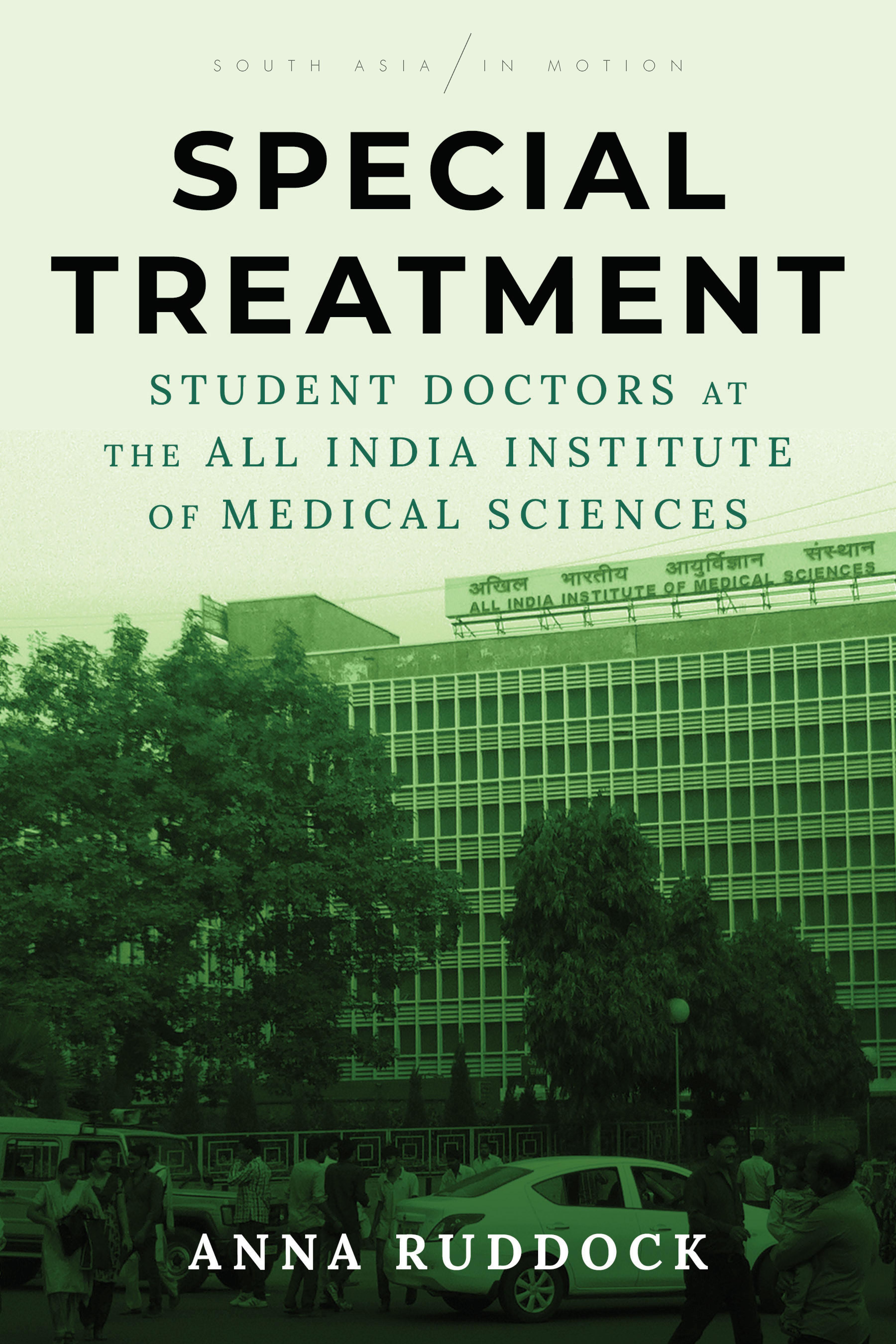
The All India Institute of Medical Sciences (AIIMS) is iconic in the landscape of Indian healthcare. Established in the early years of independence, this enormous public teaching hospital rapidly gained fame for the high-quality treatment it offered at a nominal cost; at present, an average of ten thousand patients pass through the outpatient department each day. With its notorious medical program acceptance rate of less than 0.01%, AIIMS also sits at the apex of Indian medical education. To be trained as a doctor here is to be considered the best.
In what way does this enduring reputation of excellence shape the institution's ethos? How does elite medical education sustain India's social hierarchies and the health inequalities entrenched within? In the first-ever ethnography of AIIMS, Anna Ruddock considers prestige as a byproduct of norms attached to ambition, aspiration, caste, and class in modern India, and illustrates how the institution's reputation affects its students' present experiences and future career choices. Ruddock untangles the threads of intellectual exceptionalism, social and power stratification, and health inequality that are woven into the health care taught and provided at AIIMS, asking what is lost when medicine is used not as a social equalizer but as a means to cultivate and maintain prestige.
Betal nemt med kort, Klarna, Apple Pay eller Google Pay. Ikke tilfreds? Du har altid 14 dages fortrydelsesret. Læs mere i vores vilkår. Har du spørgsmål, så send os en mail på hello@memmo.org.
Memmo gør det nemmere at studere – uanset hvor du er i verden. Hos os samler du dine kursusbøger og smarte studieværktøjer ét sted: resuméer, quizzer, podcasts og flashcards. Og så er der Ted, din studieven, der svarer på alt, du undrer dig over. Over 50 000 studerende studerer allerede her – bygget til at hjælpe dig med at lære hurtigere og stresse mindre.