
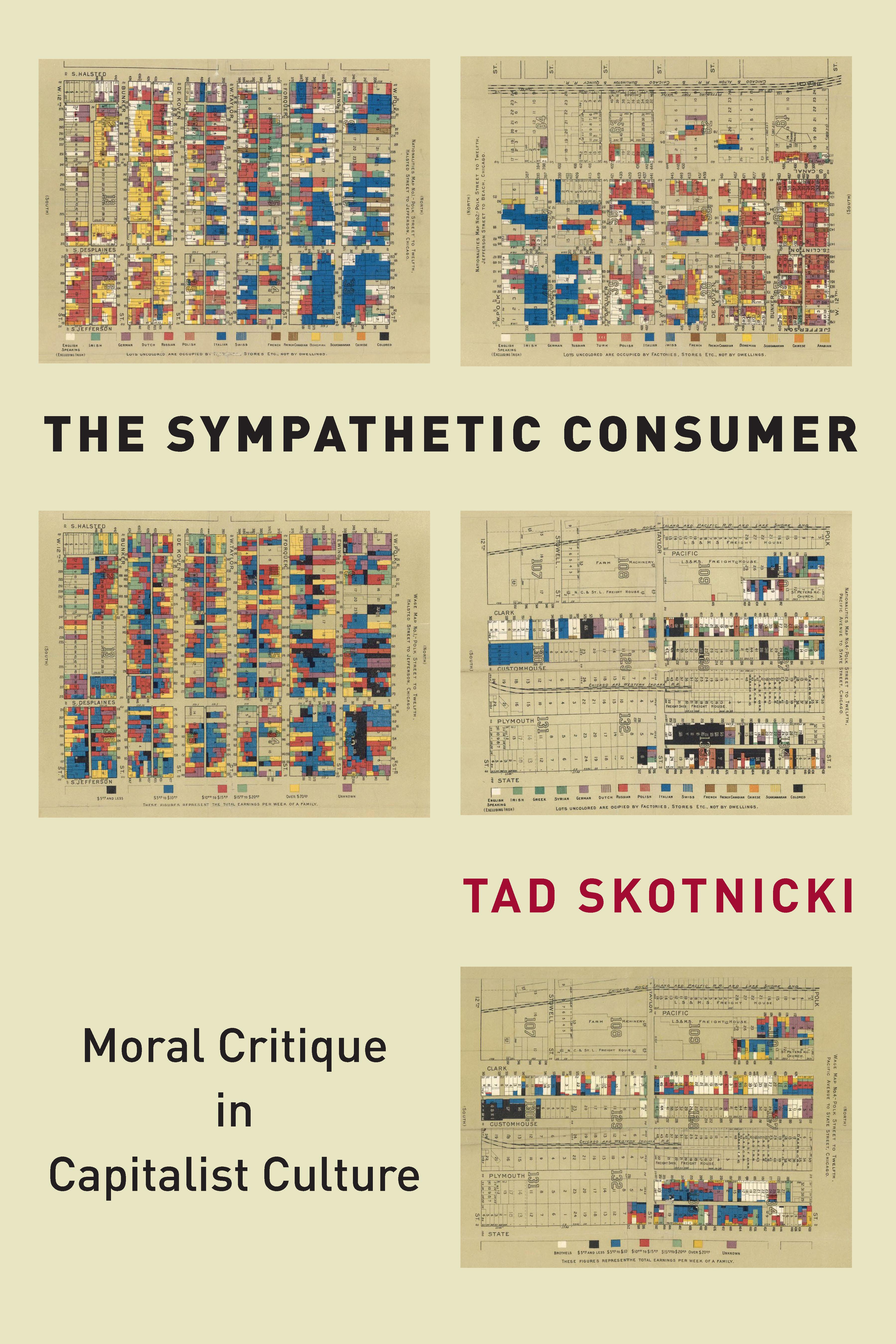
When people encounter consumer goods—sugar, clothes, phones—they find little to no information about their origins. The goods will thus remain anonymous, and the labor that went into making them, the supply chain through which they traveled, will remain obscured. In this book, Tad Skotnicki argues that this encounter is an endemic feature of capitalist societies, and one with which consumers have struggled for centuries in the form of activist movements constructed around what he calls The Sympathetic Consumer.
This book documents the uncanny similarities shared by such movements over the course of three centuries: the transatlantic abolitionist movement, US and English consumer movements around the turn of the twentieth century, and contemporary Fair Trade activism. Offering a comparative historical study of consumer activism the book shows, in vivid detail, how activists wrestled with the broader implications of commodity exchange. These activists arrived at a common understanding of the relationship between consumers, producers, and commodities, and concluded that consumers were responsible for sympathizing with invisible laborers. Ultimately, Skotnicki provides a framework to identify a capitalist culture by examining how people interpret everyday phenomena essential to it.
Betal nemt med kort, Klarna, Apple Pay eller Google Pay. Ikke tilfreds? Du har altid 14 dages fortrydelsesret. Læs mere i vores vilkår. Har du spørgsmål, så send os en mail på hello@memmo.org.
Memmo gør det nemmere at studere – uanset hvor du er i verden. Hos os samler du dine kursusbøger og smarte studieværktøjer ét sted: resuméer, quizzer, podcasts og flashcards. Og så er der Ted, din studieven, der svarer på alt, du undrer dig over. Over 50 000 studerende studerer allerede her – bygget til at hjælpe dig med at lære hurtigere og stresse mindre.