
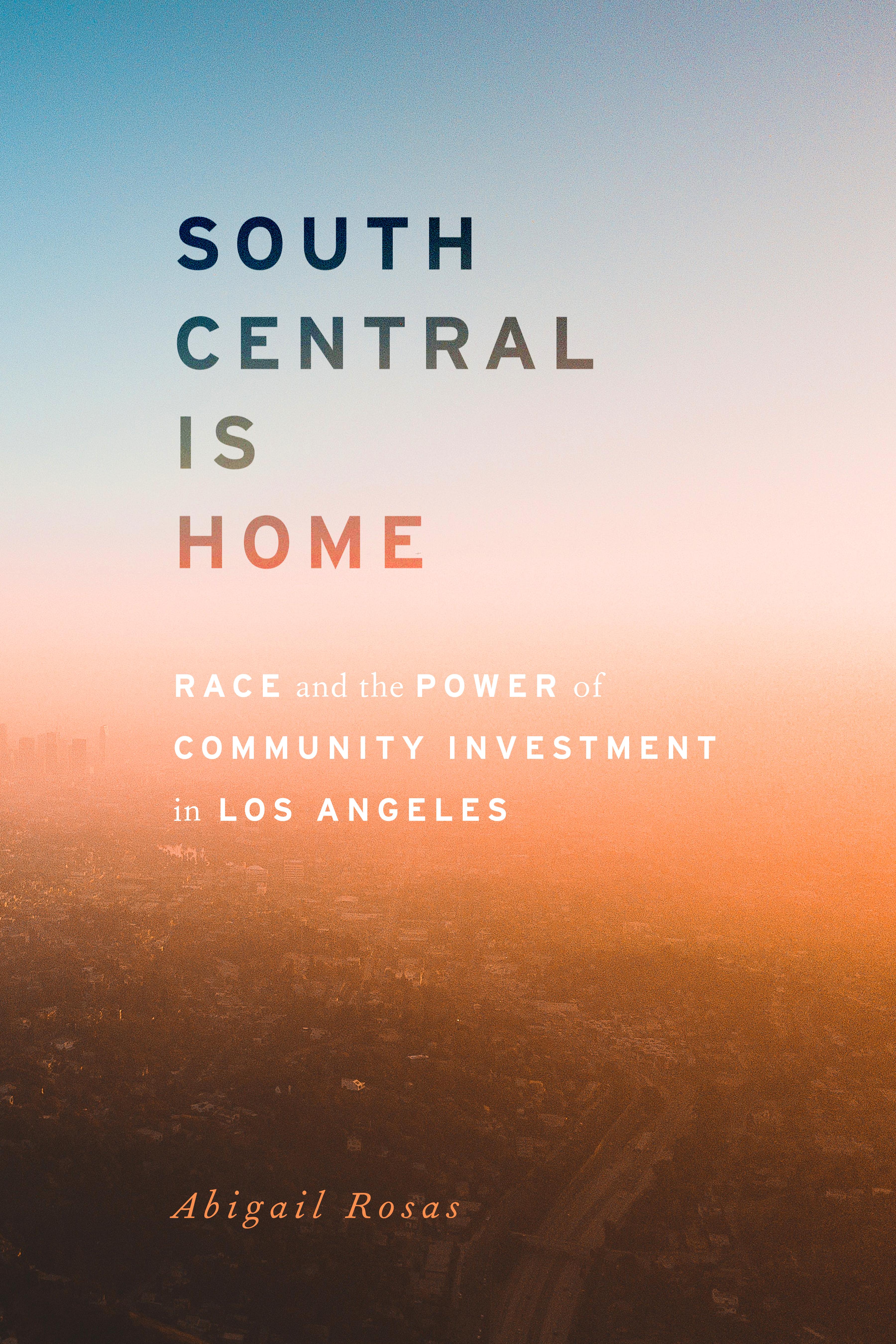
South Central Los Angeles is often characterized as an African American community beset by poverty and economic neglect. But this depiction obscures the significant Latina/o population that has called South Central home since the 1970s. More significantly, it conceals the efforts African American and Latina/o residents have made together in shaping their community. As residents have faced increasing challenges from diminished government social services, economic disinvestment, immigration enforcement, and police surveillance, they have come together in their struggle for belonging and justice.
South Central Is Home investigates the development of relational community formation and highlights how communities of color like South Central experience racism and discrimination—and how in the best of situations, they are energized to improve their conditions together. Tracking the demographic shifts in South Central from 1945 to the present, Abigail Rosas shows how financial institutions, War on Poverty programs like Headstart for school children, and community health centers emerged as crucial sites where neighbors engaged one another over what was best for their community. Through this work, Rosas illuminates the promise of community building, offering findings indispensable to our understandings of race, community, and place in U.S. society.
Betal nemt med kort, Klarna, Apple Pay eller Google Pay. Ikke tilfreds? Du har altid 14 dages fortrydelsesret. Læs mere i vores vilkår. Har du spørgsmål, så send os en mail på hello@memmo.org.
Memmo gør det nemmere at studere – uanset hvor du er i verden. Hos os samler du dine kursusbøger og smarte studieværktøjer ét sted: resuméer, quizzer, podcasts og flashcards. Og så er der Ted, din studieven, der svarer på alt, du undrer dig over. Over 50 000 studerende studerer allerede her – bygget til at hjælpe dig med at lære hurtigere og stresse mindre.