
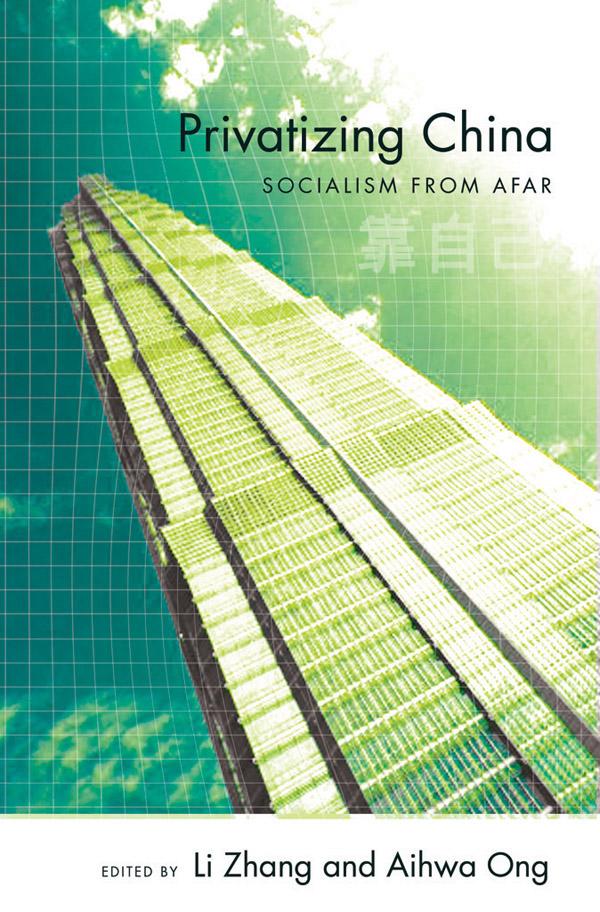
Everyday life in China is increasingly shaped by a novel mix of neoliberal and socialist elements, of individual choices and state objectives. This combination of self-determination and socialism from afar has incited profound changes in the ways individuals think and act in different spheres of society.
Covering a vast range of daily life—from homeowner organizations and the users of Internet cafes to self-directed professionals and informed consumers—the essays in Privatizing China create a compelling picture of the burgeoning awareness of self-governing within the postsocialist context. The introduction by Aihwa Ong and Li Zhang presents assemblage as a concept for studying China as a unique postsocialist society created through interactions with global forms.
The authors conduct their ethnographic fieldwork in a spectrum of domains—family, community, real estate, business, taxation, politics, labor, health, professions, religion, and consumption—that are infiltrated by new techniques of the self and yet also regulated by broader socialist norms. Privatizing China gives readers a grounded, fine-grained intimacy with the variety and complexity of everyday conduct in China's turbulent transformation.
Betal nemt med kort, Klarna, Apple Pay eller Google Pay. Ikke tilfreds? Du har altid 14 dages fortrydelsesret. Læs mere i vores vilkår. Har du spørgsmål, så send os en mail på hello@memmo.org.
Memmo gør det nemmere at studere – uanset hvor du er i verden. Hos os samler du dine kursusbøger og smarte studieværktøjer ét sted: resuméer, quizzer, podcasts og flashcards. Og så er der Ted, din studieven, der svarer på alt, du undrer dig over. Over 50 000 studerende studerer allerede her – bygget til at hjælpe dig med at lære hurtigere og stresse mindre.