
Marked by uncertainty and upheaval, immigrant entrepreneurship emerges not as a fixed strategy but as an ongoing process of adaptation, negotiation, and reinvention.
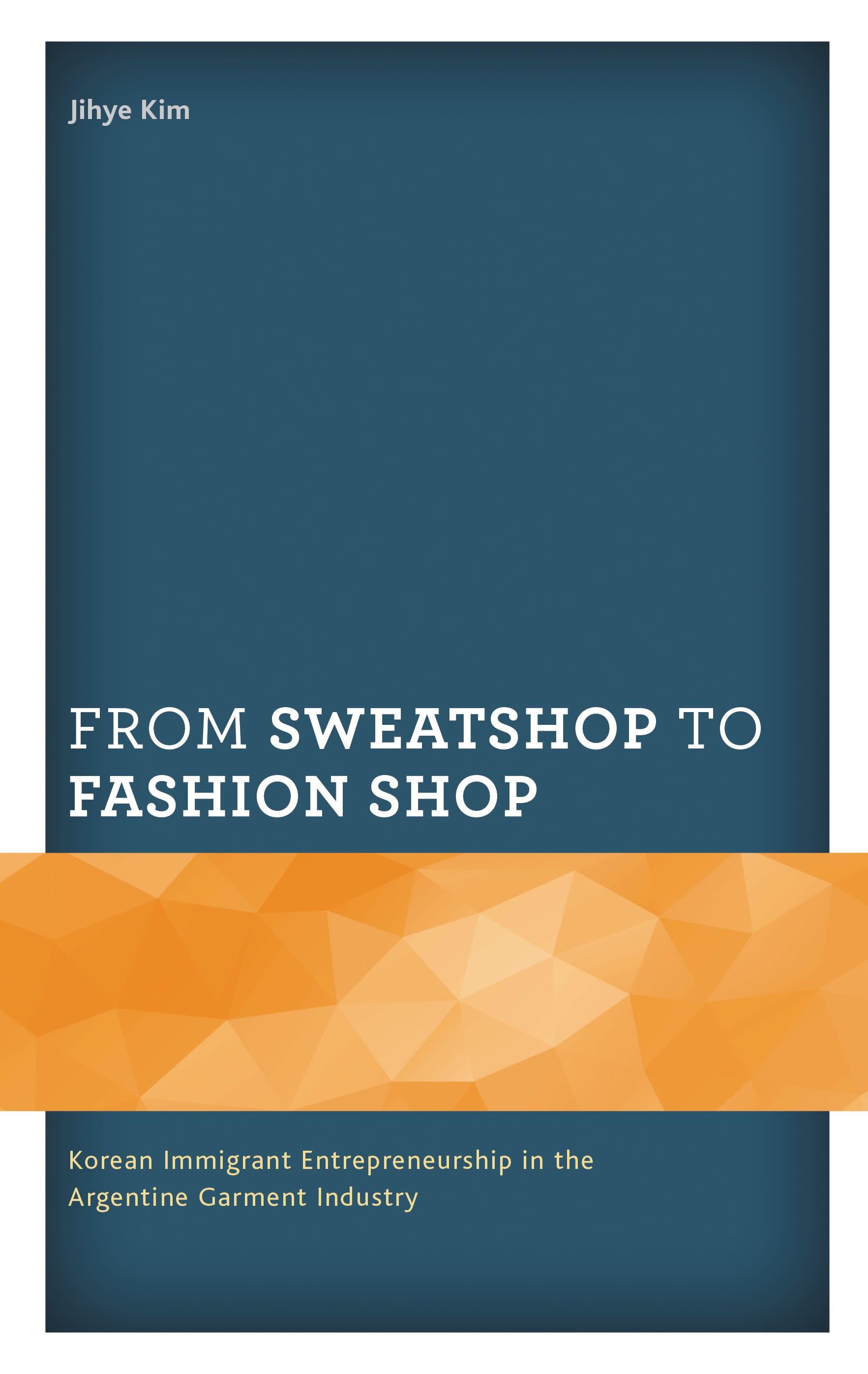
Since their arrival in the 1960s, Korean immigrants in Argentina have been deeply embedded in the garment industry, developing a sustained yet evolving presence within this important economic sector. From Sweatshop to Fashion Shop examines how, across decades of political instability and economic volatility, Korean entrepreneurs have continuously reshaped their motivations, business practices, and strategies in response to-and sometimes in defiance of-the shifting conditions of the host country. Moving from early migration decisions and sectoral entry into apparel production, through expansion into distribution networks, and into present-day challenges, Jihye Kim traces a historical trajectory that connects individual agency with broader structural transformations.
Drawing on established theories of immigrant entrepreneurship while critically reassessing their limits, Kim offers a nuanced interpretation that integrates theoretical frameworks with historically grounded analysis. This approach reveals how context-specific factors-ranging from Argentina's economic crises to changing global markets-have shaped distinct entrepreneurial pathways within the Korean diaspora. By foregrounding a Latin American case that has long been overlooked, the book not only enriches Korean studies but also contributes more comprehensive and globally attuned theories of migration and entrepreneurship.
Since their arrival in the 1960s, Korean immigrants in Argentina have been deeply embedded in the garment industry, developing a sustained yet evolving presence within this important economic sector. From Sweatshop to Fashion Shop examines how, across decades of political instability and economic volatility, Korean entrepreneurs have continuously reshaped their motivations, business practices, and strategies in response to-and sometimes in defiance of-the shifting conditions of the host country. Moving from early migration decisions and sectoral entry into apparel production, through expansion into distribution networks, and into present-day challenges, Jihye Kim traces a historical trajectory that connects individual agency with broader structural transformations.
Drawing on established theories of immigrant entrepreneurship while critically reassessing their limits, Kim offers a nuanced interpretation that integrates theoretical frameworks with historically grounded analysis. This approach reveals how context-specific factors-ranging from Argentina's economic crises to changing global markets-have shaped distinct entrepreneurial pathways within the Korean diaspora. By foregrounding a Latin American case that has long been overlooked, the book not only enriches Korean studies but also contributes more comprehensive and globally attuned theories of migration and entrepreneurship.
Sider: 200
Kategori: Sociologi
e-ISBN: 9781498584029
Forsendelsesvægt: 1.2 kg
Sendes inden for: 1-2 dage
Betal nemt med kort, Klarna, Apple Pay eller Google Pay. Ikke tilfreds? Du har altid 14 dages fortrydelsesret. Læs mere i vores vilkår. Har du spørgsmål, så send os en mail på hello@memmo.org.
Memmo gør det nemmere at studere – uanset hvor du er i verden. Hos os samler du dine kursusbøger og smarte studieværktøjer ét sted: resuméer, quizzer, podcasts og flashcards. Og så er der Ted, din studieven, der svarer på alt, du undrer dig over. Over 50 000 studerende studerer allerede her – bygget til at hjælpe dig med at lære hurtigere og stresse mindre.