
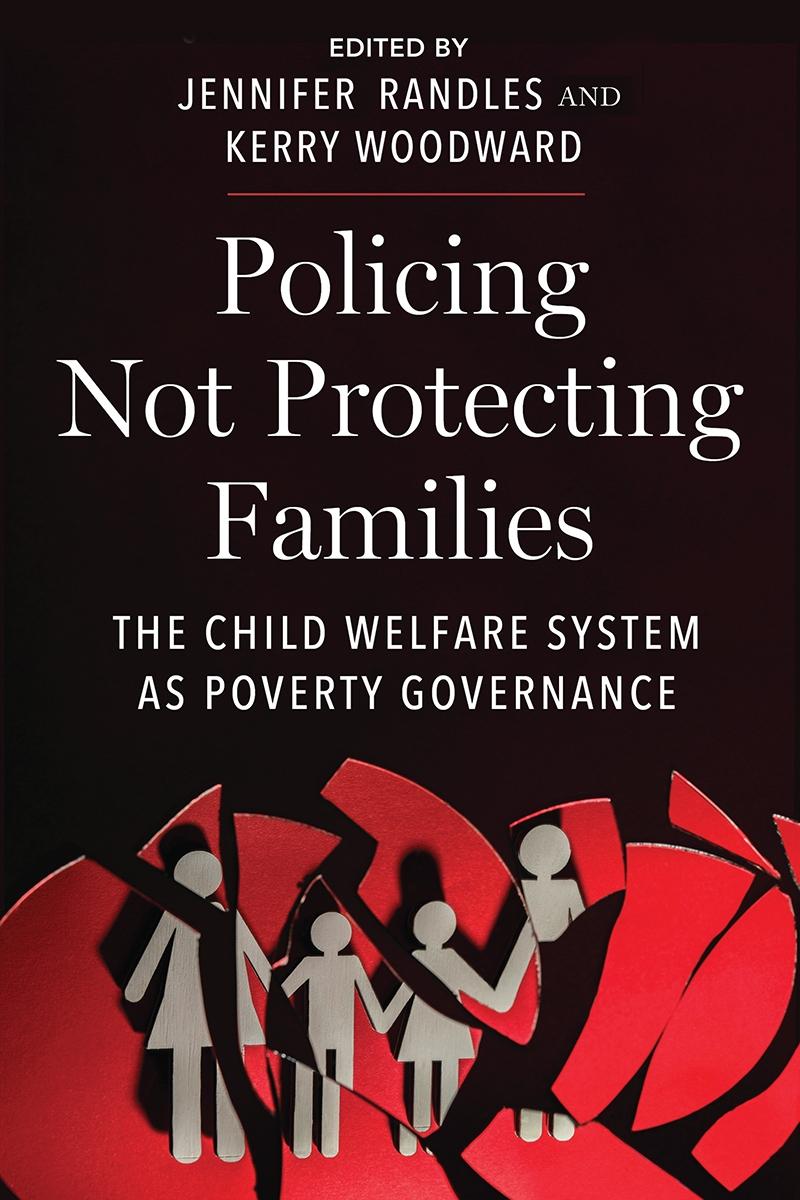
Controlling, surveilling, and punishing poor families through the child welfare system
In a typical year, one in five US children have some interaction with the child welfare system. Countless other families, particularly those who struggle to care for their children due to poverty or economic insecurity, fear child welfare system involvement. Though imagined as a system that protects children from caregivers’ maltreatment, contributors to Policing Not Protecting Families argue that the child welfare system polices and punishes poor parents who are unable to meet white, middle class parenting standards due to structural inequalities.
Bringing together scholars from anthropology, sociology, law, and social work, this collection is the first to critically examine the child welfare system’s role in governing poor, disproportionately Black and Native families. It shows that the child welfare system is a key site of poverty governance, or state control and management of poor families. Chapters bring together empirical research from diverse settings across the US, highlighting the system’s interactions with other state systems and its wide impact on marginalized families. Together the chapters illustrate the failure of the child welfare system to protect children and families from the structural inequalities that shape the lives of poor and other marginalized families.
Betal nemt med kort, Klarna, Apple Pay eller Google Pay. Ikke tilfreds? Du har altid 14 dages fortrydelsesret. Læs mere i vores vilkår. Har du spørgsmål, så send os en mail på hello@memmo.org.
Memmo gør det nemmere at studere – uanset hvor du er i verden. Hos os samler du dine kursusbøger og smarte studieværktøjer ét sted: resuméer, quizzer, podcasts og flashcards. Og så er der Ted, din studieven, der svarer på alt, du undrer dig over. Over 50 000 studerende studerer allerede her – bygget til at hjælpe dig med at lære hurtigere og stresse mindre.