
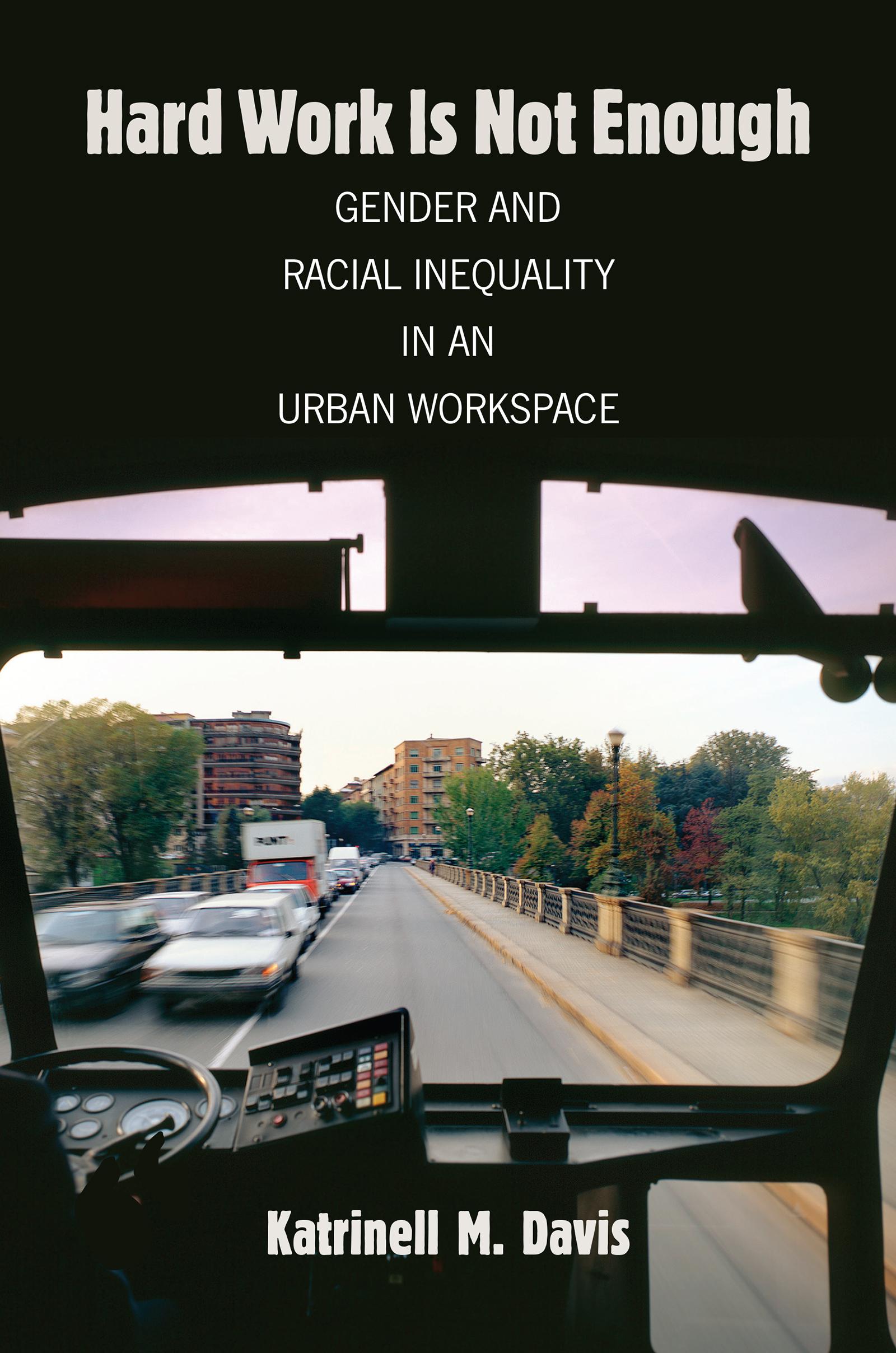
The Great Recession punished American workers, leaving many underemployed or trapped in jobs that did not provide the income or opportunities they needed. Moreover, the gap between the wealthy and the poor had widened in past decades as mobility remained stubbornly unchanged. Against this deepening economic divide, a dominant cultural narrative took root: immobility, especially for the working class, is driven by shifts in demand for labor. In this context, and with right-to-work policies proliferating nationwide, workers are encouraged to avoid government dependency by arming themselves with education and training.
Drawing on archival material and interviews with African American women transit workers in the San Francisco Bay Area, Katrinell Davis grapples with our understanding of mobility as it intersects with race and gender in the postindustrial and post–civil rights United States. Considering the consequences of declining working conditions within the public transit workplace of Alameda County, Davis illustrates how worker experience — on and off the job — has been undermined by workplace norms and administrative practices designed to address flagging worker commitment and morale. Providing a comprehensive account of how political, social, and economic factors work together to shape the culture of opportunity in a postindustrial workplace, she shows how government manpower policies, administrative policies, and drastic shifts in unionization have influenced the prospects of low-skilled workers.
Drawing on archival material and interviews with African American women transit workers in the San Francisco Bay Area, Katrinell Davis grapples with our understanding of mobility as it intersects with race and gender in the postindustrial and post–civil rights United States. Considering the consequences of declining working conditions within the public transit workplace of Alameda County, Davis illustrates how worker experience — on and off the job — has been undermined by workplace norms and administrative practices designed to address flagging worker commitment and morale. Providing a comprehensive account of how political, social, and economic factors work together to shape the culture of opportunity in a postindustrial workplace, she shows how government manpower policies, administrative policies, and drastic shifts in unionization have influenced the prospects of low-skilled workers.
Betal nemt med kort, Klarna, Apple Pay eller Google Pay. Ikke tilfreds? Du har altid 14 dages fortrydelsesret. Læs mere i vores vilkår. Har du spørgsmål, så send os en mail på hello@memmo.org.
Memmo gør det nemmere at studere – uanset hvor du er i verden. Hos os samler du dine kursusbøger og smarte studieværktøjer ét sted: resuméer, quizzer, podcasts og flashcards. Og så er der Ted, din studieven, der svarer på alt, du undrer dig over. Over 50 000 studerende studerer allerede her – bygget til at hjælpe dig med at lære hurtigere og stresse mindre.
Du kan måske også lide
Køb bogen0