
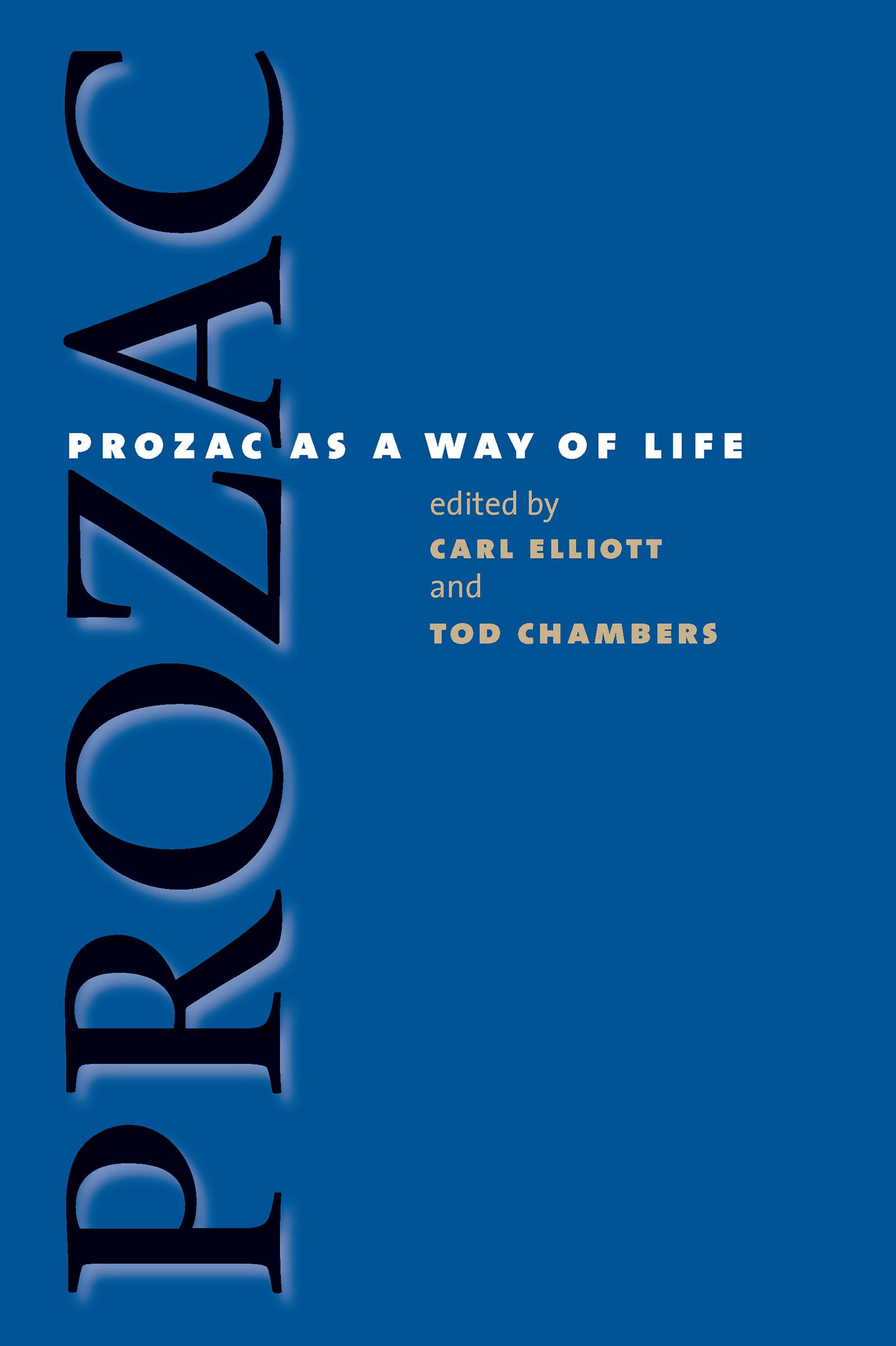
Prozac and its chemical cousins, Paxil, Celexa, and Zoloft, are some of the most profitable and most widely used drugs in America. Their use in the treatment of a multitude of disorders — from generalized anxiety disorder and premenstrual syndrome to eating disorders and sexual compulsions — has provoked a whirlwind of public debate. Talk shows ask, Why is Prozac so popular? What, exactly, do these drugs treat? But sustained critical discussion among bioethicists and medical humanists has been surprisingly absent.
The eleven essays in Prozac as a Way of Life provide the groundwork for a much-needed philosophical discussion of the ethical and cultural dimensions of the popularity of SSRI antidepressants. Focusing on the increasing use of medication as a means of self-enhancement, contributors from the fields of psychiatry, psychology, bioethics, and the medical humanities address issues of identity enhancement, the elasticity of psychiatric diagnosis, and the aggressive marketing campaigns of pharmaceutical companies. They do not question the fact that these antidepressants can, in some cases, provide great benefit to alleviate real suffering. What they do question is the abundant popularity of these drugs and that popularity’s relationship to American culture and ideas of selfhood.
Contributors:
Tod Chambers, Northwestern University Feinberg School of Medicine, Chicago
David DeGrazia, George Washington University
James C. Edwards, Furman University
Carl Elliott, University of Minnesota Center for Bioethics
David Healy, University of Wales College of Medicine
Laurence J. Kirmayer, McGill University
Peter D. Kramer, Brown University
Erik Parens, The Hastings Center
Lauren Slater, AfterCare Services, Boston
Susan Squier, Pennsylvania State University
Laurie Zoloth, Northwestern University Center for Genetic Medicine, Chicago
The eleven essays in Prozac as a Way of Life provide the groundwork for a much-needed philosophical discussion of the ethical and cultural dimensions of the popularity of SSRI antidepressants. Focusing on the increasing use of medication as a means of self-enhancement, contributors from the fields of psychiatry, psychology, bioethics, and the medical humanities address issues of identity enhancement, the elasticity of psychiatric diagnosis, and the aggressive marketing campaigns of pharmaceutical companies. They do not question the fact that these antidepressants can, in some cases, provide great benefit to alleviate real suffering. What they do question is the abundant popularity of these drugs and that popularity’s relationship to American culture and ideas of selfhood.
Contributors:
Tod Chambers, Northwestern University Feinberg School of Medicine, Chicago
David DeGrazia, George Washington University
James C. Edwards, Furman University
Carl Elliott, University of Minnesota Center for Bioethics
David Healy, University of Wales College of Medicine
Laurence J. Kirmayer, McGill University
Peter D. Kramer, Brown University
Erik Parens, The Hastings Center
Lauren Slater, AfterCare Services, Boston
Susan Squier, Pennsylvania State University
Laurie Zoloth, Northwestern University Center for Genetic Medicine, Chicago
Betal nemt med kort, Klarna, Apple Pay eller Google Pay. Ikke tilfreds? Du har altid 14 dages fortrydelsesret. Læs mere i vores vilkår. Har du spørgsmål, så send os en mail på hello@memmo.org.
Memmo gør det nemmere at studere – uanset hvor du er i verden. Hos os samler du dine kursusbøger og smarte studieværktøjer ét sted: resuméer, quizzer, podcasts og flashcards. Og så er der Ted, din studieven, der svarer på alt, du undrer dig over. Over 50 000 studerende studerer allerede her – bygget til at hjælpe dig med at lære hurtigere og stresse mindre.
Du kan måske også lide
Køb bogen0