
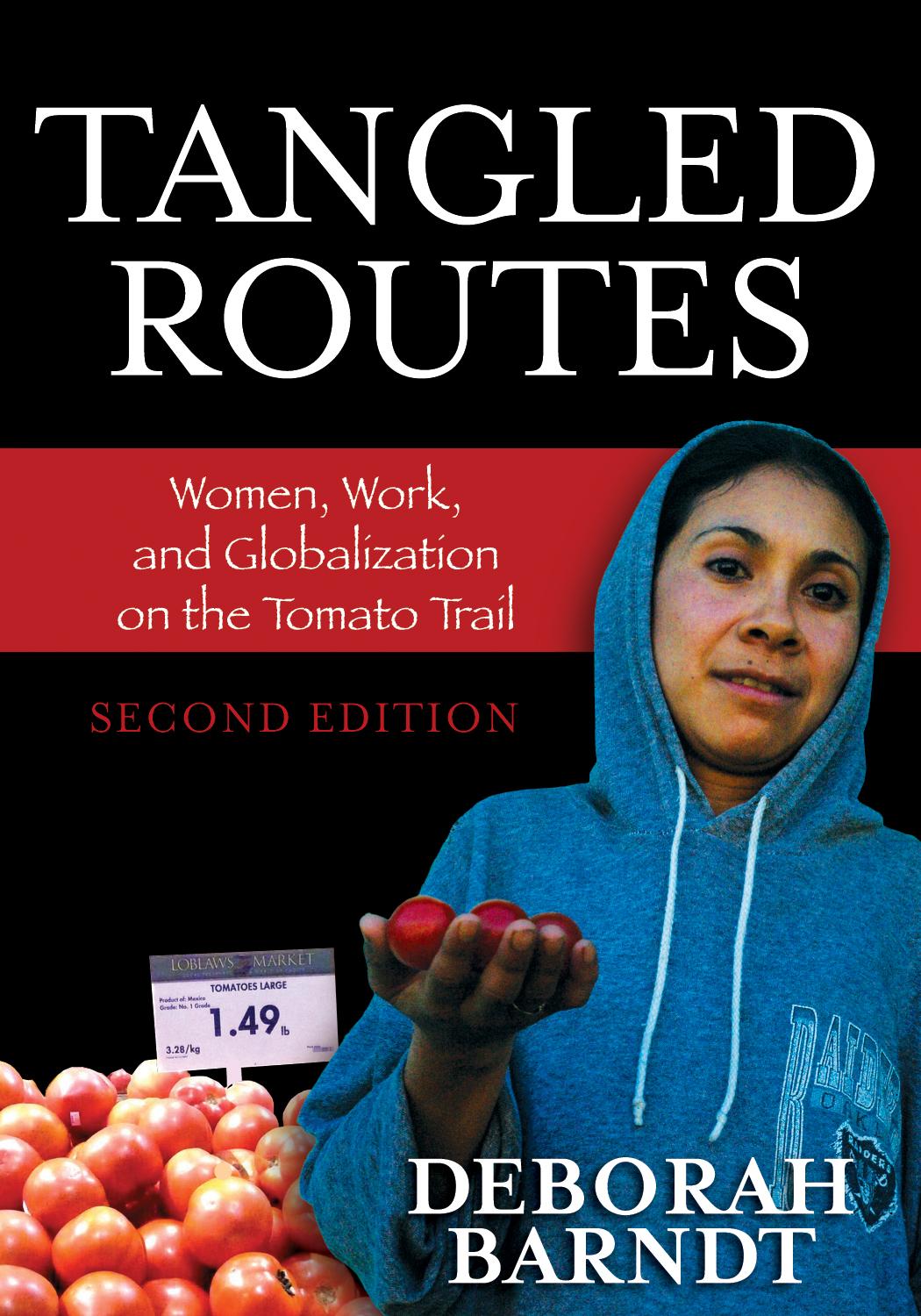
Where does our food come from? Whose hands have planted, cultivated, picked, packed, processed, transported, scanned, sold, sliced, and cooked it? What production practices have transformed it from seed to fruit, from fresh to processed form? Who decides what is grown and how? What are the effects of those decisions on our health and the health of the planet?
Tangled Routes tackles these fascinating questions and demystifies globalization by tracing the long journey of a corporate tomato from a Mexican field to a Canadian fast-food restaurant. Through an interdisciplinary lens, Deborah Barndt examines the dynamic relationships between production and consumption, work and technology, biodiversity and cultural diversity, and health and environment. A globalization-from-above perspective is reflected in the corporate agendas of a Mexican agribusiness, the U.S.-based McDonald's chain, and Canadian-based Loblaws supermarkets. The women workers on the front line of these businesses offer a humanized globalization-from-below perspective, while yet another "globalization" is revealed through examples of resistance and local alternatives.
This revised and updated edition highlights developments since the turn of the millennium, in particular the deepening economic integration of the NAFTA countries as well as the growing questioning of NAFTA's consequences and the crafting of alternatives built on foundations of sustainability and justice.
Tangled Routes tackles these fascinating questions and demystifies globalization by tracing the long journey of a corporate tomato from a Mexican field to a Canadian fast-food restaurant. Through an interdisciplinary lens, Deborah Barndt examines the dynamic relationships between production and consumption, work and technology, biodiversity and cultural diversity, and health and environment. A globalization-from-above perspective is reflected in the corporate agendas of a Mexican agribusiness, the U.S.-based McDonald's chain, and Canadian-based Loblaws supermarkets. The women workers on the front line of these businesses offer a humanized globalization-from-below perspective, while yet another "globalization" is revealed through examples of resistance and local alternatives.
This revised and updated edition highlights developments since the turn of the millennium, in particular the deepening economic integration of the NAFTA countries as well as the growing questioning of NAFTA's consequences and the crafting of alternatives built on foundations of sustainability and justice.
Betal nemt med kort, Klarna, Apple Pay eller Google Pay. Ikke tilfreds? Du har altid 14 dages fortrydelsesret. Læs mere i vores vilkår. Har du spørgsmål, så send os en mail på hello@memmo.org.
Memmo gør det nemmere at studere – uanset hvor du er i verden. Hos os samler du dine kursusbøger og smarte studieværktøjer ét sted: resuméer, quizzer, podcasts og flashcards. Og så er der Ted, din studieven, der svarer på alt, du undrer dig over. Over 50 000 studerende studerer allerede her – bygget til at hjælpe dig med at lære hurtigere og stresse mindre.