
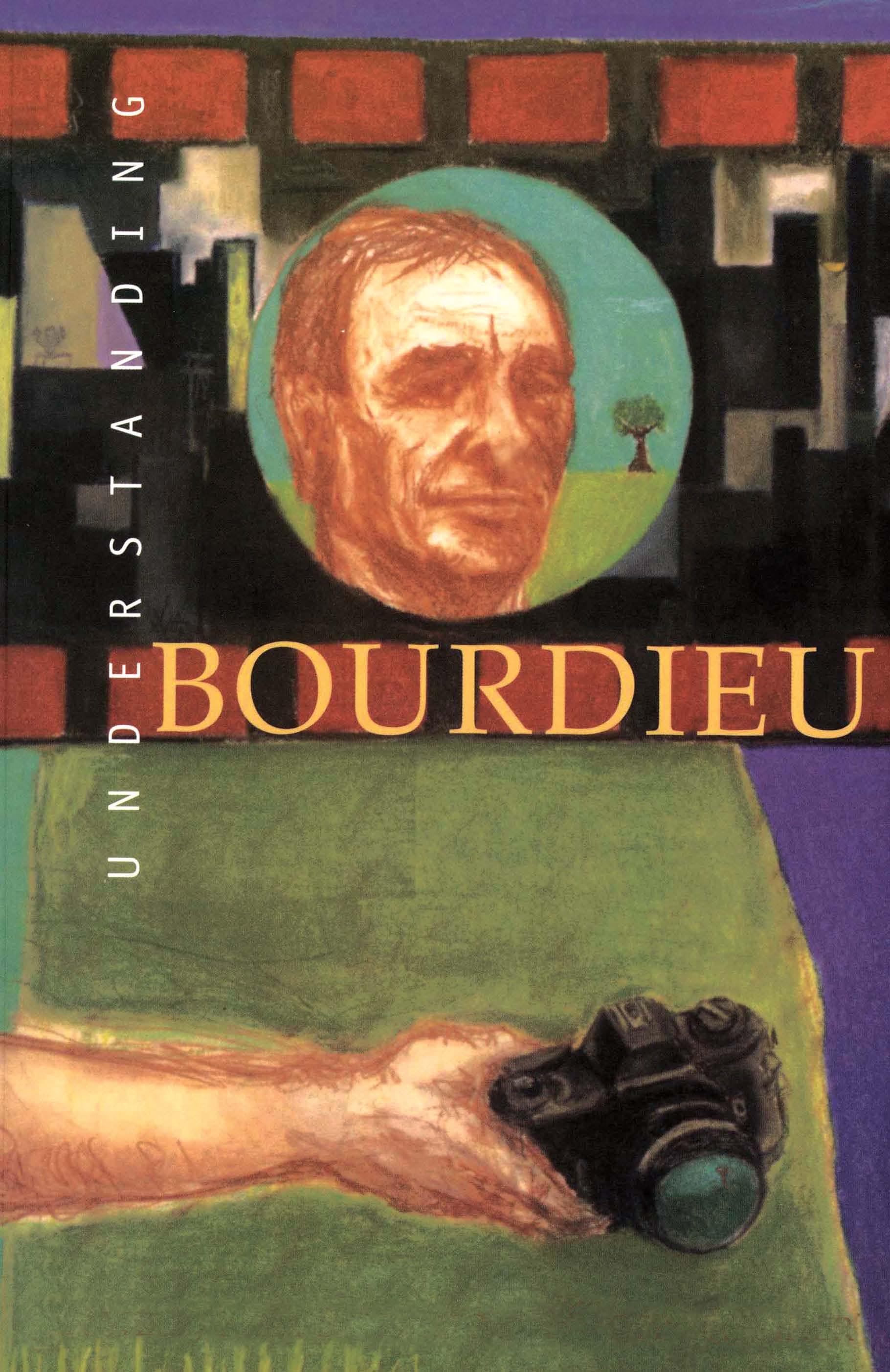
"Bourdieu′s work is formidable - the journey is tough. Follow this French foreign legion - take an apple, take a hanky - but take this book".
- Peter Beilharz , La Trobe University
"A good range of recent examples from popular culture are used to flesh out the material in accessible terms. These examples are deployed very well indeed - rather than being tacked-on illustrations of an idea, they are instead used at the heart of the explanation of the ideas".
- David Gauntlett, Leeds University
Now considered one of the most influential thinkers of the 20th century, Pierre Bourdieu has left his mark on most of the ′big′ theoretical issues in the world of contemporary theory: gender, subjectivity, the body, culture, citizenship, and globalization. His terms are now commonplace: ′social capital′, ′cultural capital′, ′field′, and ′habitus′.
Bourdieu examines how people conduct their lives in relation to one another and to major social institutions. He argues that culture and education aren′t simply minor influences, but as important as economics in determining differences between groups of people. Unlike the other grand systematisers Marx and Foucault, Bourdieu has tested these arguments in detailed fieldwork. His range is eclectic, his vision is vast, and his writing is often dense and challenging.
Understanding Bourdieu offers a comprehensive introduction to Bourdieu′s work. It is essential reading for anyone tackling him for the first time.
- Peter Beilharz , La Trobe University
"A good range of recent examples from popular culture are used to flesh out the material in accessible terms. These examples are deployed very well indeed - rather than being tacked-on illustrations of an idea, they are instead used at the heart of the explanation of the ideas".
- David Gauntlett, Leeds University
Now considered one of the most influential thinkers of the 20th century, Pierre Bourdieu has left his mark on most of the ′big′ theoretical issues in the world of contemporary theory: gender, subjectivity, the body, culture, citizenship, and globalization. His terms are now commonplace: ′social capital′, ′cultural capital′, ′field′, and ′habitus′.
Bourdieu examines how people conduct their lives in relation to one another and to major social institutions. He argues that culture and education aren′t simply minor influences, but as important as economics in determining differences between groups of people. Unlike the other grand systematisers Marx and Foucault, Bourdieu has tested these arguments in detailed fieldwork. His range is eclectic, his vision is vast, and his writing is often dense and challenging.
Understanding Bourdieu offers a comprehensive introduction to Bourdieu′s work. It is essential reading for anyone tackling him for the first time.
Betal nemt med kort, Klarna, Apple Pay eller Google Pay. Ikke tilfreds? Du har altid 14 dages fortrydelsesret. Læs mere i vores vilkår. Har du spørgsmål, så send os en mail på hello@memmo.org.
Memmo gør det nemmere at studere – uanset hvor du er i verden. Hos os samler du dine kursusbøger og smarte studieværktøjer ét sted: resuméer, quizzer, podcasts og flashcards. Og så er der Ted, din studieven, der svarer på alt, du undrer dig over. Over 50 000 studerende studerer allerede her – bygget til at hjælpe dig med at lære hurtigere og stresse mindre.