
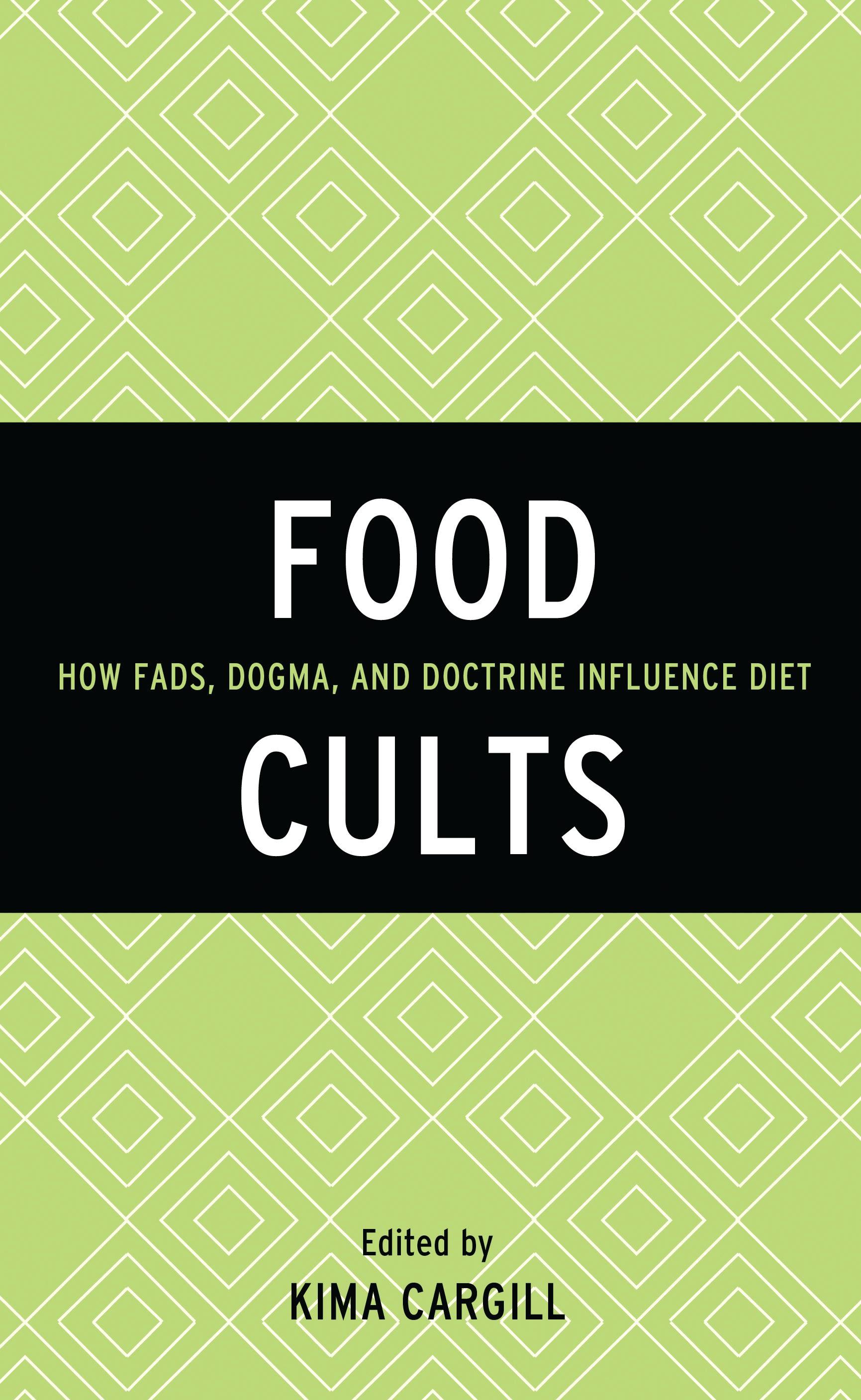
What do we mean when we call any group a cult? Definingthat term is a slippery proposition – the word cult is provocative and arguably pejorative. Does it necessarily refer to a religious group? A group with a charismatic leader? Or something darker and more sinister?
Because beliefs and practices surrounding food often inspire religious and political fervor, as well as function to unite people into insular groups, it is inevitable that "food cults" would emerge. Studying the extreme beliefs and practices of such food cults allows us to see the ways in which food serves as a nexus for religious beliefs, sexuality, death anxiety, preoccupation with the body, asceticism, and hedonism, to name a few. In contrast to religious and political cults, food cults have the added dimension of mediating cultural trends in nutrition and diet through their membership.
Should we then consider raw foodists, many of whom believe that cooked food is poison, a type of food cult? What about paleo diet adherents or those who follow a restricted calorie diet for longevity? Food Cults explores these questions by looking at domestic and international, contemporary and historic food communities characterized by extreme nutritional beliefs or viewed as "fringe" movements by mainstream culture. While there are a variety of accounts of such food communities across disciplines, this collection pulls together these works and explains why we gravitate toward such groups and the social and psychological functions they serve. This volume describes how contemporary and historic food communities come together and foment fanaticism, judgment, charisma, dogma, passion, longevity, condemnation and exaltation.
Because beliefs and practices surrounding food often inspire religious and political fervor, as well as function to unite people into insular groups, it is inevitable that "food cults" would emerge. Studying the extreme beliefs and practices of such food cults allows us to see the ways in which food serves as a nexus for religious beliefs, sexuality, death anxiety, preoccupation with the body, asceticism, and hedonism, to name a few. In contrast to religious and political cults, food cults have the added dimension of mediating cultural trends in nutrition and diet through their membership.
Should we then consider raw foodists, many of whom believe that cooked food is poison, a type of food cult? What about paleo diet adherents or those who follow a restricted calorie diet for longevity? Food Cults explores these questions by looking at domestic and international, contemporary and historic food communities characterized by extreme nutritional beliefs or viewed as "fringe" movements by mainstream culture. While there are a variety of accounts of such food communities across disciplines, this collection pulls together these works and explains why we gravitate toward such groups and the social and psychological functions they serve. This volume describes how contemporary and historic food communities come together and foment fanaticism, judgment, charisma, dogma, passion, longevity, condemnation and exaltation.
Betal nemt med kort, Klarna, Apple Pay eller Google Pay. Ikke tilfreds? Du har altid 14 dages fortrydelsesret. Læs mere i vores vilkår. Har du spørgsmål, så send os en mail på hello@memmo.org.
Memmo gør det nemmere at studere – uanset hvor du er i verden. Hos os samler du dine kursusbøger og smarte studieværktøjer ét sted: resuméer, quizzer, podcasts og flashcards. Og så er der Ted, din studieven, der svarer på alt, du undrer dig over. Over 50 000 studerende studerer allerede her – bygget til at hjælpe dig med at lære hurtigere og stresse mindre.