
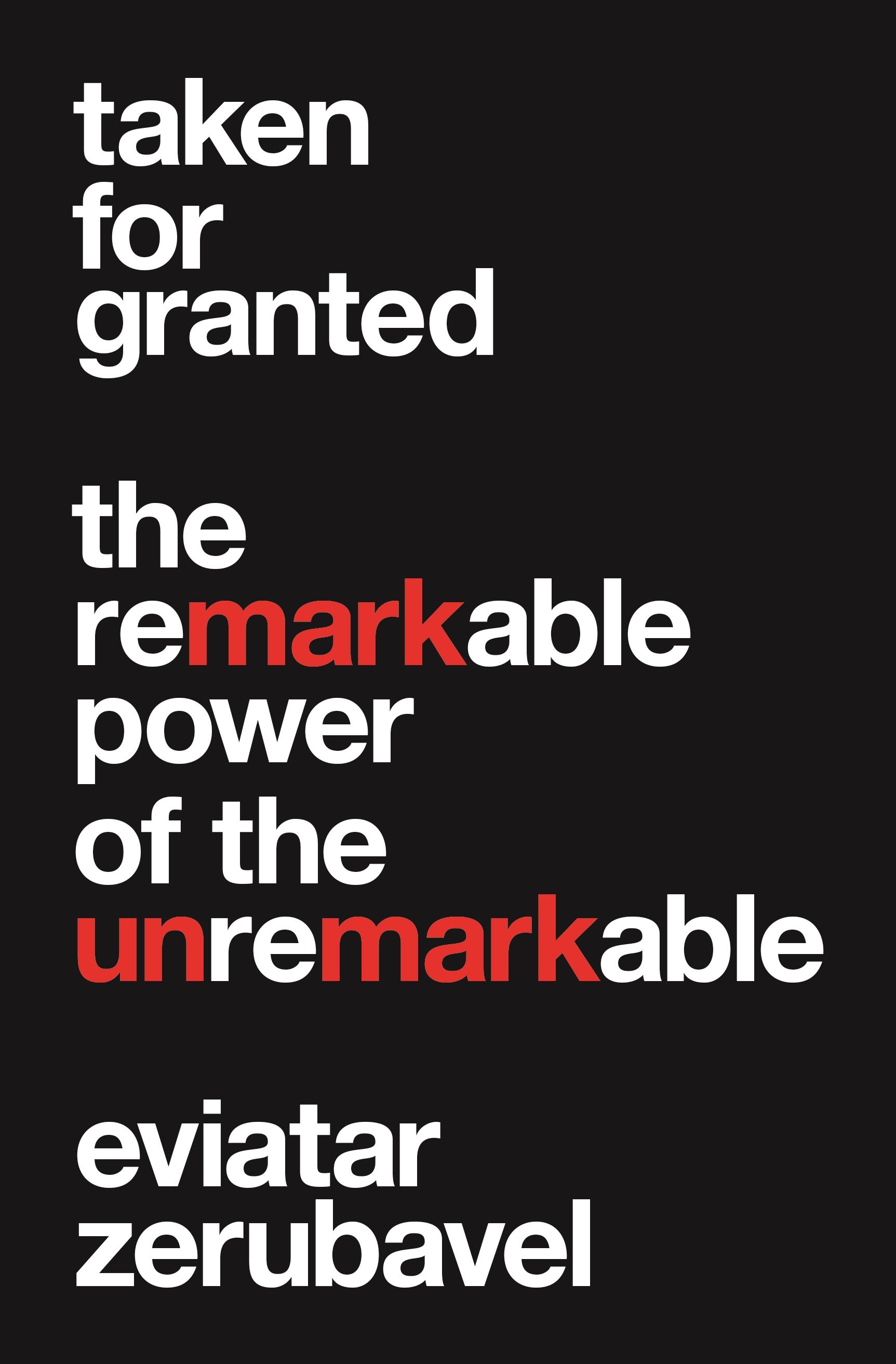
How the words we use—and don’t use—reinforce dominant cultural norms
Why is the term "openly gay" so widely used but "openly straight" is not? What are the unspoken assumptions behind terms like "male nurse," "working mom," and "white trash"? Offering a revealing and provocative look at the word choices we make every day without even realizing it, Taken for Granted exposes the subtly encoded ways we talk about race, gender, sexual orientation, religion, social status, and more.
In this engaging and insightful book, Eviatar Zerubavel describes how the words we use--such as when we mark "the best female basketball player" but leave her male counterpart unmarked—provide telling clues about the things many of us take for granted. By marking "women's history" or "Black History Month," we are also reinforcing the apparent normality of the history of white men. When we mark something as being special or somehow noticeable, that which goes unmarked—such as maleness, whiteness, straightness, and able-bodiedness—is assumed to be ordinary by default. Zerubavel shows how this tacit normalizing of certain identities, practices, and ideas helps to maintain their cultural dominance—including the power to dictate what others take for granted.
A little book about a very big idea, Taken for Granted draws our attention to what we implicitly assume to be normal—and in the process unsettles the very notion of normality.
Betal nemt med kort, Klarna, Apple Pay eller Google Pay. Ikke tilfreds? Du har altid 14 dages fortrydelsesret. Læs mere i vores vilkår. Har du spørgsmål, så send os en mail på hello@memmo.org.
Memmo gør det nemmere at studere – uanset hvor du er i verden. Hos os samler du dine kursusbøger og smarte studieværktøjer ét sted: resuméer, quizzer, podcasts og flashcards. Og så er der Ted, din studieven, der svarer på alt, du undrer dig over. Over 50 000 studerende studerer allerede her – bygget til at hjælpe dig med at lære hurtigere og stresse mindre.