
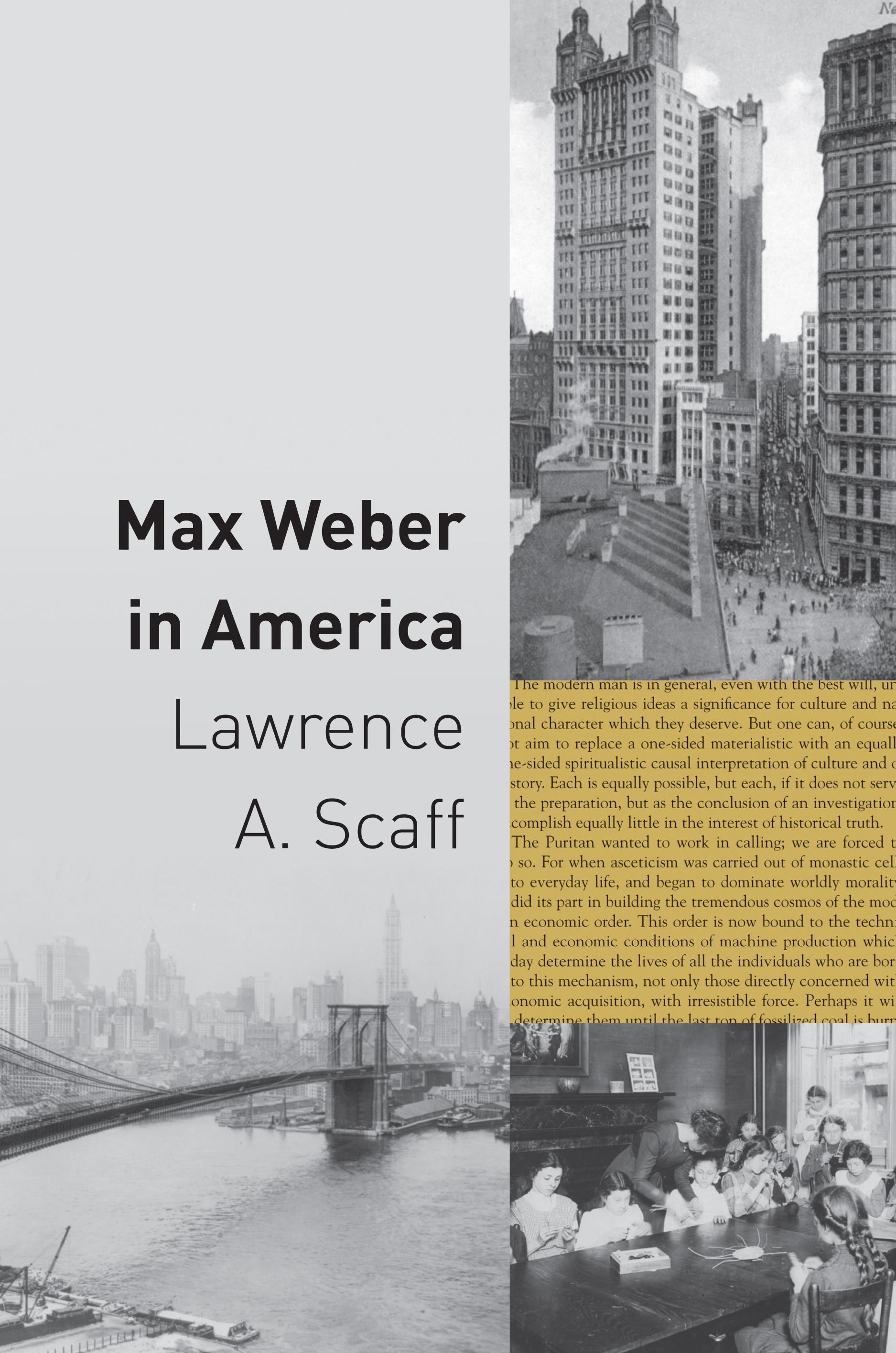
Max Weber, widely considered a founder of sociology and the modern social sciences, visited the United States in 1904 with his wife Marianne. The trip was a turning point in Weber's life and it played a pivotal role in shaping his ideas, yet until now virtually our only source of information about the trip was Marianne Weber's faithful but not always reliable 1926 biography of her husband.Max Weber in America carefully reconstructs this important episode in Weber's career, and shows how the subsequent critical reception of Weber's work was as American a story as the trip itself.
Lawrence Scaff provides new details about Weber's visit to the United States--what he did, what he saw, whom he met and why, and how these experiences profoundly influenced Weber's thought on immigration, capitalism, science and culture, Romanticism, race, diversity, Protestantism, and modernity. Scaff traces Weber's impact on the development of the social sciences in the United States following his death in 1920, examining how Weber's ideas were interpreted, translated, and disseminated by American scholars such as Talcott Parsons and Frank Knight, and how the Weberian canon, codified in America, was reintroduced into Europe after World War II.
A landmark work by a leading Weber scholar, Max Weber in America will fundamentally transform our understanding of this influential thinker and his place in the history of sociology and the social sciences.
Betal nemt med kort, Klarna, Apple Pay eller Google Pay. Ikke tilfreds? Du har altid 14 dages fortrydelsesret. Læs mere i vores vilkår. Har du spørgsmål, så send os en mail på hello@memmo.org.
Memmo gør det nemmere at studere – uanset hvor du er i verden. Hos os samler du dine kursusbøger og smarte studieværktøjer ét sted: resuméer, quizzer, podcasts og flashcards. Og så er der Ted, din studieven, der svarer på alt, du undrer dig over. Over 50 000 studerende studerer allerede her – bygget til at hjælpe dig med at lære hurtigere og stresse mindre.