
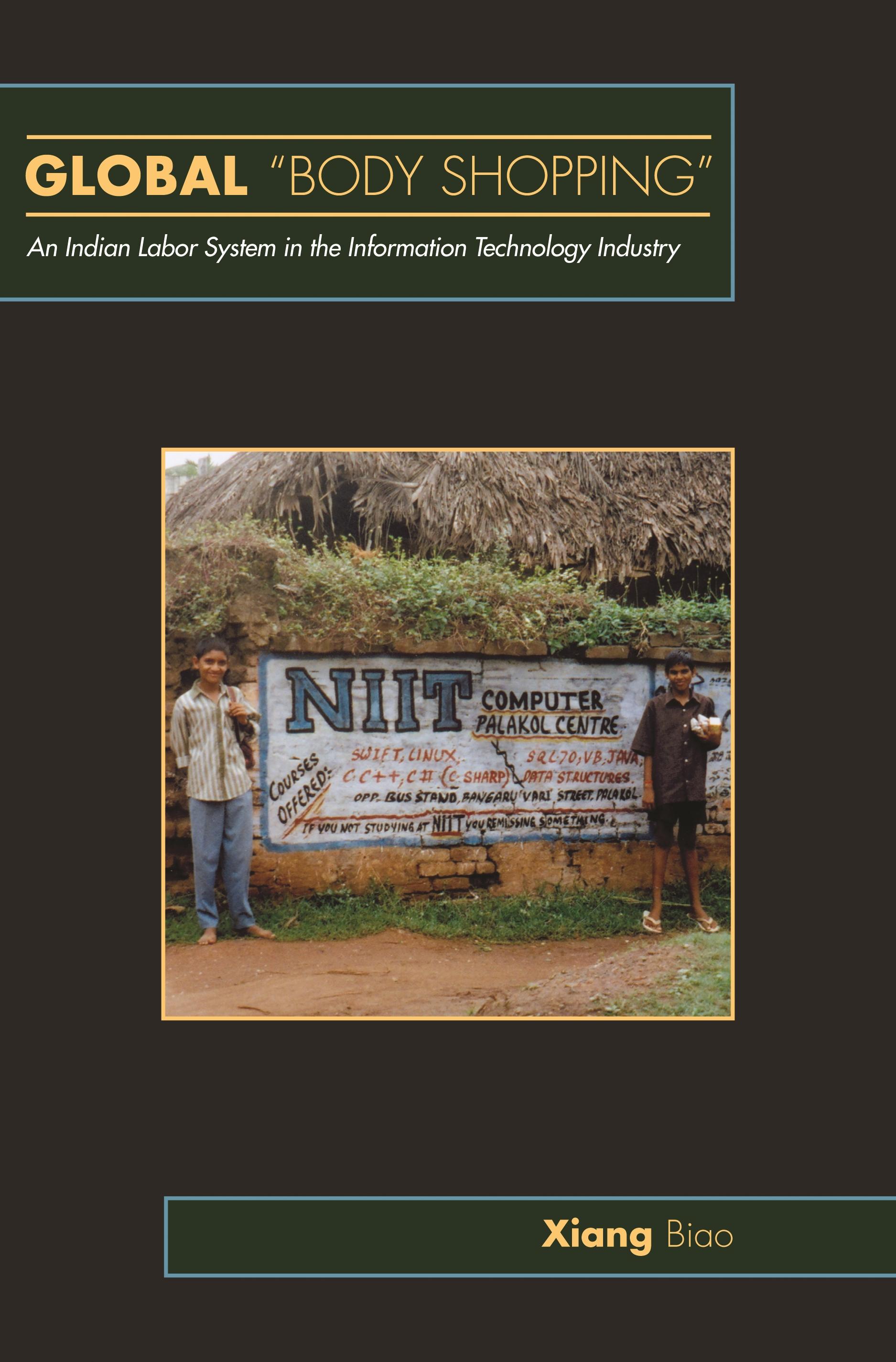
How can America's information technology (IT) industry predict serious labor shortages while at the same time laying off tens of thousands of employees annually? The answer is the industry's flexible labor management system--a flexibility widely regarded as the modus operandi of global capitalism today. Global "Body Shopping" explores how flexibility and uncertainty in the IT labor market are constructed and sustained through concrete human actions.
Drawing on in-depth field research in southern India and in Australia, and folding an ethnography into a political economy examination, Xiang Biao offers a richly detailed analysis of the India-based global labor management practice known as "body shopping." In this practice, a group of consultants--body shops--in different countries works together to recruit IT workers. Body shops then farm out workers to clients as project-based labor; and upon a project's completion they either place the workers with a different client or "bench" them to await the next placement. Thus, labor is managed globally to serve volatile capital movement.
Underpinning this practice are unequal socioeconomic relations on multiple levels. While wealth in the New Economy is created in an increasingly abstract manner, everyday realities--stock markets in New York, benched IT workers in Sydney, dowries in Hyderabad, and women and children in Indian villages--sustain this flexibility.
Betal nemt med kort, Klarna, Apple Pay eller Google Pay. Ikke tilfreds? Du har altid 14 dages fortrydelsesret. Læs mere i vores vilkår. Har du spørgsmål, så send os en mail på hello@memmo.org.
Memmo gør det nemmere at studere – uanset hvor du er i verden. Hos os samler du dine kursusbøger og smarte studieværktøjer ét sted: resuméer, quizzer, podcasts og flashcards. Og så er der Ted, din studieven, der svarer på alt, du undrer dig over. Over 50 000 studerende studerer allerede her – bygget til at hjælpe dig med at lære hurtigere og stresse mindre.