
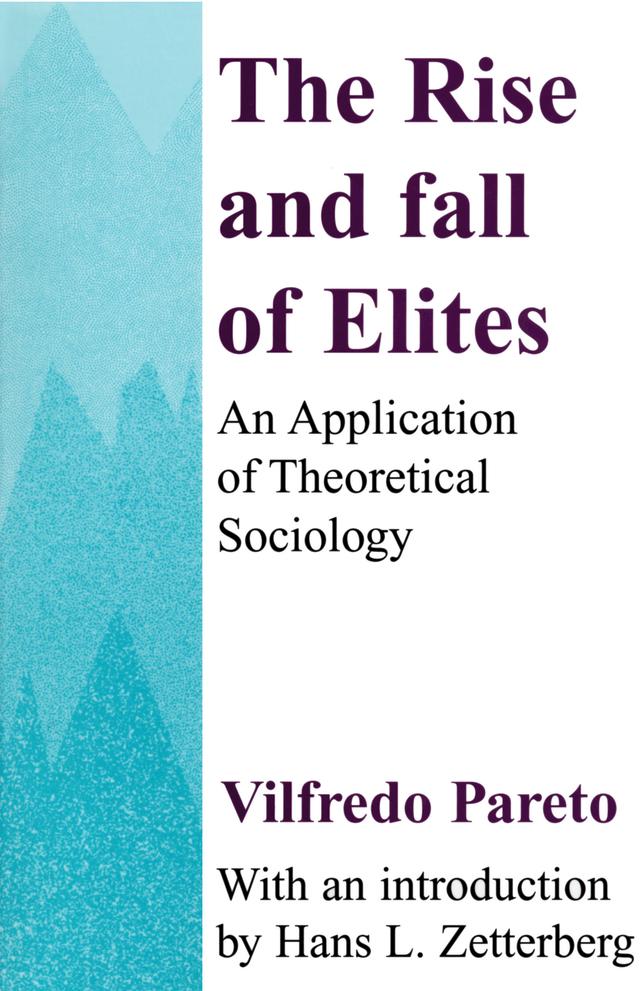
Combining a thorough introduction to the work of nineteenth-and early twentieth-century Italian social theorist Vilfredo Pareto with a highly readable English translation of Pareto's last monograph "Generalizations," originally published in 1920, this work illustrates how and why democratic forms of government undergo decay and are eventually reinvigorated. More than any other social scientist of his generation, Pareto offers a well-developed, articulate, and compelling theory of change based on a Newtonian vision of science and an engineering model of social equilibrium. This dynamic involves a shifting balance among the countervailing forces of centralization and decentralization of power, economic expansion and contraction, and liberalism versus traditionalism in public sentiment. By 1920, Pareto had developed a scheme for predicting shifts in magnitude of these forces and subsequent change in the character of society. This book will be of interest to students, teachers, or general readers interested in political science, sociology and late-nineteenth/ early-twentieth century social theory.
Betal nemt med kort, Klarna, Apple Pay eller Google Pay. Ikke tilfreds? Du har altid 14 dages fortrydelsesret. Læs mere i vores vilkår. Har du spørgsmål, så send os en mail på hello@memmo.org.
Memmo gør det nemmere at studere – uanset hvor du er i verden. Hos os samler du dine kursusbøger og smarte studieværktøjer ét sted: resuméer, quizzer, podcasts og flashcards. Og så er der Ted, din studieven, der svarer på alt, du undrer dig over. Over 50 000 studerende studerer allerede her – bygget til at hjælpe dig med at lære hurtigere og stresse mindre.
Du kan måske også lide
Køb bogen0