
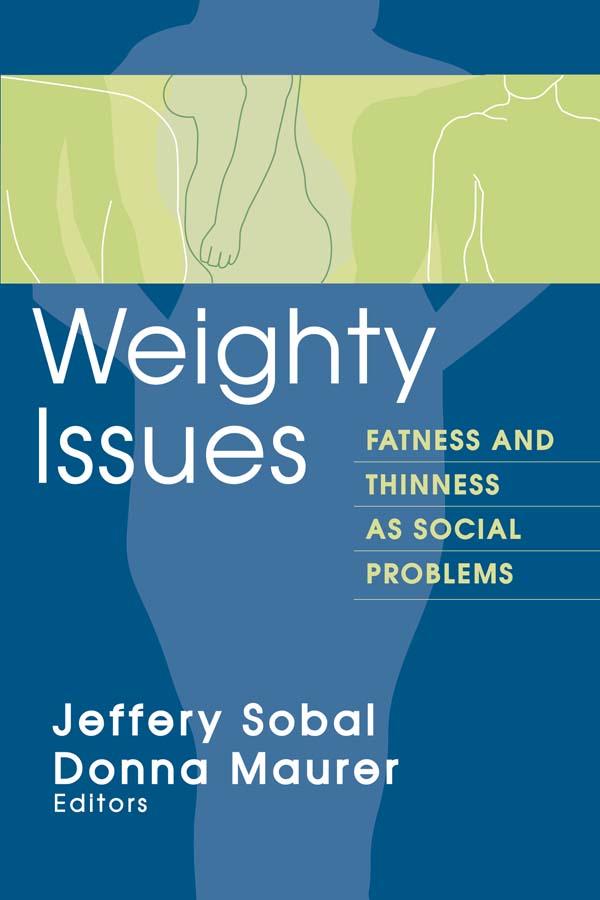
Many people consider their weight to be a personal problem; when, then, does body weight become a social problem? Until recently, the major public concern was whether enough food was consistently available. As food systems began to provide ample and stable amounts of food, questions about food availability were replaced with concerns about ideal weights and appearance. These interests were aggregated into public concerns about defining people as too fat and too thin.Social constructionist perspectives can contribute to the understanding of weight problems because they focus attention on how these problems are created, maintained, and promoted within various social environments. While there is much objectivist research concerning weight problems, few studies address the socially constructed aspects of fatness and thinness.This book however draws from and contributes to social constructionist perspectives. The chapters in this volume offer several perspectives that can be used to understand the way society deals with fatness and thinness. The contributors consider historical foundations, medical models, gendered dimensions, institutional components, and collective perspectives. These different perspectives illustrate the multifaceted nature of obesity and eating disorders, providing examples of how a variety of social groups construct weight as a social problem.
Betal nemt med kort, Klarna, Apple Pay eller Google Pay. Ikke tilfreds? Du har altid 14 dages fortrydelsesret. Læs mere i vores vilkår. Har du spørgsmål, så send os en mail på hello@memmo.org.
Memmo gør det nemmere at studere – uanset hvor du er i verden. Hos os samler du dine kursusbøger og smarte studieværktøjer ét sted: resuméer, quizzer, podcasts og flashcards. Og så er der Ted, din studieven, der svarer på alt, du undrer dig over. Over 50 000 studerende studerer allerede her – bygget til at hjælpe dig med at lære hurtigere og stresse mindre.
Du kan måske også lide
Køb bogen0