
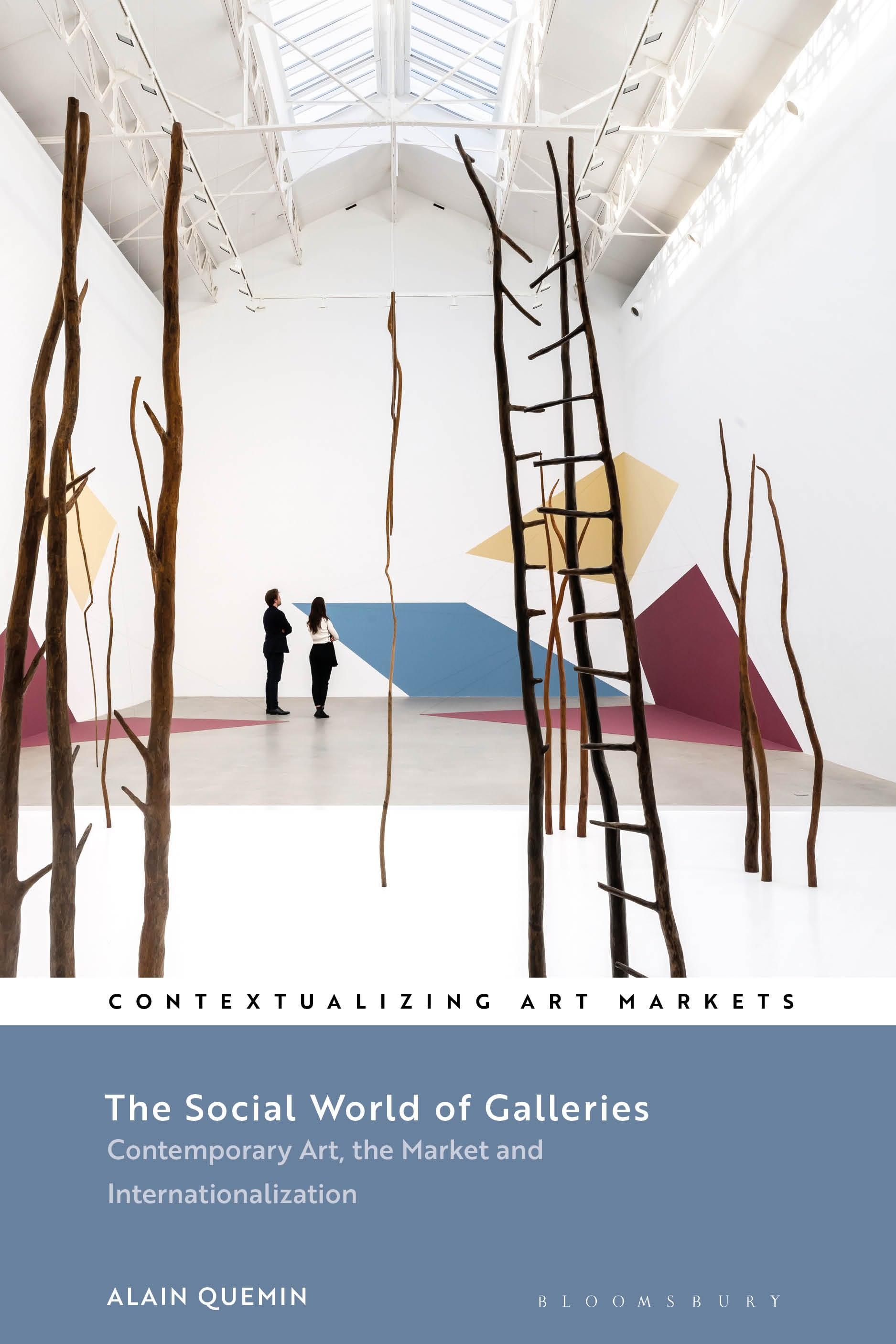
This book presents the first detailed study of the place of contemporary art galleries and gallerists, especially within the art markets of Europe and the United States. Based on the author's field research carried out for over a decade, and combining ethnographic material with quantitative data, the book reveals the major role galleries play in the creation of art value.
Despite being pillars of the art market, there has been very little in-depth research on galleries, especially when compared with the analysis of artists, critics, and dealers. Written by a sociologist who has spent a decade as an art critic, the book builds on work conducted by art historian and sociologist Raymonde Moulin from the 1960s to the 1990s. Drawing on ethnographic observations and interviews with those working in the field today, it provides a thorough and up-to-date analysis of what contemporary art galleries really are: the spaces they occupy both physically and online; their position within gallery 'districts'; their relation to art fairs and biennials; and how friendship with clients is built and trends within the business, in turn illuminating the hierarchized structure of the sector. The book concludes by addressing a significant gap in data on the art market by providing a sociological ranking of international contemporary art galleries.
Offering a detailed analysis to a topic that has never been fully studied, The Social World of Galleries is essential reading for scholars and students of art sociology, art history and art business, as well as gallerists, collectors or art lovers, and artists themselves.
Despite being pillars of the art market, there has been very little in-depth research on galleries, especially when compared with the analysis of artists, critics, and dealers. Written by a sociologist who has spent a decade as an art critic, the book builds on work conducted by art historian and sociologist Raymonde Moulin from the 1960s to the 1990s. Drawing on ethnographic observations and interviews with those working in the field today, it provides a thorough and up-to-date analysis of what contemporary art galleries really are: the spaces they occupy both physically and online; their position within gallery 'districts'; their relation to art fairs and biennials; and how friendship with clients is built and trends within the business, in turn illuminating the hierarchized structure of the sector. The book concludes by addressing a significant gap in data on the art market by providing a sociological ranking of international contemporary art galleries.
Offering a detailed analysis to a topic that has never been fully studied, The Social World of Galleries is essential reading for scholars and students of art sociology, art history and art business, as well as gallerists, collectors or art lovers, and artists themselves.
Betal nemt med kort, Klarna, Apple Pay eller Google Pay. Ikke tilfreds? Du har altid 14 dages fortrydelsesret. Læs mere i vores vilkår. Har du spørgsmål, så send os en mail på hello@memmo.org.
Memmo gør det nemmere at studere – uanset hvor du er i verden. Hos os samler du dine kursusbøger og smarte studieværktøjer ét sted: resuméer, quizzer, podcasts og flashcards. Og så er der Ted, din studieven, der svarer på alt, du undrer dig over. Over 50 000 studerende studerer allerede her – bygget til at hjælpe dig med at lære hurtigere og stresse mindre.