
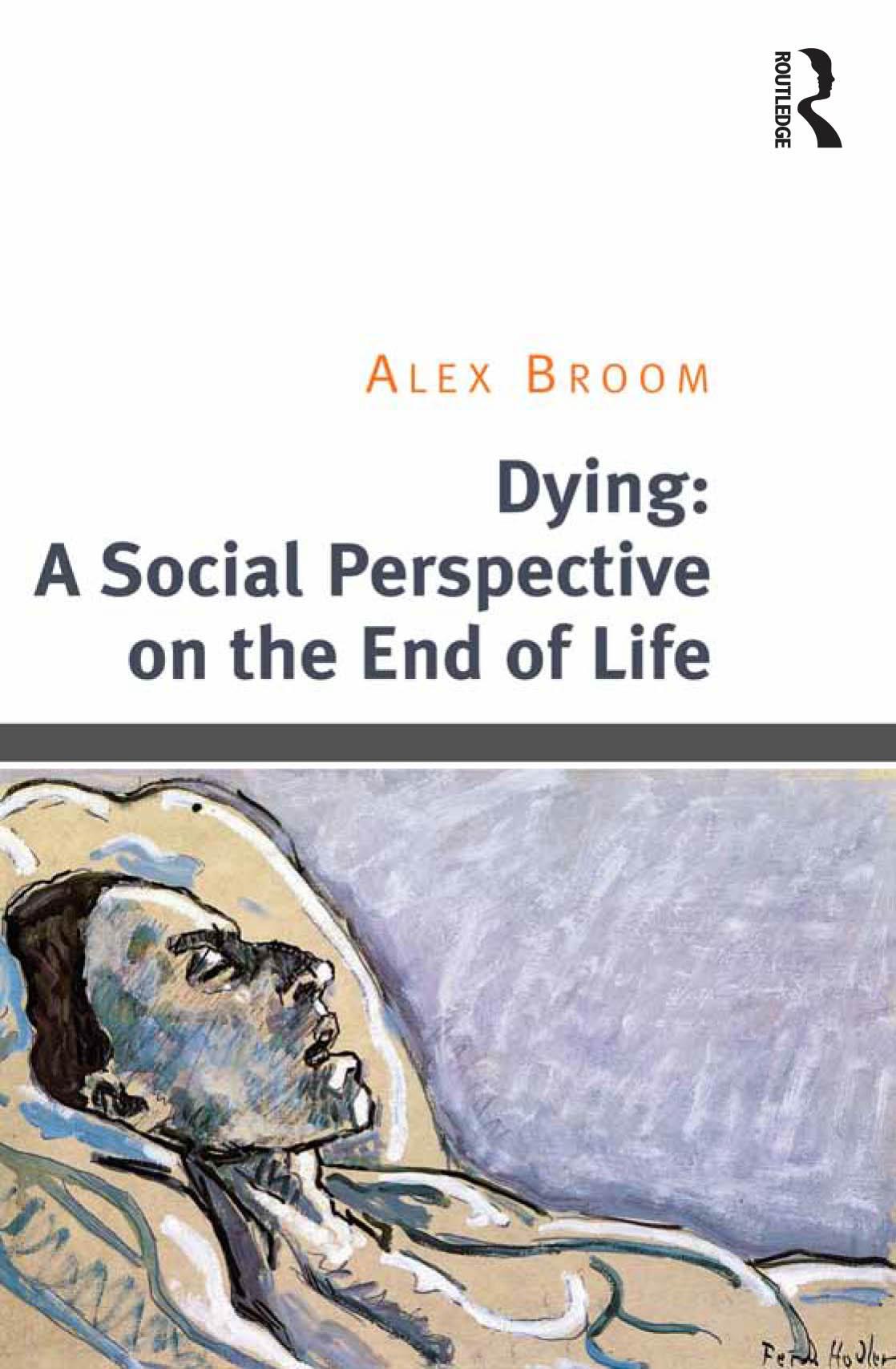
An inevitable and universal experience, dying is experienced by individuals in different ways, often related to the character of our relationships, family structures, gender identities, cultural backgrounds, and economic means. Drawing on extensive qualitative fieldwork with patients, carers and health professionals in Australia and the United Kingdom, Dying: A Social Perspective on the End of Life provides a critical examination of the different spheres of dying, in social and cultural context. Exploring complex issues such as the politics of assisted dying, negotiating medical futility, gender and dying, the desire for redemption, the moralities of 'the good fight' and the lived experience of bodily disintegration, this book links novel theoretical ideas within sociology to cutting-edge empirical data collected in palliative and end-of-life care contexts. A theoretically engaged understanding of the social mediation of the end of life, Dying: A Social Perspective on the End of Life also sheds light on the manner in which the end of life can be shaped by major economic, cultural and socio-cultural shifts including neo-liberalism, individualisation, medicalisation, professionalisation and detraditionalisation. As such, it will appeal to social science, health and medical researchers interested in the end of life, as well as those working in palliative and end-of-life care settings.
Betal nemt med kort, Klarna, Apple Pay eller Google Pay. Ikke tilfreds? Du har altid 14 dages fortrydelsesret. Læs mere i vores vilkår. Har du spørgsmål, så send os en mail på hello@memmo.org.
Memmo gør det nemmere at studere – uanset hvor du er i verden. Hos os samler du dine kursusbøger og smarte studieværktøjer ét sted: resuméer, quizzer, podcasts og flashcards. Og så er der Ted, din studieven, der svarer på alt, du undrer dig over. Over 50 000 studerende studerer allerede her – bygget til at hjælpe dig med at lære hurtigere og stresse mindre.
Du kan måske også lide
Køb bogen0