
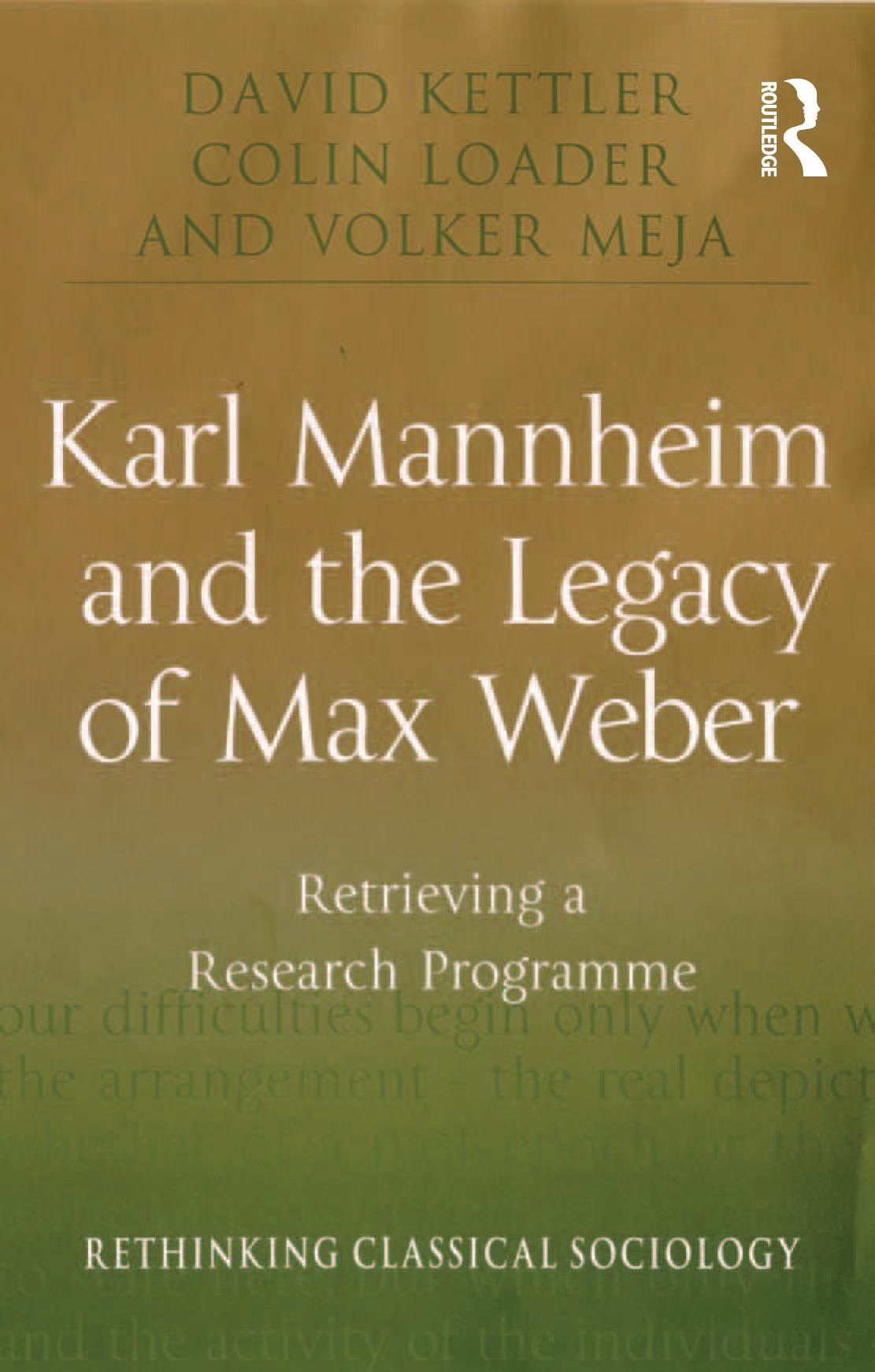
This book focuses on the important work of Karl Mannheim by demonstrating how his theoretical conception of a reflexive sociology took shape as a collaborative empirical research programme. The authors show how contemporary work along these lines can benefit from the insights of Mannheim and his students into both morphology and genealogy. It returns Mannheim's sociology of knowledge inquiries into the broader context of a wider project in historical and cultural sociology, whose promising development was disrupted and then partially obscured by the expulsion of Mannheim's intellectual generation. This inspired volume will appeal to sociologists concerned with the contemporary relevance of his work, and who are prepared for a fresh look at Weimar sociology and the legacy of Max Weber.
Betal nemt med kort, Klarna, Apple Pay eller Google Pay. Ikke tilfreds? Du har altid 14 dages fortrydelsesret. Læs mere i vores vilkår. Har du spørgsmål, så send os en mail på hello@memmo.org.
Memmo gør det nemmere at studere – uanset hvor du er i verden. Hos os samler du dine kursusbøger og smarte studieværktøjer ét sted: resuméer, quizzer, podcasts og flashcards. Og så er der Ted, din studieven, der svarer på alt, du undrer dig over. Over 50 000 studerende studerer allerede her – bygget til at hjælpe dig med at lære hurtigere og stresse mindre.
Du kan måske også lide
Køb bogen0