
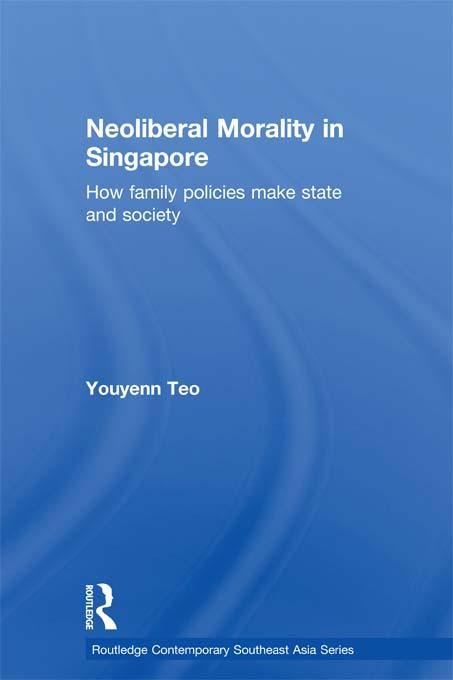
Using the case study of Singapore, this book examines the production of a set of institutionalized relationships and ethical meanings that link citizens to each other and the state. It looks at how questions of culture and morality are resolved, and how state-society relations are established that render paradoxes and inequalities acceptable, and form the basis of a national political culture.
The Singapore government has put in place a number of policies to encourage marriage and boost fertility that has attracted much attention, and are often taken as evidence that the Singapore state is a social engineer. The book argues that these policies have largely failed to reverse demographic trends, and reveals that the effects of the policies are far more interesting and significant. As Singaporeans negotiate various rules and regulations, they form a set of ties to each other and to the state. These institutionalized relationships and shared meanings, referred to as neoliberal morality, render particular ideals about family natural. Based on extensive field work, the book is a useful contribution to studies on Asian Culture and Society, Globalisation, as well as Development Studies.
Betal nemt med kort, Klarna, Apple Pay eller Google Pay. Ikke tilfreds? Du har altid 14 dages fortrydelsesret. Læs mere i vores vilkår. Har du spørgsmål, så send os en mail på hello@memmo.org.
Memmo gør det nemmere at studere – uanset hvor du er i verden. Hos os samler du dine kursusbøger og smarte studieværktøjer ét sted: resuméer, quizzer, podcasts og flashcards. Og så er der Ted, din studieven, der svarer på alt, du undrer dig over. Over 50 000 studerende studerer allerede her – bygget til at hjælpe dig med at lære hurtigere og stresse mindre.