
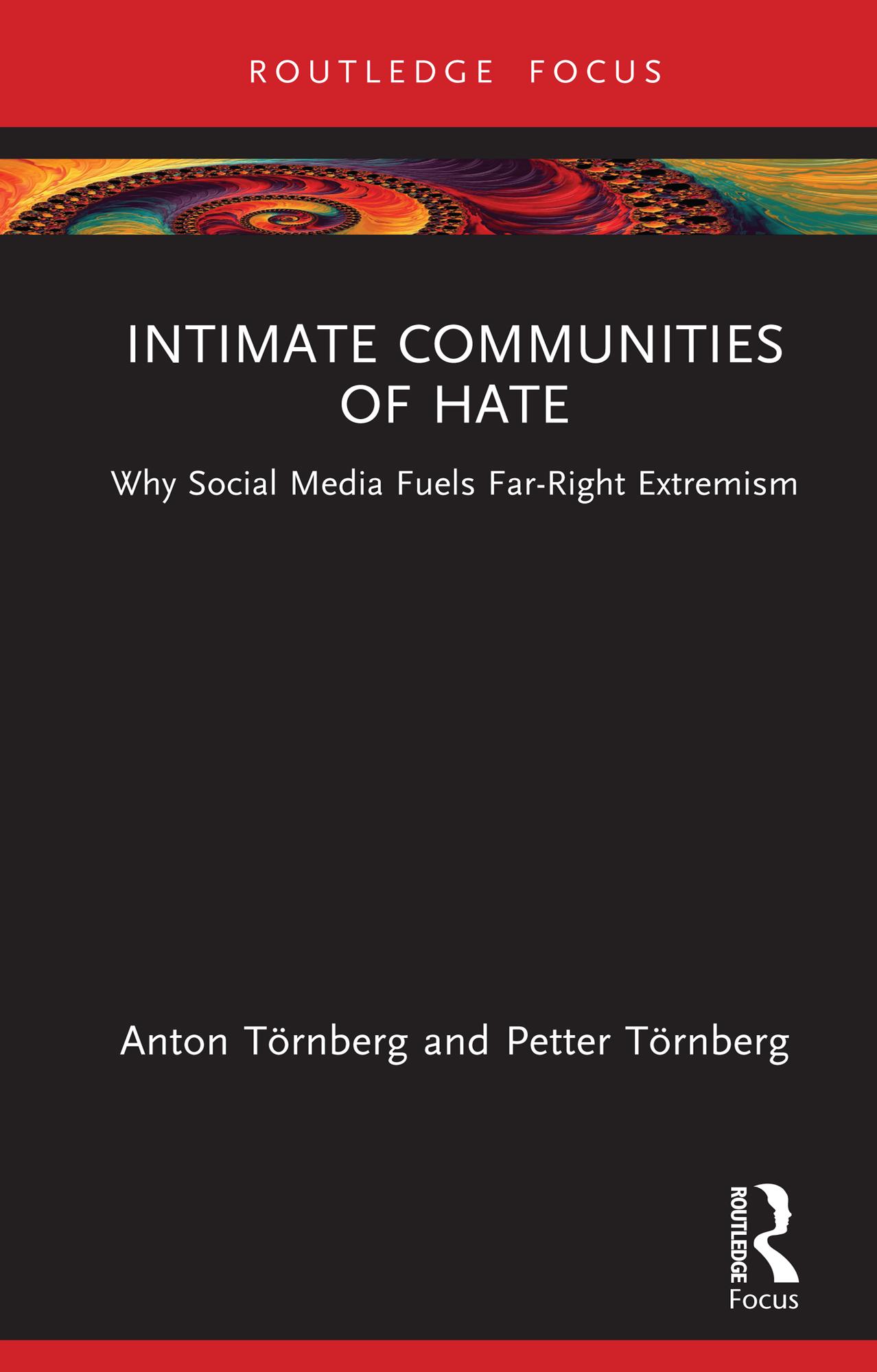
Social media has fundamentally transformed political life, driving a surge in far-right extremism. In recent years, radical anti-democratic ideologies have entered into the political mainstream, fueled by energy from extreme online environments. But why do far-right extremist movements seem to thrive so well on social media platforms? What takes place within the fringe online spaces that seem to function as incubators for violent extremists? To answer these questions, this book goes inside the “murder capital of the racist Internet”, examining 20 years of conversations on Stormfront.org. Using a combination of computational text analysis and close reading, we seek a deeper understanding of the emotional and social effects of being part of an extremist community. We lay the foundation of a new way of understanding online extremism, building on the tradition of Émile Durkheim and Randall Collins. We find that online radicalization is not merely an effect of repeated one-sided arguments, as suggested by metaphors such as “echo chambers”. Instead, social media politics can be better understood through Durkheim’s concept of rituals: moments of shared attention and emotion that create emotional energy and a sense of intersubjectivity, weaving from participants a political tribe – united, energized, and poised to act.
Betal nemt med kort, Klarna, Apple Pay eller Google Pay. Ikke tilfreds? Du har altid 14 dages fortrydelsesret. Læs mere i vores vilkår. Har du spørgsmål, så send os en mail på hello@memmo.org.
Memmo gør det nemmere at studere – uanset hvor du er i verden. Hos os samler du dine kursusbøger og smarte studieværktøjer ét sted: resuméer, quizzer, podcasts og flashcards. Og så er der Ted, din studieven, der svarer på alt, du undrer dig over. Over 50 000 studerende studerer allerede her – bygget til at hjælpe dig med at lære hurtigere og stresse mindre.