
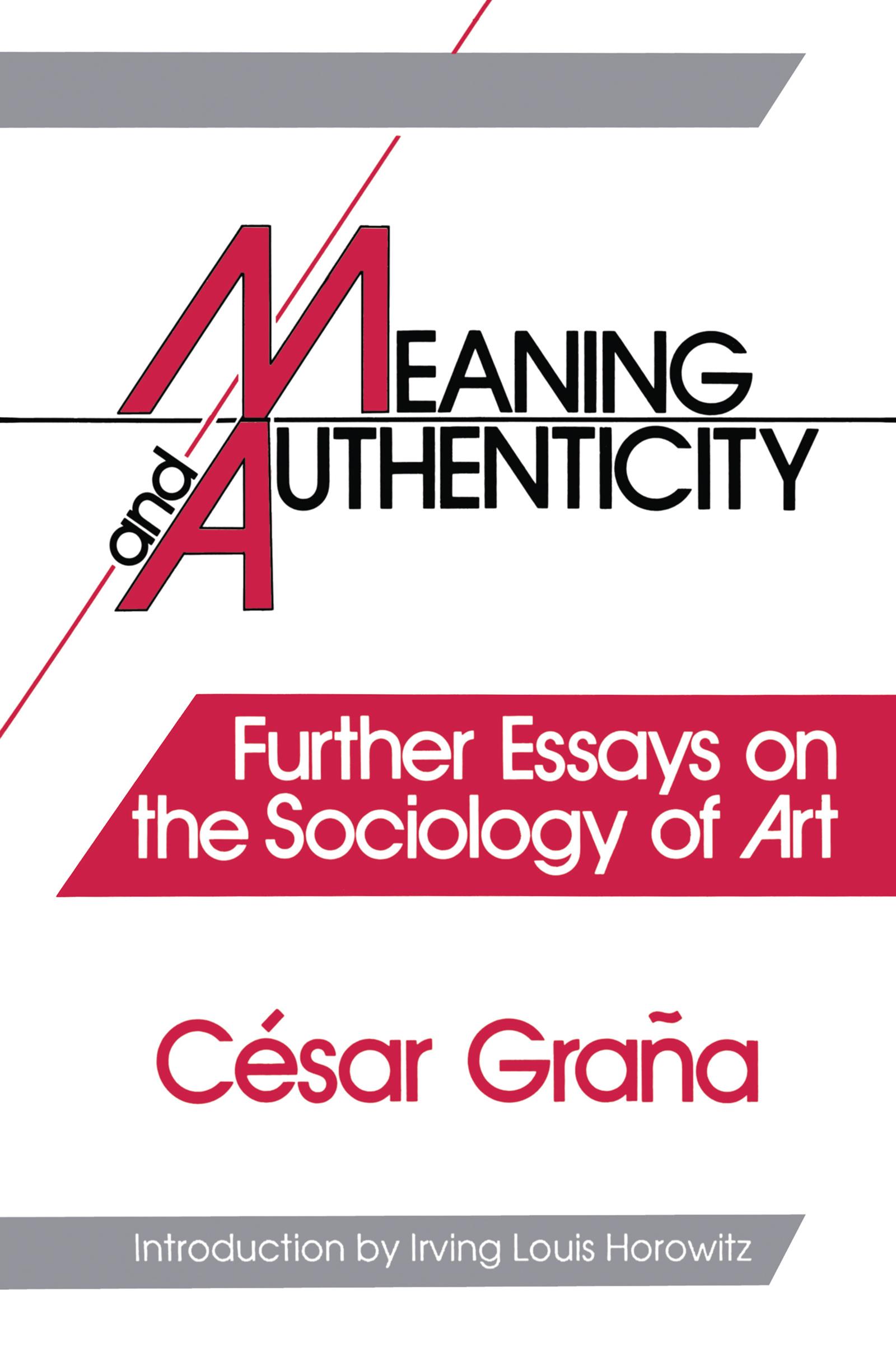
This outstanding collection of hitherto unpublished work, written over the last fifteen years of the author's life, reveals the development and maturation of his ideas about sociology and art, and specifically about the relationship between them. Grafia sees in the artistic traditions of Western society the sociological sources of our sense of cultural form, as well as cultural and intellectual meaning. He discusses theories of art and theories of artists as they have changed over time, although the book is neither a history of art nor a criticism of specific artistic works. Rather, it is a defense of the sociology of art.Grafia believes that the difficult and ambitious questions in the sociology of art are not merely questions of the proper role or status of the artist, or the recognition of art as an ornament, perhaps the supreme ornament, of our culture. He believes that what the sociologist must come to terms with is the view of art as the representation, indeed the revelation of what is most telling and pervasive in culture itself. This perspective assumes that the most serious claims made for art are in fact inseparable from the unique claims that are made about art. Art can make visible what is implicit in our lives. Art can put before us a statement of what we are but do not always recognize in oursleves. Art is the mask and mimicry through which society gestures to us its ultimate and most poignant meanings. Grafia contends that this vision of art derives from Hegelian aesthetics, and he believes that this grand view-whether one takes an idealist, a literary, or a Marxist-materialist position-also implies a dramatically changed conception of society itself.The essays cover a variety of subjects, from Marx, museums, and modern literature, to Durkheim, Daniel Bell, and bullfighting-the last being the apotheosis of cultural expression rendered into artistic form. Throughout, Grafia considers questions of the social origins of our artistic and intellectual traditions, the influence of these traditions on our ways of thinking about society, and their pervasiveness as standards for social meaning.
Betal nemt med kort, Klarna, Apple Pay eller Google Pay. Ikke tilfreds? Du har altid 14 dages fortrydelsesret. Læs mere i vores vilkår. Har du spørgsmål, så send os en mail på hello@memmo.org.
Memmo gør det nemmere at studere – uanset hvor du er i verden. Hos os samler du dine kursusbøger og smarte studieværktøjer ét sted: resuméer, quizzer, podcasts og flashcards. Og så er der Ted, din studieven, der svarer på alt, du undrer dig over. Over 50 000 studerende studerer allerede her – bygget til at hjælpe dig med at lære hurtigere og stresse mindre.
Du kan måske også lide
Køb bogen0