
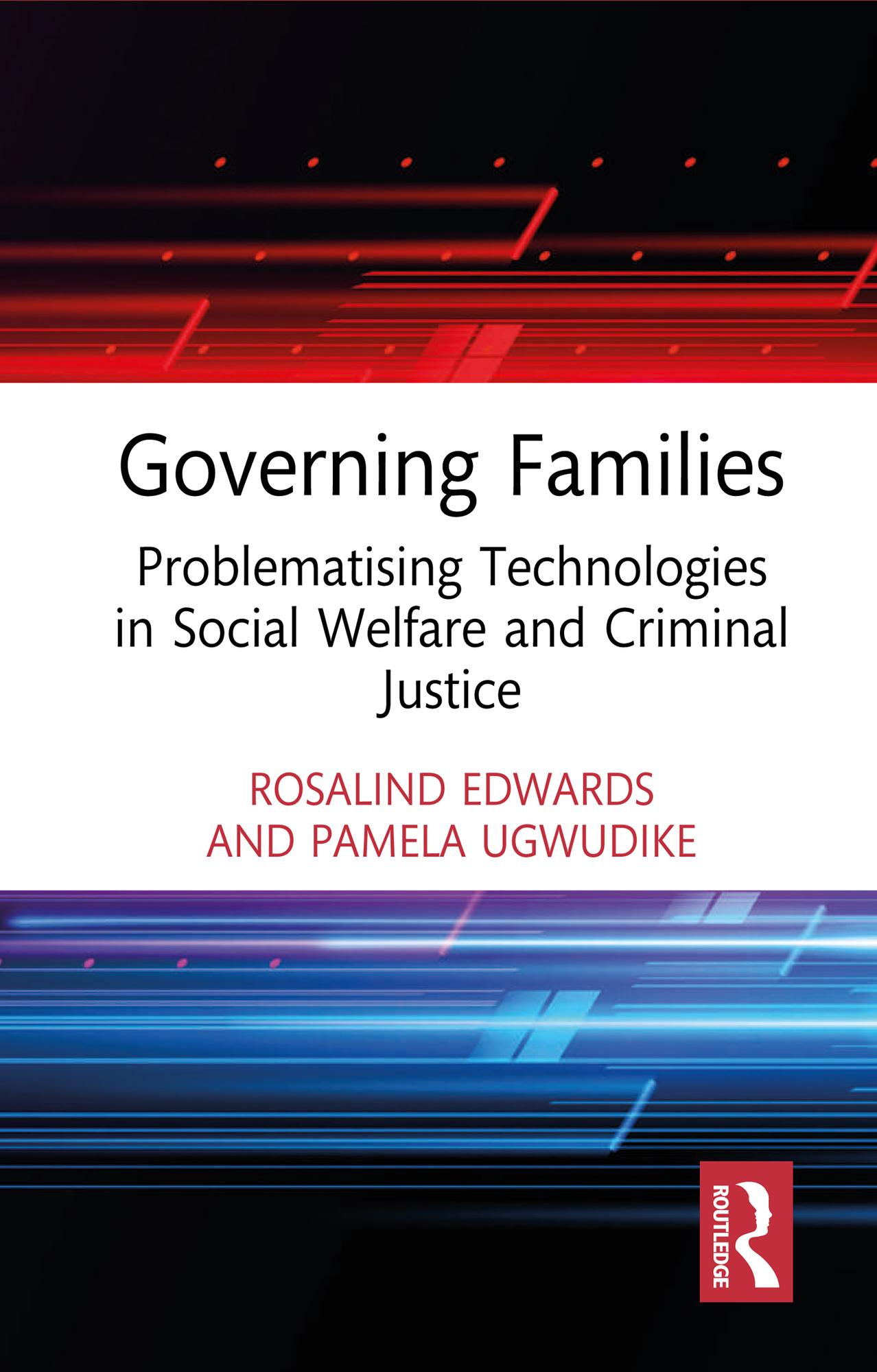
This book provides a focused discussion of how families are governed through technologies. It shows how states attempt to influence, shape and govern families as both the source of and solution to a range of social problems including crime.
The book critically reviews family governance in contemporary neo-liberal society, notably through technologies of self-responsibilisation, biologisation, and artificial intelligence. The book draws attention to the poor working class and racialised families that often are marked out and evaluated as culpable, dysfunctional, and a threat to economic and social order, obscuring the structural inequalities that underpin family lives and discriminations that are built into the tools that identify and govern families.
Filling a gap where disciplinary perspectives cross-cut, this book brings together sociological and criminological perspectives to provide a unique cross-disciplinary approach to the topic. It will be of interest to researchers, scholars and lecturers studying sociology and criminology, as well as policy-makers and professionals working in the fields of early years and family intervention programmes, including in social work, health, education, and the criminologically-relevant professions such as police and probation.
Betal nemt med kort, Klarna, Apple Pay eller Google Pay. Ikke tilfreds? Du har altid 14 dages fortrydelsesret. Læs mere i vores vilkår. Har du spørgsmål, så send os en mail på hello@memmo.org.
Memmo gør det nemmere at studere – uanset hvor du er i verden. Hos os samler du dine kursusbøger og smarte studieværktøjer ét sted: resuméer, quizzer, podcasts og flashcards. Og så er der Ted, din studieven, der svarer på alt, du undrer dig over. Over 50 000 studerende studerer allerede her – bygget til at hjælpe dig med at lære hurtigere og stresse mindre.