
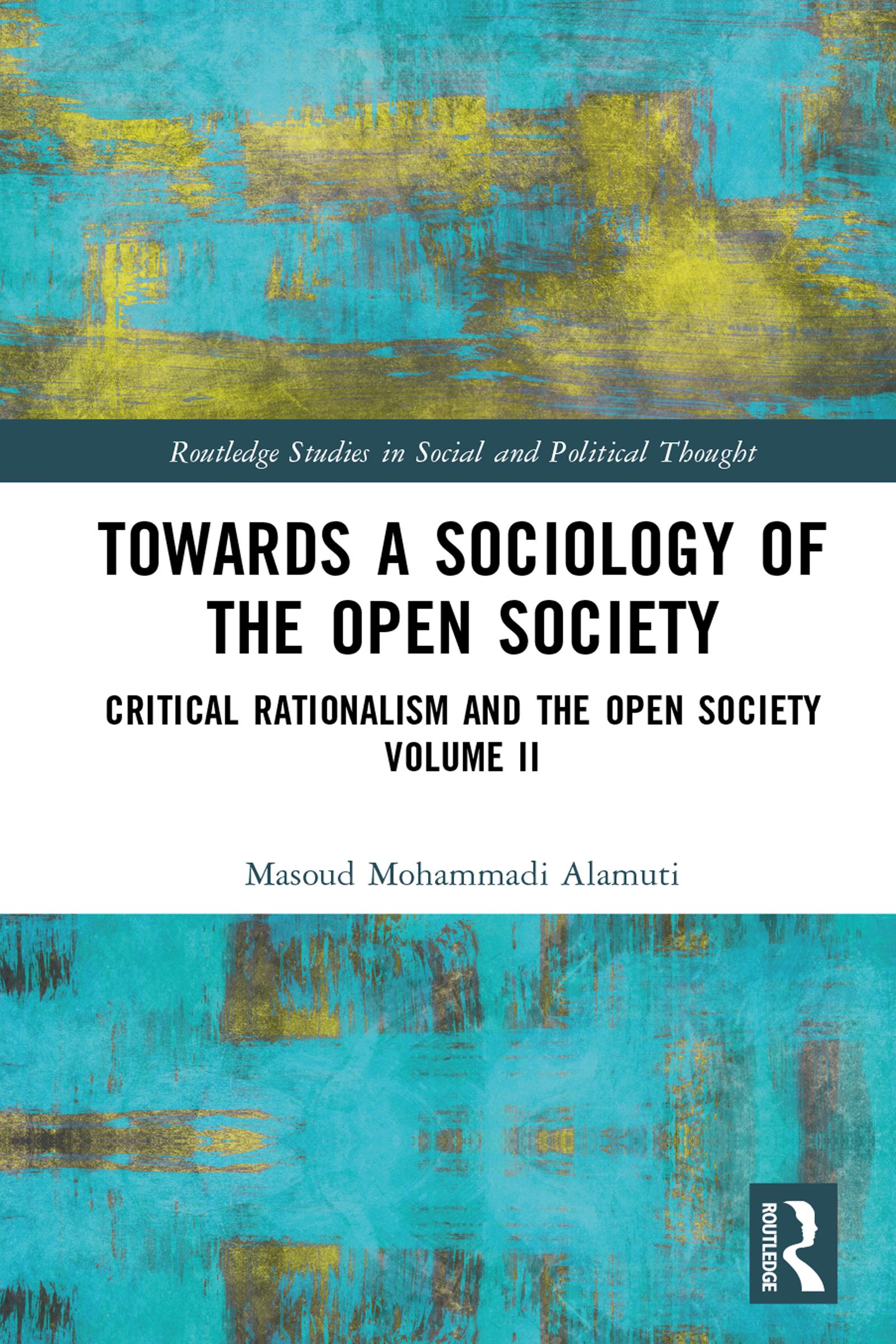
This book applies the general theory of critical rationalism in order to develop a new sociology of the open society, in general, and a new analysis of the transition from a closed society to an open society in particular. It presents a criticism of Karl Popper’s analysis of human action for opening up a closed society, followed by a critical study of the mainstream sociology to show how justificational models of knowledge and rational action have prevented sociology from addressing the contribution of human action to social change.
This book provides new sociologies of closed and open societies. It argues that in the closed society "a low level" of critical rationality is activated by people to define the meaning of the good life and social institutions of law, polity and economy. Masoud Mohammadi Alamuti proposes five mechanisms of opening up closed society through the model of social change, inspired by the philosophy of critical rationalism.
This volume is "the first systematic attempt" to apply the philosophy of critical rationalism in order to present a "normative sociology of the open society". It will be of interest to postgraduate researchers and professional readers in philosophy, sociology, moral science, law, politics and economics. In addition, this book would benefit research centres, policymakers and civil society activists interested in the ideas of critical rationalism and the open society.
Betal nemt med kort, Klarna, Apple Pay eller Google Pay. Ikke tilfreds? Du har altid 14 dages fortrydelsesret. Læs mere i vores vilkår. Har du spørgsmål, så send os en mail på hello@memmo.org.
Memmo gør det nemmere at studere – uanset hvor du er i verden. Hos os samler du dine kursusbøger og smarte studieværktøjer ét sted: resuméer, quizzer, podcasts og flashcards. Og så er der Ted, din studieven, der svarer på alt, du undrer dig over. Over 50 000 studerende studerer allerede her – bygget til at hjælpe dig med at lære hurtigere og stresse mindre.