
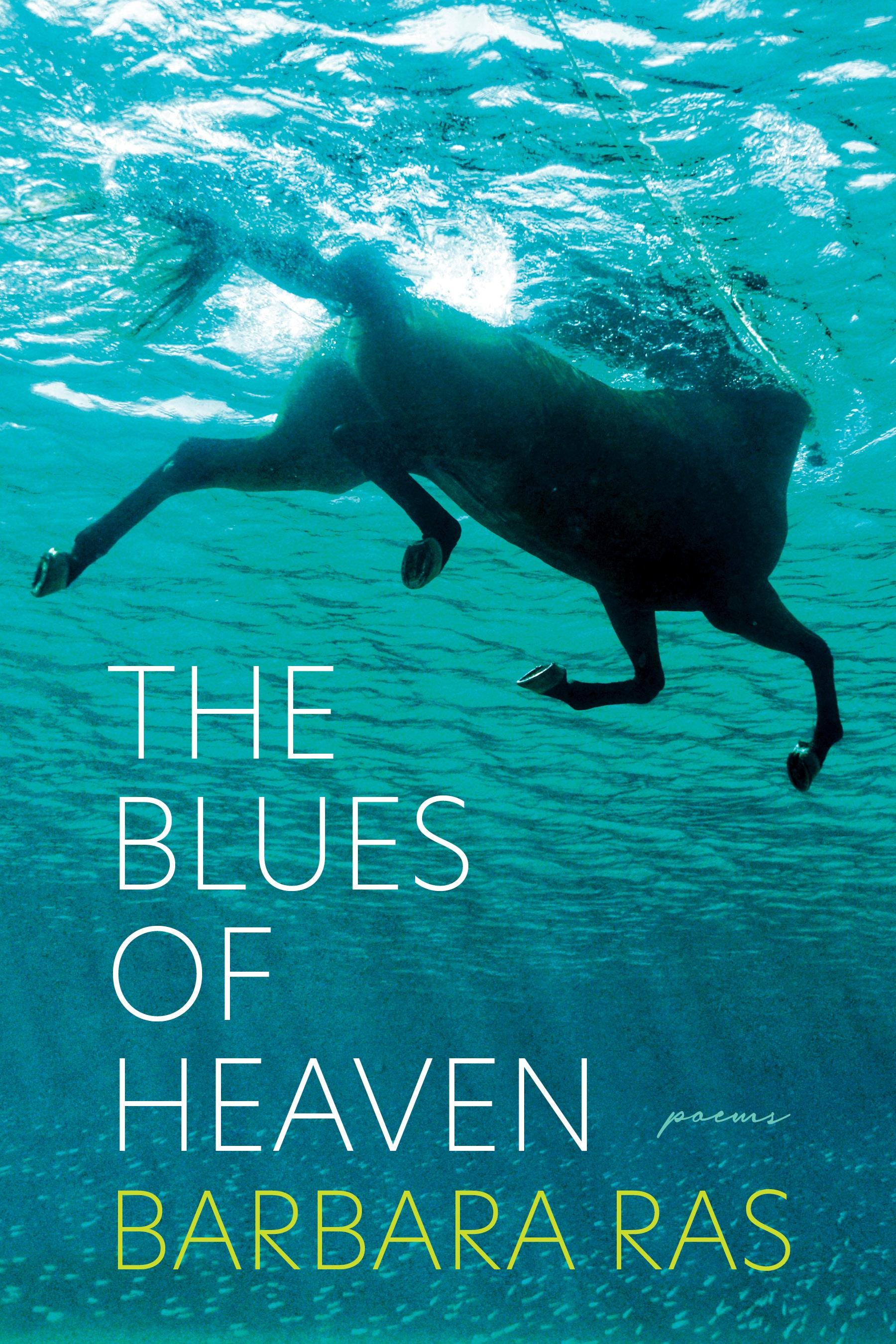
In The Blues of Heaven, Barbara Ras delivers her characteristic subjects with new daring that both rattles and beguiles. Here are poems of grief over her brother’s death; doors to an idiosyncratic working-class childhood among Polish immigrants; laments for nature and politics out of kilter. Ras portrays the climate crisis, guns out of control, the reckless injustice and ignorance of the United States government. At the same time, her poems nimbly focus on particulars—these facts, these consequences—bringing the wreckage of unfathomable harm home with immediacy and integrity. Though her subjects may be dire, Ras also weaves her wise humor throughout, moving deftly from sardonic to whimsical to create an expansive, ardent, and memorable book.
Survival Strategies
To dig for quahogs, to feel their edges like smiles
and pull against their suck to toss them in a bucket.
To feel the wind as a friend, to feel its current as luck.
To ignore Capricorn and Cancer presuming to slice the globe.
To know the lie in “names can never hurt you.”
To be a gull breezing the blue, eating nothing but clouds.
To measure your ties to the past by the strength of cobwebs.
To haunt the widow’s walk, its twelve narrow windows
each the size of a child’s coffin.
To watch the harbor where the Acushnet runs into Buzzards Bay
before it was named a Superfund site full of PCBs.
To wonder if that water you swam summer after aimless summer
could get you the way something got your brother,
too fast, too soon.
To bury or burn the whole family you were born to
and talk to them only through the smoke of letters
you torch at their graves.
To see a snake with a ladybug on its back
and still refuse to pray.
Survival Strategies
To dig for quahogs, to feel their edges like smiles
and pull against their suck to toss them in a bucket.
To feel the wind as a friend, to feel its current as luck.
To ignore Capricorn and Cancer presuming to slice the globe.
To know the lie in “names can never hurt you.”
To be a gull breezing the blue, eating nothing but clouds.
To measure your ties to the past by the strength of cobwebs.
To haunt the widow’s walk, its twelve narrow windows
each the size of a child’s coffin.
To watch the harbor where the Acushnet runs into Buzzards Bay
before it was named a Superfund site full of PCBs.
To wonder if that water you swam summer after aimless summer
could get you the way something got your brother,
too fast, too soon.
To bury or burn the whole family you were born to
and talk to them only through the smoke of letters
you torch at their graves.
To see a snake with a ladybug on its back
and still refuse to pray.
Betal nemt med kort, Klarna, Apple Pay eller Google Pay. Ikke tilfreds? Du har altid 14 dages fortrydelsesret. Læs mere i vores vilkår. Har du spørgsmål, så send os en mail på hello@memmo.org.
Memmo gør det nemmere at studere – uanset hvor du er i verden. Hos os samler du dine kursusbøger og smarte studieværktøjer ét sted: resuméer, quizzer, podcasts og flashcards. Og så er der Ted, din studieven, der svarer på alt, du undrer dig over. Over 50 000 studerende studerer allerede her – bygget til at hjælpe dig med at lære hurtigere og stresse mindre.
Du kan måske også lide
Køb bogen0