
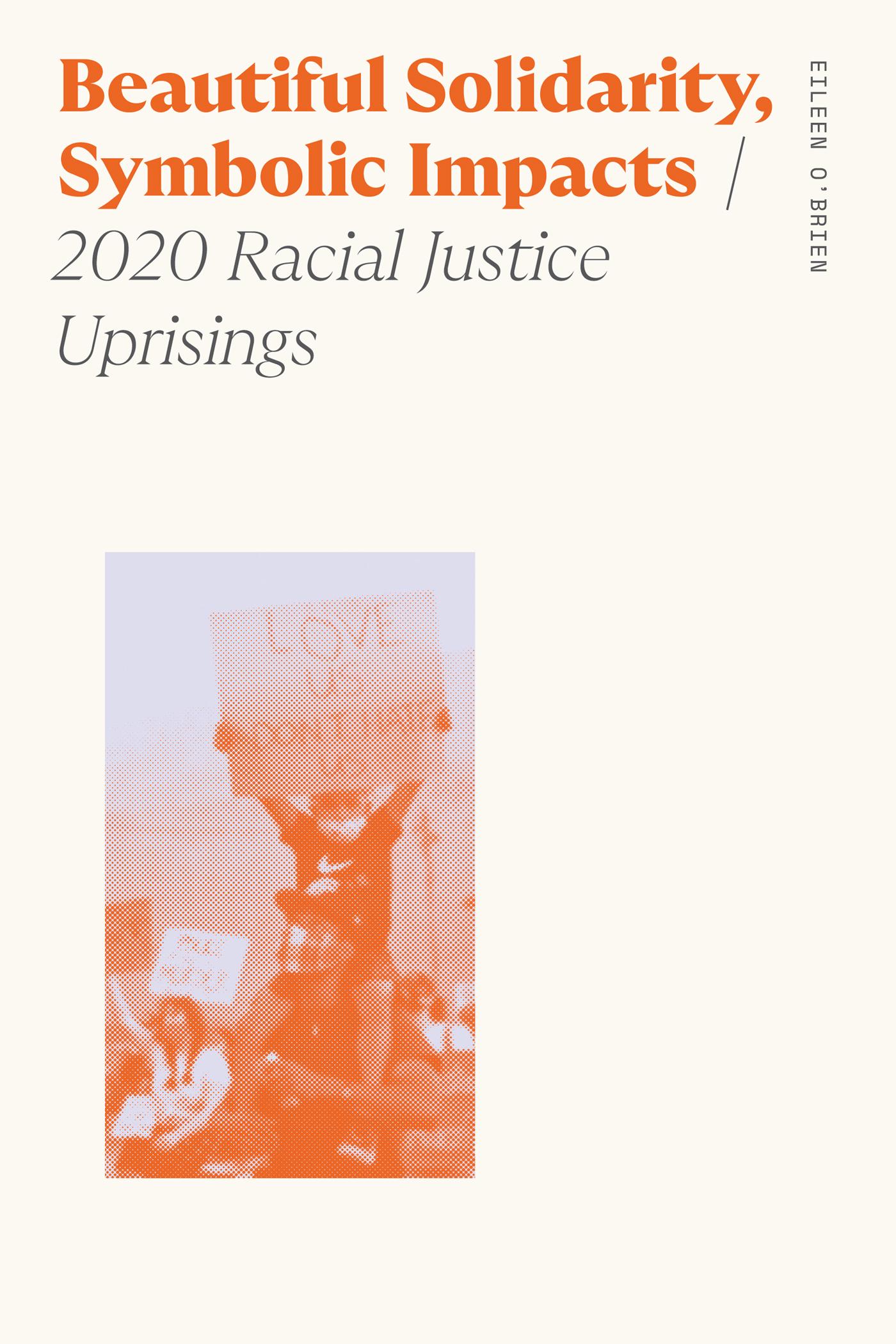
For activists working for racial justice for decades, the year 2020 stood out from the rest. More people seemed to care about racism than ever before. Due to this unprecedented surge, was anything more accomplished than in prior efforts?
Through interviews with uprising participants (a mix of first-time protesters and seasoned veterans; from both large cities and smaller towns), participant observation from three U.S. cities, and secondary data sources on U.S. and global 2020 protest actions, Eileen O’Brien documents what exactly was different about 2020 from a boots-on-the-ground vantage point.
Participants in the uprising drew a sense of meaning being part of something larger than themselves and were able to grieve racist violence collectively during a lockdown. They also created beautiful protest art out of plywood made necessary by white supremacist counter-protesters’ destruction of local businesses. They toppled Confederate monuments and felt that sentences like Derek Chauvin’s murder conviction or the three killers of Ahmaud Arbery on federal hate crime charges were rare victories only made possible through their activism. Later, many went back to business as usual after 2020, broader societal antiracist changes proved elusive, and backlash was swift. Yet, cross-racial interest convergence occurred for a brief antiracist moment, and “the struggle itself was redemptive.”
Betal nemt med kort, Klarna, Apple Pay eller Google Pay. Ikke tilfreds? Du har altid 14 dages fortrydelsesret. Læs mere i vores vilkår. Har du spørgsmål, så send os en mail på hello@memmo.org.
Memmo gør det nemmere at studere – uanset hvor du er i verden. Hos os samler du dine kursusbøger og smarte studieværktøjer ét sted: resuméer, quizzer, podcasts og flashcards. Og så er der Ted, din studieven, der svarer på alt, du undrer dig over. Over 50 000 studerende studerer allerede her – bygget til at hjælpe dig med at lære hurtigere og stresse mindre.