
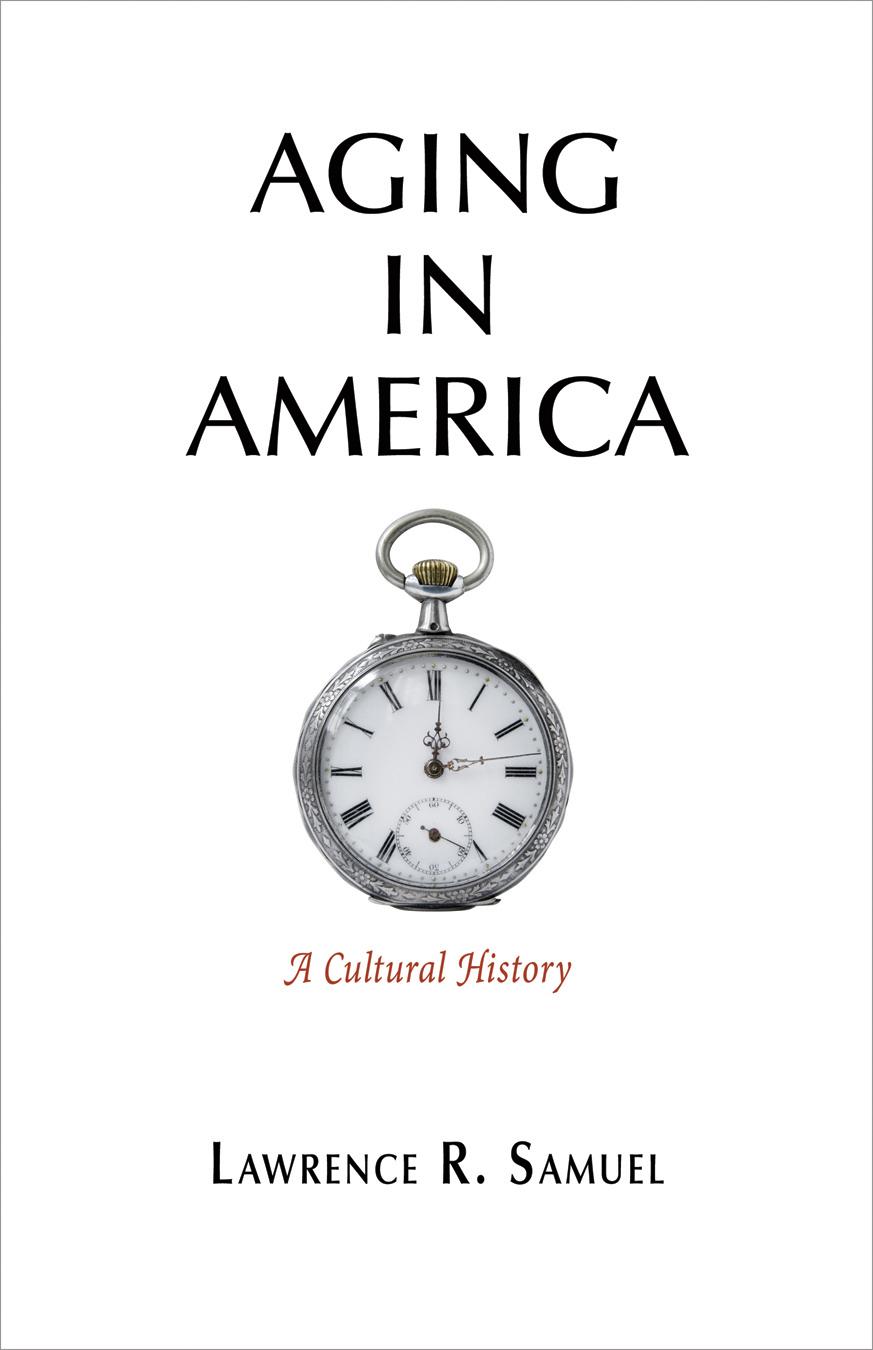
Aging is a preoccupation shared by beauty bloggers, serious journalists, scientists, doctors, celebrities—arguably all of adult America, given the pervasiveness of the crusade against it in popular culture and the media. We take our youth-oriented culture as a given but, as Lawrence R. Samuel argues, this was not always the case. Old age was revered in early America, in part because it was so rare. Indeed, it was not until the 1960s, according to Samuel, that the story of aging in America became the one we are most familiar with today: aging is a disease that science will one day cure, and in the meantime, signs of aging should be prevented, masked, and treated as a source of shame.
By tracing the story of aging in the United States over the course of the last half century, Samuel vividly demonstrates the ways in which getting older tangibly contradicts the prevailing social values and attitudes of our youth-obsessed culture. As a result, tens of millions of adults approaching their sixties and seventies in this decade do not know how to age, as they were never prepared to do so.
Despite recent trends that suggest a more positive outlook, getting old is still viewed in terms of physical and cognitive decline, resulting in discrimination in the workplace and marginalization in social life. Samuels concludes Aging in America by exhorting his fellow baby boomers to use their economic clout and sheer numbers to change the narrative of aging in America.
Betal nemt med kort, Klarna, Apple Pay eller Google Pay. Ikke tilfreds? Du har altid 14 dages fortrydelsesret. Læs mere i vores vilkår. Har du spørgsmål, så send os en mail på hello@memmo.org.
Memmo gør det nemmere at studere – uanset hvor du er i verden. Hos os samler du dine kursusbøger og smarte studieværktøjer ét sted: resuméer, quizzer, podcasts og flashcards. Og så er der Ted, din studieven, der svarer på alt, du undrer dig over. Over 50 000 studerende studerer allerede her – bygget til at hjælpe dig med at lære hurtigere og stresse mindre.