
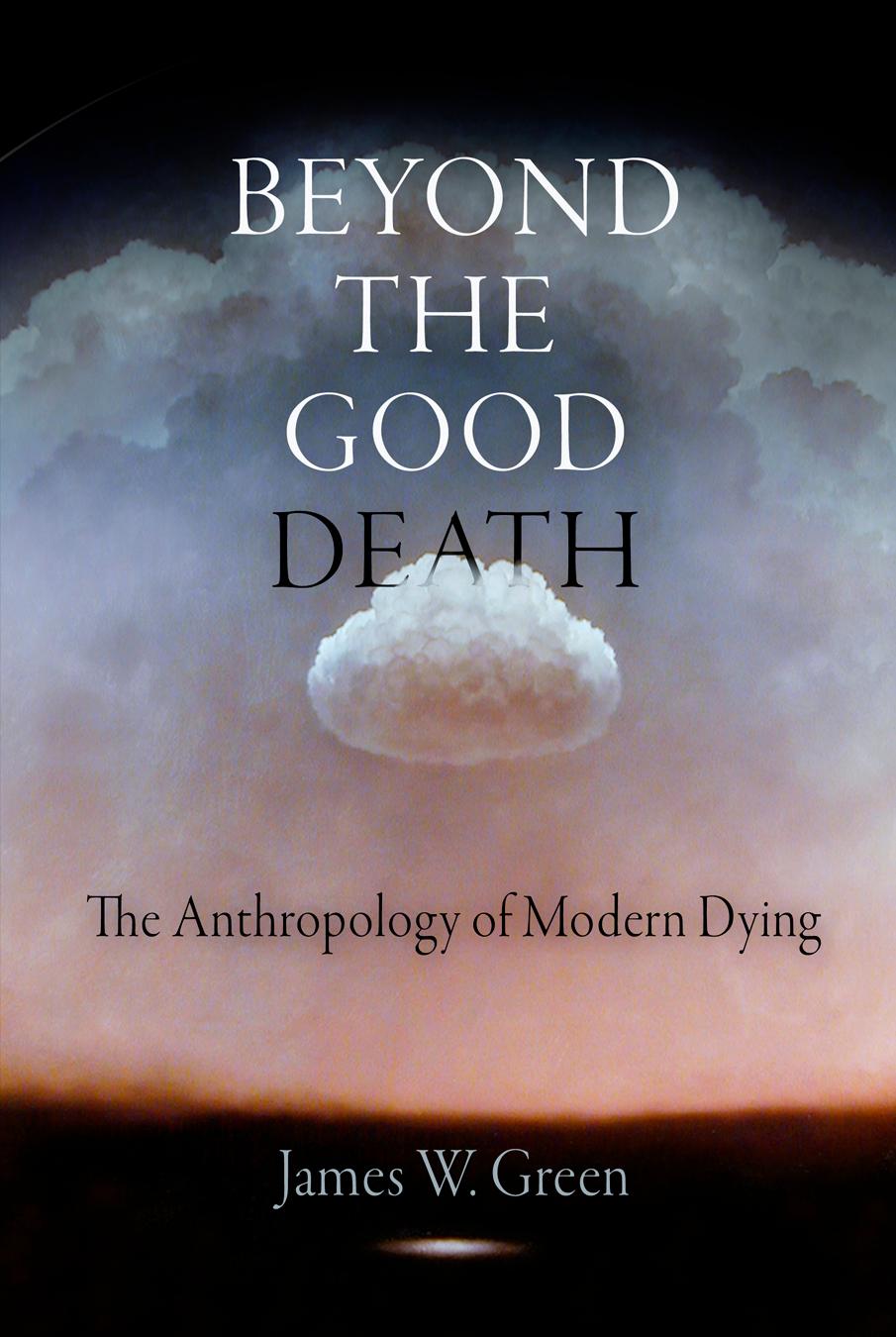
In November 1998, millions of television viewers watched as Thomas Youk died. Suffering from the late stages of Lou Gehrig's disease, Youk had called upon infamous Michigan pathologist Dr. Jack Kevorkian to help end his life on his own terms. After delivering the videotape to 60 Minutes, Kevorkian was arrested and convicted of manslaughter, despite the fact that Youk's family firmly believed that the ending of his life qualified as a good death.
Death is political, as the controversies surrounding Jack Kevorkian and, more recently, Terri Schiavo have shown. While death is a natural event, modern end-of-life experiences are shaped by new medical, demographic, and cultural trends. People who are dying are kept alive, sometimes against their will or the will of their family, with powerful medications, machines, and "heroic measures." Current research on end-of-life issues is substantial, involving many fields. Beyond the Good Death takes an anthropological approach, examining the changes in our concept of death over the last several decades. As author James W. Green determines, the attitudes of today's baby boomers differ greatly from those of their parents and grandparents, who spoke politely and in hushed voices of those who had "passed away." Dr. Elisabeth Kübler-Ross, in the 1960s, gave the public a new language for speaking openly about death with her "five steps of dying." If we talked more about death, she emphasized, it would become less fearful for everyone.
The term "good death" reentered the public consciousness as narratives of AIDS, cancer, and other chronic diseases were featured on talk shows and in popular books such as the best-selling Tuesdays with Morrie. Green looks at a number of contemporary secular American death practices that are still informed by an ancient religious ethos. Most important, Beyond the Good Death provides an interpretation of the ways in which Americans react when death is at hand for themselves or for those they care about.
Betal nemt med kort, Klarna, Apple Pay eller Google Pay. Ikke tilfreds? Du har altid 14 dages fortrydelsesret. Læs mere i vores vilkår. Har du spørgsmål, så send os en mail på hello@memmo.org.
Memmo gør det nemmere at studere – uanset hvor du er i verden. Hos os samler du dine kursusbøger og smarte studieværktøjer ét sted: resuméer, quizzer, podcasts og flashcards. Og så er der Ted, din studieven, der svarer på alt, du undrer dig over. Over 50 000 studerende studerer allerede her – bygget til at hjælpe dig med at lære hurtigere og stresse mindre.