
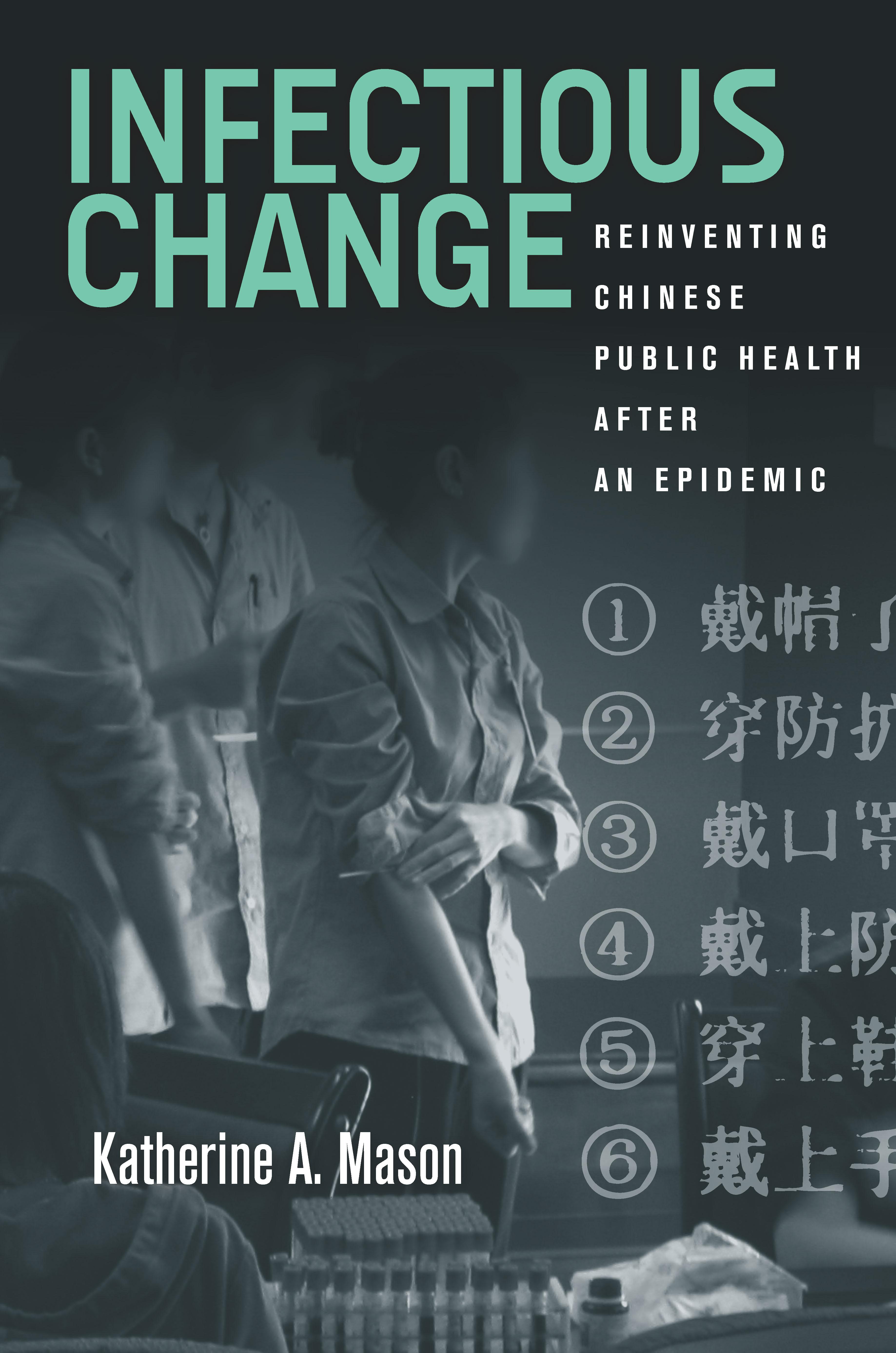
In February 2003, a Chinese physician crossed the border between mainland China and Hong Kong, spreading Severe Acute Respiratory Syndrome (SARS)—a novel flu-like virus—to over a dozen international hotel guests. SARS went on to kill about 800 people and sicken 8,000 worldwide. By the time it disappeared in July 2003 the Chinese public health system, once famous for its grassroots, low-technology approach, was transformed into a globally-oriented, research-based, scientific endeavor.
In Infectious Change, Katherine A. Mason investigates local Chinese public health institutions in Southeastern China, examining how the outbreak of SARS re-imagined public health as a professionalized, biomedicalized, and technological machine—one that frequently failed to serve the Chinese people. Mason grapples with how public health in China was reinvented into a prestigious profession in which global recognition took precedent over service to vulnerable local communities. This book lays bare the common elements of a global pandemic that too often get overlooked, all of which are being thrown into sharp relief during the present COVID-19 outbreak: blame of "exotic" customs from the country of origin and the poor bearing the most severe consequences. Mason's argument resonates profoundly with our current crisis, making the case that we can only consider ourselves truly prepared for the next crisis once public health policies, and social welfare more generally, are made more inclusive.
Betal nemt med kort, Klarna, Apple Pay eller Google Pay. Ikke tilfreds? Du har altid 14 dages fortrydelsesret. Læs mere i vores vilkår. Har du spørgsmål, så send os en mail på hello@memmo.org.
Memmo gør det nemmere at studere – uanset hvor du er i verden. Hos os samler du dine kursusbøger og smarte studieværktøjer ét sted: resuméer, quizzer, podcasts og flashcards. Og så er der Ted, din studieven, der svarer på alt, du undrer dig over. Over 50 000 studerende studerer allerede her – bygget til at hjælpe dig med at lære hurtigere og stresse mindre.