
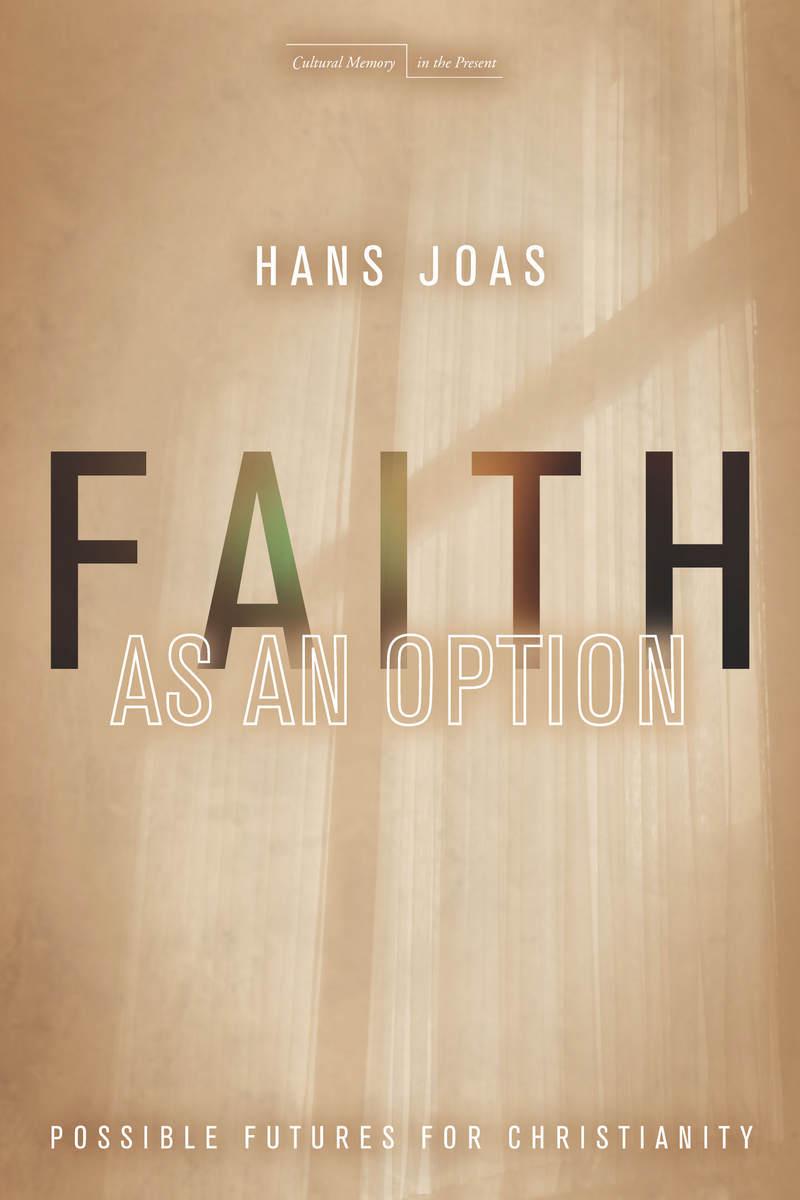
Many people these days regard religion as outdated and are unable to understand how believers can intellectually justify their faith. Nonbelievers have long assumed that progress in technology and the sciences renders religion irrelevant. Believers, in contrast, see religion as vital to society's spiritual and moral well-being. But does modernization lead to secularization? Does secularization lead to moral decay? Sociologist Hans Joas argues that these two supposed certainties have kept scholars from serious contemporary debate and that people must put these old arguments aside in order for debate to move forward. The emergence of a "secular option" does not mean that religion must decline, but that even believers must now define their faith as one option among many.
In this book, Joas spells out some of the consequences of the abandonment of conventional assumptions for contemporary religion and develops an alternative to the cliché of an inevitable conflict between Christianity and modernity. Arguing that secularization comes in waves and stressing the increasing contingency of our worlds, he calls upon faith to articulate contemporary experiences. Churches and religious communities must take into account religious diversity, but the modern world is not a threat to Christianity or to faith in general. On the contrary, Joas says, modernity and faith can be mutually enriching.
Betal nemt med kort, Klarna, Apple Pay eller Google Pay. Ikke tilfreds? Du har altid 14 dages fortrydelsesret. Læs mere i vores vilkår. Har du spørgsmål, så send os en mail på hello@memmo.org.
Memmo gør det nemmere at studere – uanset hvor du er i verden. Hos os samler du dine kursusbøger og smarte studieværktøjer ét sted: resuméer, quizzer, podcasts og flashcards. Og så er der Ted, din studieven, der svarer på alt, du undrer dig over. Over 50 000 studerende studerer allerede her – bygget til at hjælpe dig med at lære hurtigere og stresse mindre.