
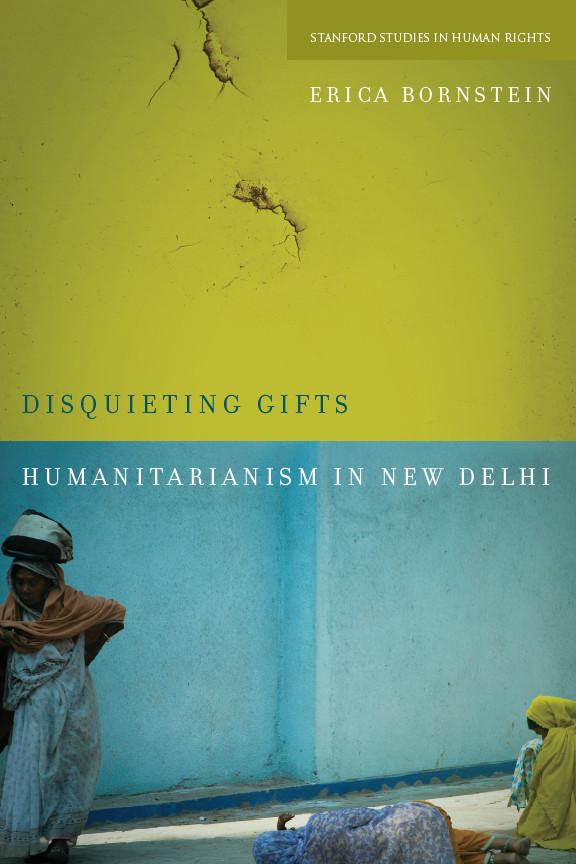
While most people would not consider sponsoring an orphan's education to be in the same category as international humanitarian aid, both acts are linked by the desire to give. Many studies focus on the outcomes of humanitarian work, but the impulses that inspire people to engage in the first place receive less attention. Disquieting Gifts takes a close look at people working on humanitarian projects in New Delhi to explore why they engage in philanthropic work, what humanitarianism looks like to them, and the ethical and political tangles they encounter.
Motivated by debates surrounding Marcel Mauss's The Gift, Bornstein investigates specific cases of people engaged in humanitarian work to reveal different perceptions of assistance to strangers versus assistance to kin, how the impulse to give to others in distress is tempered by its regulation, suspicions about recipient suitability, and why the figure of the orphan is so valuable in humanitarian discourse. The book also focuses on vital humanitarian efforts that often go undocumented and ignored and explores the role of empathy in humanitarian work.
Betal nemt med kort, Klarna, Apple Pay eller Google Pay. Ikke tilfreds? Du har altid 14 dages fortrydelsesret. Læs mere i vores vilkår. Har du spørgsmål, så send os en mail på hello@memmo.org.
Memmo gør det nemmere at studere – uanset hvor du er i verden. Hos os samler du dine kursusbøger og smarte studieværktøjer ét sted: resuméer, quizzer, podcasts og flashcards. Og så er der Ted, din studieven, der svarer på alt, du undrer dig over. Over 50 000 studerende studerer allerede her – bygget til at hjælpe dig med at lære hurtigere og stresse mindre.