
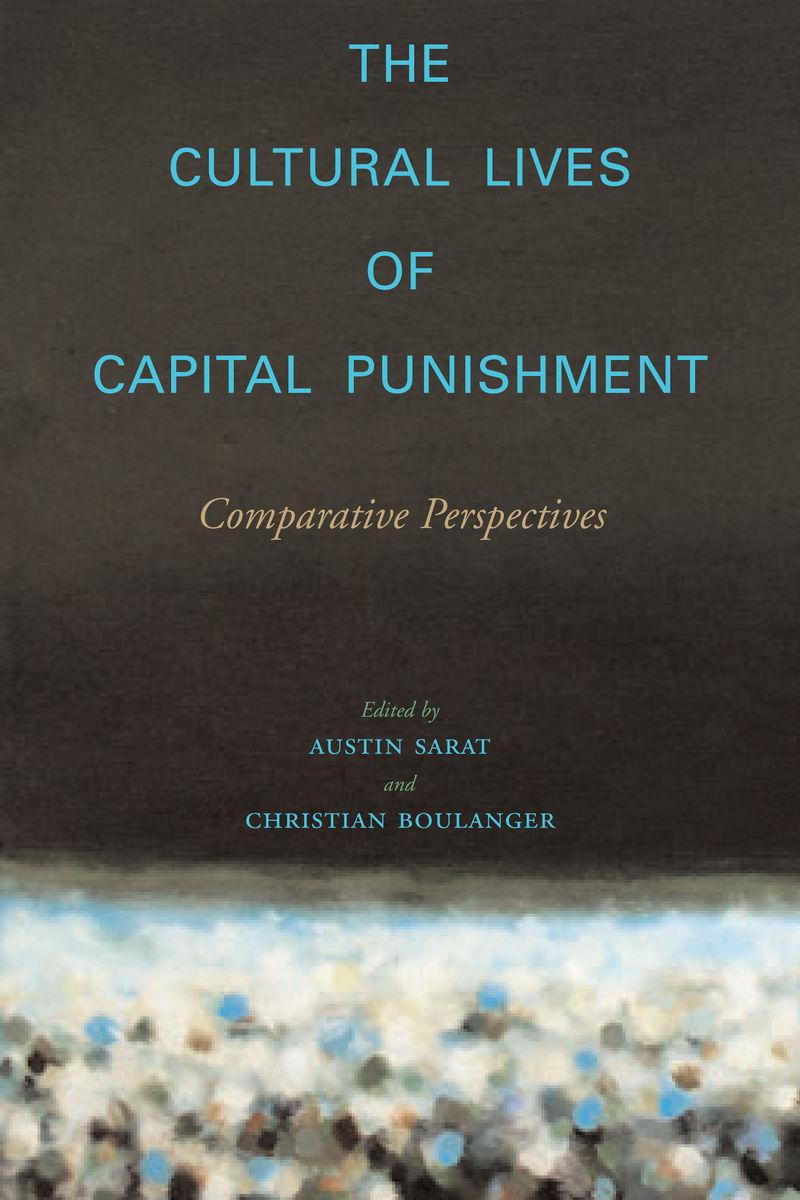
How does the way we think and feel about the world around us affect the existence and administration of the death penalty? What role does capital punishment play in defining our political and cultural identity?
After centuries during which capital punishment was a normal and self-evident part of criminal punishment, it has now taken on a life of its own in various arenas far beyond the limits of the penal sphere. In this volume, the authors argue that in order to understand the death penalty, we need to know more about the "cultural lives"—past and present—of the state’s ultimate sanction.
They undertake this “cultural voyage” comparatively—examining the dynamics of the death penalty in Mexico, the United States, Poland, Kyrgyzstan, India, Israel, Palestine, Japan, China, Singapore, and South Korea—arguing that we need to look beyond the United States to see how capital punishment “lives” or “dies” in the rest of the world, how images of state killing are produced and consumed elsewhere, and how they are reflected, back and forth, in the emerging international judicial and political discourse on the penalty of death and its abolition.
Contributors:
Sangmin Bae
Christian Boulanger
Julia Eckert
Agata Fijalkowski
Evi Girling
Virgil K.Y. Ho
David T. Johnson
Botagoz Kassymbekova
Shai Lavi
Jürgen Martschukat
Alfred Oehlers
Judith Randle
Judith Mendelsohn Rood
Austin Sarat
Patrick Timmons
Nicole Tarulevicz
Louise Tyler
Betal nemt med kort, Klarna, Apple Pay eller Google Pay. Ikke tilfreds? Du har altid 14 dages fortrydelsesret. Læs mere i vores vilkår. Har du spørgsmål, så send os en mail på hello@memmo.org.
Memmo gør det nemmere at studere – uanset hvor du er i verden. Hos os samler du dine kursusbøger og smarte studieværktøjer ét sted: resuméer, quizzer, podcasts og flashcards. Og så er der Ted, din studieven, der svarer på alt, du undrer dig over. Over 50 000 studerende studerer allerede her – bygget til at hjælpe dig med at lære hurtigere og stresse mindre.