
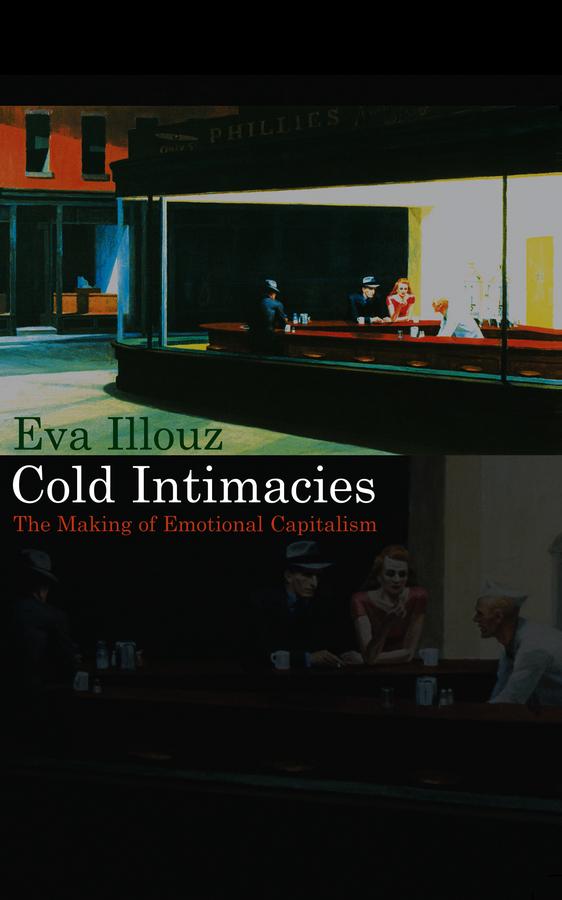
It is commonly assumed that capitalism has created an a-emotional world dominated by bureaucratic rationality; that economic behavior conflicts with intimate, authentic relationships; that the public and private spheres are irremediably opposed to each other; and that true love is opposed to calculation and self-interest.
Eva Illouz rejects these conventional ideas and argues that the culture of capitalism has fostered an intensely emotional culture in the workplace, in the family, and in our own relationship to ourselves. She argues that economic relations have become deeply emotional, while close, intimate relationships have become increasingly defined by economic and political models of bargaining, exchange, and equity. This dual process by which emotional and economic relationships come to define and shape each other is called emotional capitalism. Illouz finds evidence of this process of emotional capitalism in various social sites: self-help literature, women's magazines, talk shows, support groups, and the Internet dating sites. How did this happen? What are the social consequences of the current preoccupation with emotions? How did the public sphere become saturated with the exposure of private life? Why does suffering occupy a central place in contemporary identity? How has emotional capitalism transformed our romantic choices and experiences? Building on and revising the intellectual legacy of critical theory, this book addresses these questions and offers a new interpretation of the reasons why the public and the private, the economic and the emotional spheres have become inextricably intertwined.
Eva Illouz rejects these conventional ideas and argues that the culture of capitalism has fostered an intensely emotional culture in the workplace, in the family, and in our own relationship to ourselves. She argues that economic relations have become deeply emotional, while close, intimate relationships have become increasingly defined by economic and political models of bargaining, exchange, and equity. This dual process by which emotional and economic relationships come to define and shape each other is called emotional capitalism. Illouz finds evidence of this process of emotional capitalism in various social sites: self-help literature, women's magazines, talk shows, support groups, and the Internet dating sites. How did this happen? What are the social consequences of the current preoccupation with emotions? How did the public sphere become saturated with the exposure of private life? Why does suffering occupy a central place in contemporary identity? How has emotional capitalism transformed our romantic choices and experiences? Building on and revising the intellectual legacy of critical theory, this book addresses these questions and offers a new interpretation of the reasons why the public and the private, the economic and the emotional spheres have become inextricably intertwined.
Betal nemt med kort, Klarna, Apple Pay eller Google Pay. Ikke tilfreds? Du har altid 14 dages fortrydelsesret. Læs mere i vores vilkår. Har du spørgsmål, så send os en mail på hello@memmo.org.
Memmo gør det nemmere at studere – uanset hvor du er i verden. Hos os samler du dine kursusbøger og smarte studieværktøjer ét sted: resuméer, quizzer, podcasts og flashcards. Og så er der Ted, din studieven, der svarer på alt, du undrer dig over. Over 50 000 studerende studerer allerede her – bygget til at hjælpe dig med at lære hurtigere og stresse mindre.
Du kan måske også lide
Køb bogen0