
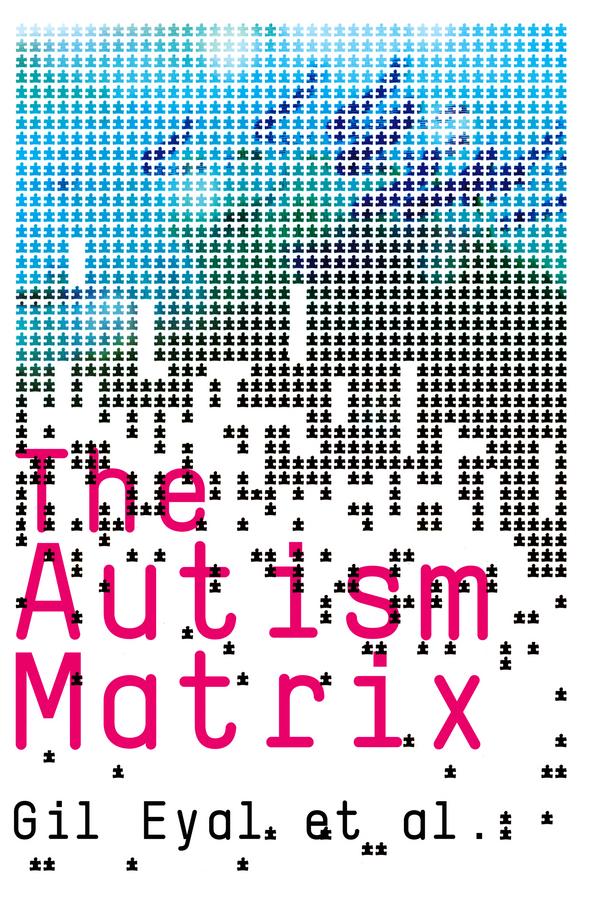
Today autism has become highly visible. Once you begin to look for it, you realize it is everywhere. Why? We all know the answer or think we do: there is an autism epidemic. And if it is an epidemic, then we know what must be done: lots of money must be thrown at it, detection centers must be established and explanations sought, so that the number of new cases can be brought down and the epidemic brought under control.
But can it really be so simple? This major new book offers a very different interpretation. The authors argue that the recent rise in autism should be understood an “aftershock” of the real earthquake, which was the deinstitutionalization of mental retardation in the mid-1970s. This entailed a radical transformation not only of the institutional matrix for dealing with developmental disorders of childhood, but also of the cultural lens through which we view them. It opened up a space for viewing and treating childhood disorders as neither mental illness nor mental retardation, neither curable nor incurable, but somewhere in-between. The authors show that where deinstitutionalization went the furthest, as in Scandinavia, UK and the “blue” states of the US, autism rates are also highest. Where it was absent or delayed, as in France, autism rates are low.
Combining a historical narrative with international comparison, The Autism Matrix offers a fresh and powerful analysis of a condition that affects many parents and children today.
But can it really be so simple? This major new book offers a very different interpretation. The authors argue that the recent rise in autism should be understood an “aftershock” of the real earthquake, which was the deinstitutionalization of mental retardation in the mid-1970s. This entailed a radical transformation not only of the institutional matrix for dealing with developmental disorders of childhood, but also of the cultural lens through which we view them. It opened up a space for viewing and treating childhood disorders as neither mental illness nor mental retardation, neither curable nor incurable, but somewhere in-between. The authors show that where deinstitutionalization went the furthest, as in Scandinavia, UK and the “blue” states of the US, autism rates are also highest. Where it was absent or delayed, as in France, autism rates are low.
Combining a historical narrative with international comparison, The Autism Matrix offers a fresh and powerful analysis of a condition that affects many parents and children today.
Betal nemt med kort, Klarna, Apple Pay eller Google Pay. Ikke tilfreds? Du har altid 14 dages fortrydelsesret. Læs mere i vores vilkår. Har du spørgsmål, så send os en mail på hello@memmo.org.
Memmo gør det nemmere at studere – uanset hvor du er i verden. Hos os samler du dine kursusbøger og smarte studieværktøjer ét sted: resuméer, quizzer, podcasts og flashcards. Og så er der Ted, din studieven, der svarer på alt, du undrer dig over. Over 50 000 studerende studerer allerede her – bygget til at hjælpe dig med at lære hurtigere og stresse mindre.
Du kan måske også lide
Køb bogen0