
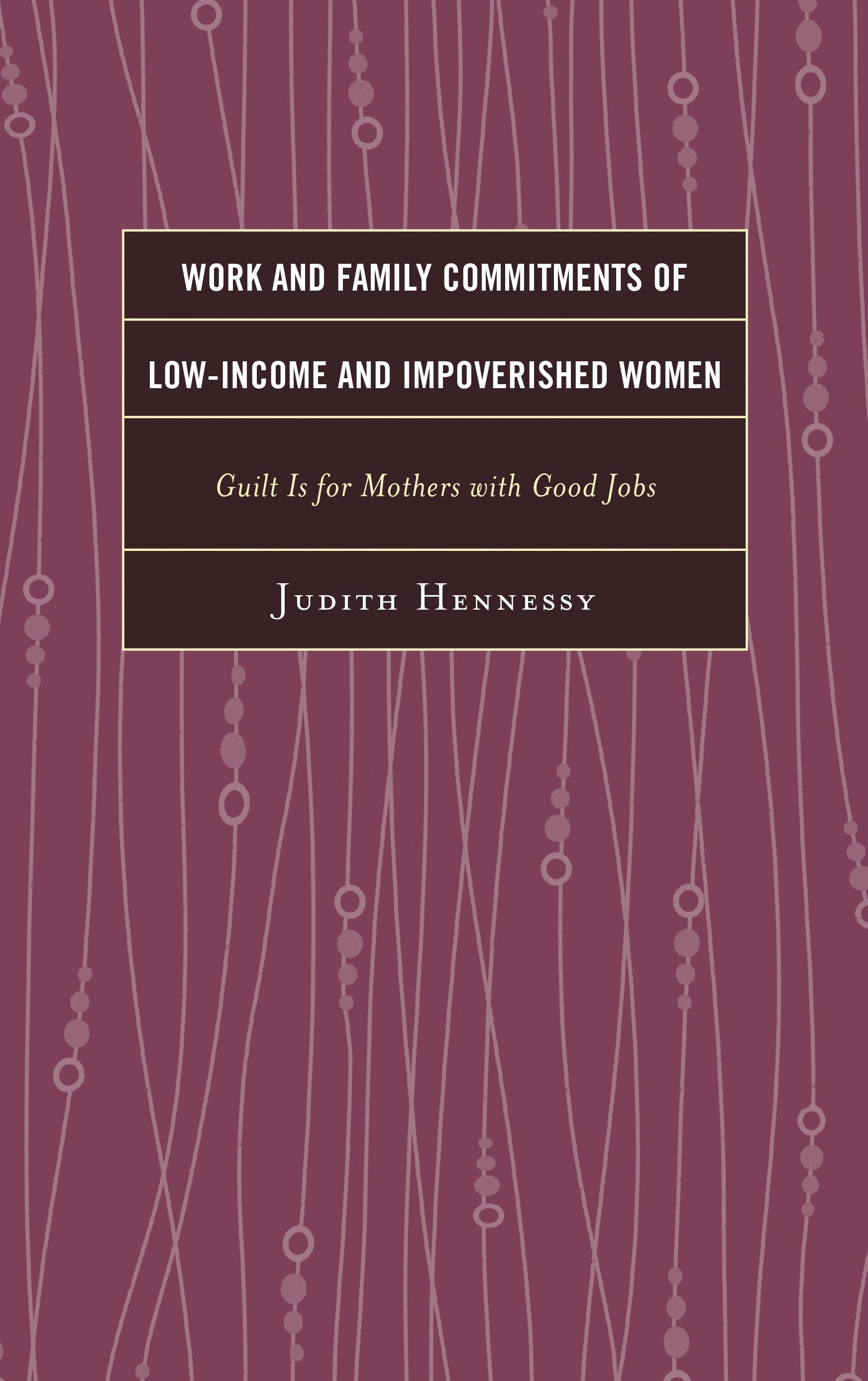
Conflict between work and family life is an all too familiar experience for many Americans. The difficult choices facing women who combine paid work with childcare are the subject of a deluge of books and articles in addition to an ongoing public debate about how women and men should balance their work and family commitments. Although we know a great deal about the social and cultural environment fueling these contradictions among middle-class and upper middle class women, we know little about the forces that influence poor and low-income women. Work and Family Commitments of Low-Income and Impoverished Women addresses this omission and gives voice to women in poverty as it traces the moral and cultural structures that help shape the meaning and value of paid work and motherhood among a group of mothers who rely on welfare or a combination of low-wage work and welfare to provide and care for their families. This portrayal of poor women’s lives rarely enters the work-life debate over women’s choices, generally characterized as between mothers who have to work versus those who choose to. Judith Hennessy puts low-income women front and center to shed light on less explored aspects of the moral and cultural foundations of contemporary work and family conflict from interviews and survey data of a group of low-income and poor mothers on and off welfare.
Hennessey explores the paradox in American society where combining paid work with caring for children continues to generate considerable ambivalence (and often guilt) on the part of married middle-class mothers for devoting too much time to paid work and supposedly neglecting their children. While poor and working class mothers who might otherwise rely on welfare are relegated to working at low-wage jobs outside the home in fulfillment of their family responsibilities.
Hennessey explores the paradox in American society where combining paid work with caring for children continues to generate considerable ambivalence (and often guilt) on the part of married middle-class mothers for devoting too much time to paid work and supposedly neglecting their children. While poor and working class mothers who might otherwise rely on welfare are relegated to working at low-wage jobs outside the home in fulfillment of their family responsibilities.
Betal nemt med kort, Klarna, Apple Pay eller Google Pay. Ikke tilfreds? Du har altid 14 dages fortrydelsesret. Læs mere i vores vilkår. Har du spørgsmål, så send os en mail på hello@memmo.org.
Memmo gør det nemmere at studere – uanset hvor du er i verden. Hos os samler du dine kursusbøger og smarte studieværktøjer ét sted: resuméer, quizzer, podcasts og flashcards. Og så er der Ted, din studieven, der svarer på alt, du undrer dig over. Over 50 000 studerende studerer allerede her – bygget til at hjælpe dig med at lære hurtigere og stresse mindre.