
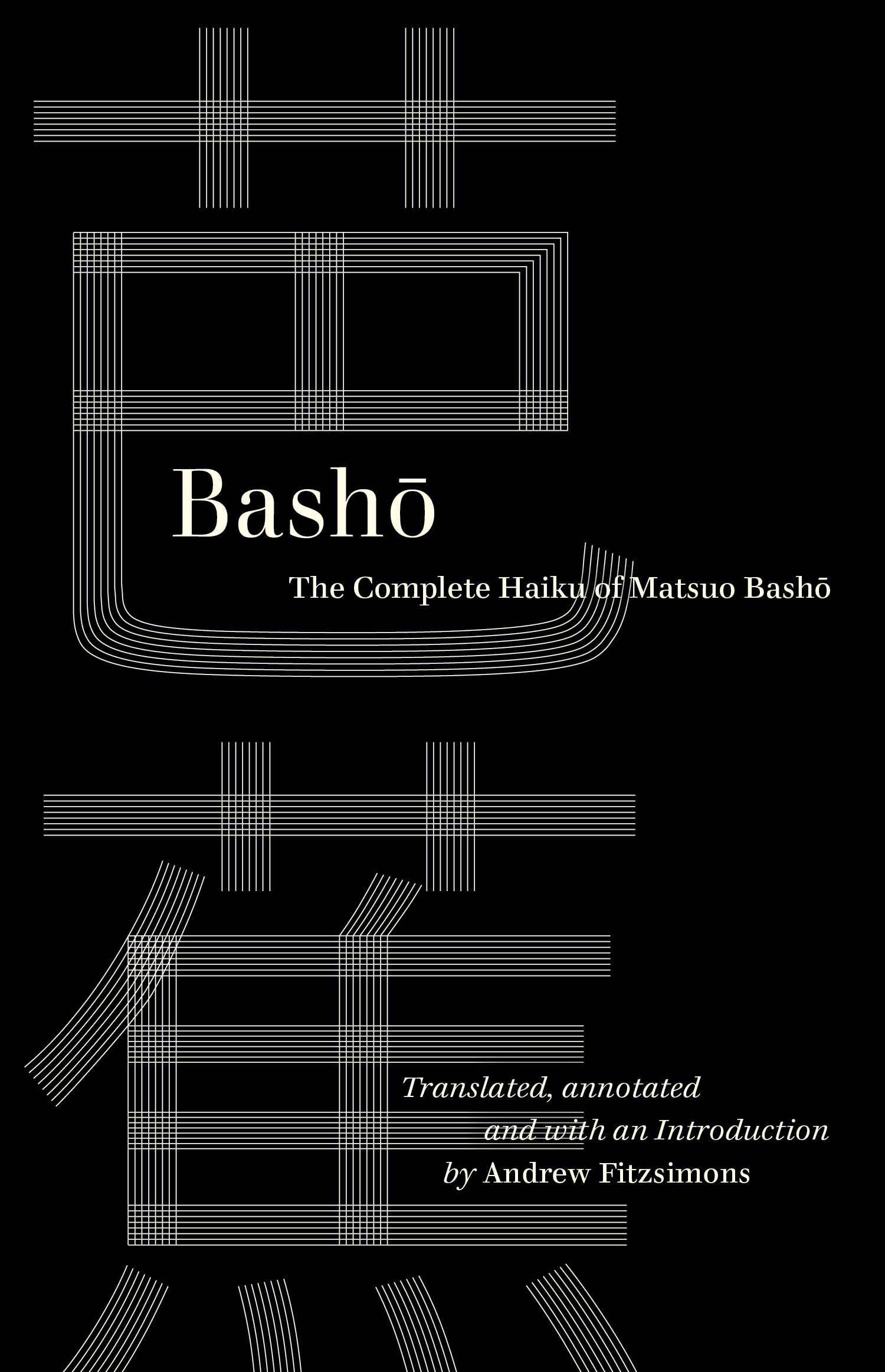
This is the essential English edition of the complete poems of the eminent Japanese master of the haiku, Matsuo Bashō.
Matsuo Bashō (1644–1694) is arguably the greatest figure in the history of Japanese literature and the master of the haiku. Bashō: The Complete Haiku of Matsuo Bashō offers in English a full picture of the haiku of Bashō, 980 poems in all. Andrew Fitzsimons’ translation is the first to adhere strictly to form: all of the poems are translated following the syllabic count of the originals. This book also translates a number of Bashō’s headnotes to poems ignored by previous English-language translators.
In Fitzsimons’ beautiful rendering, Bashō is much more than a philosopher of the natural world and the leading exponent of a refined Japanese sensibility. He is also a poet of queer love and eroticism; of the city as well as the country, the indoors and the outdoors, travel and staying put; of lonesomeness as well as the desire to be alone.
His poetry explores the full range of social experience in Edo Japan as he moved among friends and followers high and low, the elite and the demi-monde, the less fortunate: poor farmers, abandoned children, disregarded elders. Bashō: The Complete Haiku of Matsuo Bashō reveals how this work speaks to our concerns today as much as it captures a Japan emerging from the Middle Ages. For dedicated scholars and those coming upon Bashō for the first time, Fitzsimons’ elegant translation—with an insightful introduction and helpful notes—allows readers to enjoy these works in all their glory.
Matsuo Bashō (1644–1694) is arguably the greatest figure in the history of Japanese literature and the master of the haiku. Bashō: The Complete Haiku of Matsuo Bashō offers in English a full picture of the haiku of Bashō, 980 poems in all. Andrew Fitzsimons’ translation is the first to adhere strictly to form: all of the poems are translated following the syllabic count of the originals. This book also translates a number of Bashō’s headnotes to poems ignored by previous English-language translators.
In Fitzsimons’ beautiful rendering, Bashō is much more than a philosopher of the natural world and the leading exponent of a refined Japanese sensibility. He is also a poet of queer love and eroticism; of the city as well as the country, the indoors and the outdoors, travel and staying put; of lonesomeness as well as the desire to be alone.
His poetry explores the full range of social experience in Edo Japan as he moved among friends and followers high and low, the elite and the demi-monde, the less fortunate: poor farmers, abandoned children, disregarded elders. Bashō: The Complete Haiku of Matsuo Bashō reveals how this work speaks to our concerns today as much as it captures a Japan emerging from the Middle Ages. For dedicated scholars and those coming upon Bashō for the first time, Fitzsimons’ elegant translation—with an insightful introduction and helpful notes—allows readers to enjoy these works in all their glory.
Betal nemt med kort, Klarna, Apple Pay eller Google Pay. Ikke tilfreds? Du har altid 14 dages fortrydelsesret. Læs mere i vores vilkår. Har du spørgsmål, så send os en mail på hello@memmo.org.
Memmo gør det nemmere at studere – uanset hvor du er i verden. Hos os samler du dine kursusbøger og smarte studieværktøjer ét sted: resuméer, quizzer, podcasts og flashcards. Og så er der Ted, din studieven, der svarer på alt, du undrer dig over. Over 50 000 studerende studerer allerede her – bygget til at hjælpe dig med at lære hurtigere og stresse mindre.
Du kan måske også lide
Køb bogen0