
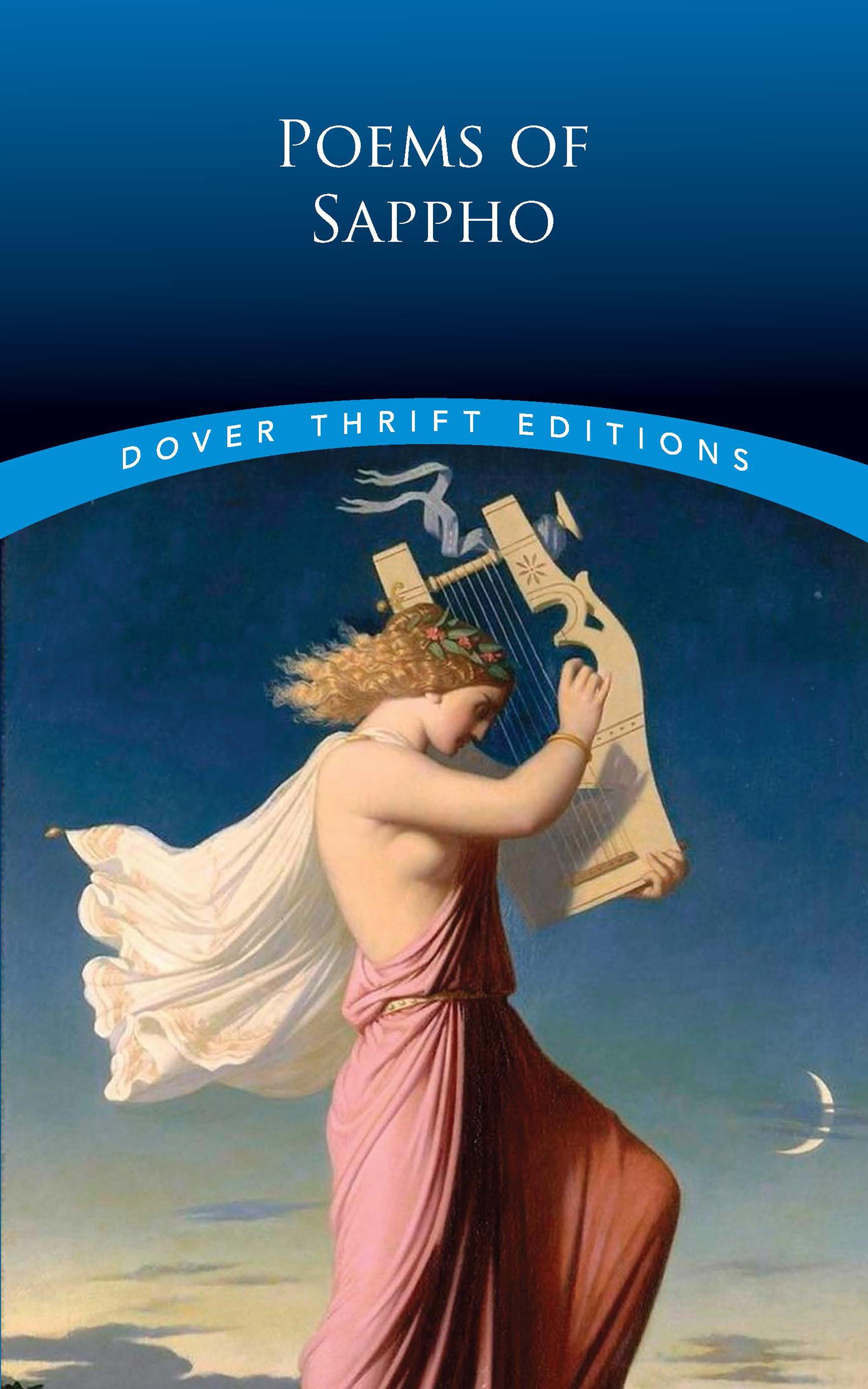
Plato hailed her as "the Tenth Muse," and 2,500 years later her voice remains dazzling as well as direct and honest. Sappho, a lyric poet from the Greek island of Lesbos, wrote verse that sings to both sexes of desire, rapture, and sorrow. Praised for their simplicity and sincerity, her poems nevertheless evoke powerful and memorable images as well as a sense of unreserved eroticism. Her focus on emotion and individualism sets her work apart from that of her contemporaries, lending it an intimacy that foreshadows modern poetry.
Details about Sappho's life are largely unknown; she is thought to have lived sometime between 612–570 B.C.E., and her poetry was read and admired throughout the ancient world. Today her poems survive in fragmentary form, and she is best known as a symbol of female homosexuality, having inspired the terms "sapphic" and "lesbian." This concise collection of her surviving works features an informative Introduction by translator J. M. Edmonds.
Details about Sappho's life are largely unknown; she is thought to have lived sometime between 612–570 B.C.E., and her poetry was read and admired throughout the ancient world. Today her poems survive in fragmentary form, and she is best known as a symbol of female homosexuality, having inspired the terms "sapphic" and "lesbian." This concise collection of her surviving works features an informative Introduction by translator J. M. Edmonds.
Betal nemt med kort, Klarna, Apple Pay eller Google Pay. Ikke tilfreds? Du har altid 14 dages fortrydelsesret. Læs mere i vores vilkår. Har du spørgsmål, så send os en mail på hello@memmo.org.
Memmo gør det nemmere at studere – uanset hvor du er i verden. Hos os samler du dine kursusbøger og smarte studieværktøjer ét sted: resuméer, quizzer, podcasts og flashcards. Og så er der Ted, din studieven, der svarer på alt, du undrer dig over. Over 50 000 studerende studerer allerede her – bygget til at hjælpe dig med at lære hurtigere og stresse mindre.
Du kan måske også lide
Køb bogen0