
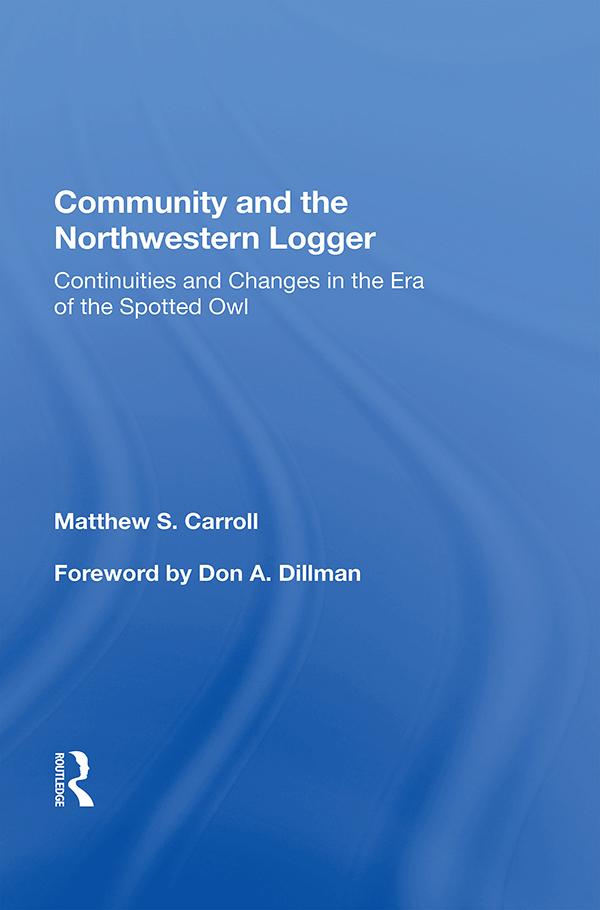
It has often been said that natural resource and environmental problems cannot be solved without solving human problems. In this book, Matthew Carroll examines the economic and social circumstances of northwestern U.S. loggers in the face of shifts in environmental politics, dramatic reductions in timber harvest levels on federal lands, and changing technology and market forces—among other factors that are rapidly transforming their industry, their livelihoods, and their communities. Drawing upon sociological fieldwork in logging communities that he conducted at various times over a period of nearly a decade and using the spotted owl-old growth controversy as a case study, Carroll provides a rich and detailed picture of life among northwestern loggers. He lays out the human dimensions and dilemmas of the timber crisis. Expanding it from the oversimplified owl-versus- logger confrontation, he puts these issues in a historical and policy context and suggests parallels to other controversies such as public grazing and federal or state river protection. Carrol’s work revives the concept of occupational community and shows ways it can be used to understand the dynamics of rural occupations linked to resource extraction.
Betal nemt med kort, Klarna, Apple Pay eller Google Pay. Ikke tilfreds? Du har altid 14 dages fortrydelsesret. Læs mere i vores vilkår. Har du spørgsmål, så send os en mail på hello@memmo.org.
Memmo gør det nemmere at studere – uanset hvor du er i verden. Hos os samler du dine kursusbøger og smarte studieværktøjer ét sted: resuméer, quizzer, podcasts og flashcards. Og så er der Ted, din studieven, der svarer på alt, du undrer dig over. Over 50 000 studerende studerer allerede her – bygget til at hjælpe dig med at lære hurtigere og stresse mindre.
Du kan måske også lide
Køb bogen0