
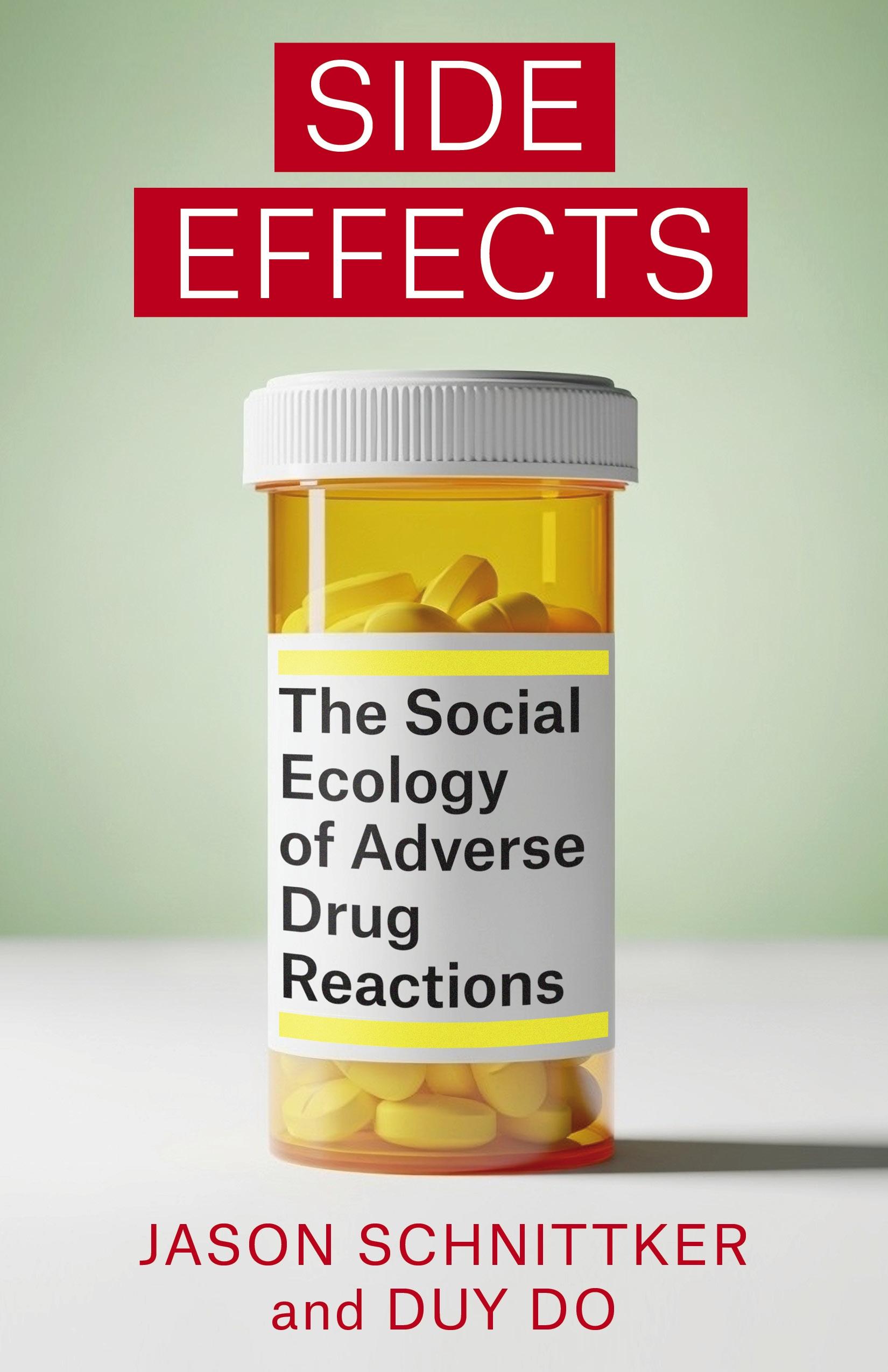
Side effects are common, but their origins and consequences remain unclear. Medications that target a disease can produce reactions far removed from it. Few side effects have been provably linked to a drug’s active ingredients. But side effects matter: Many people are reluctant to take vaccines and other pharmaceuticals because of side effects, even if these reactions are minor compared to the disease a medication prevents or treats. Because side effects do not fit comfortably within the framework of modern medicine, they continue to confound.
This book uncovers the social origins of side effects and their consequences for patients, physicians, and the health care system. Jason Schnittker and Duy Do argue that side effects emerge from the interaction of cultural, institutional, and psychological factors. Side effects reflect how manufacturers and regulators evaluate the effectiveness and safety of a drug, as well as how physicians consider the risks and benefits. They are also influenced by the beliefs, expectations, and experiences that patients use to interpret their treatment and symptoms. Drawing on pharmaceutical data, surveys, and public opinion polls, Schnittker and Do develop a framework for understanding the social ecology of side effects. A keen sociological analysis of how we grapple with medicine’s unintended consequences, this book shows how side effects are shaped by their social context.
Betal nemt med kort, Klarna, Apple Pay eller Google Pay. Ikke tilfreds? Du har altid 14 dages fortrydelsesret. Læs mere i vores vilkår. Har du spørgsmål, så send os en mail på hello@memmo.org.
Memmo gør det nemmere at studere – uanset hvor du er i verden. Hos os samler du dine kursusbøger og smarte studieværktøjer ét sted: resuméer, quizzer, podcasts og flashcards. Og så er der Ted, din studieven, der svarer på alt, du undrer dig over. Over 50 000 studerende studerer allerede her – bygget til at hjælpe dig med at lære hurtigere og stresse mindre.