
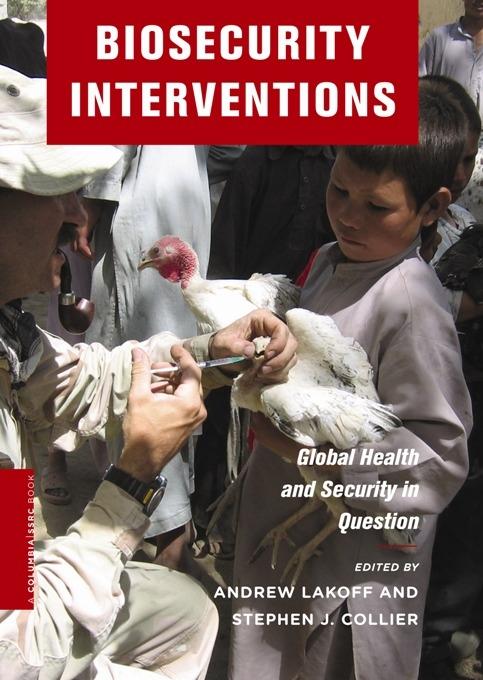
In recent years, new disease threatssuch as SARS, avian flu, mad cow disease, and drug-resistant strains of malaria and tuberculosishave garnered media attention and galvanized political response. Proposals for new approaches to "securing health" against these threats have come not only from public health and medicine but also from such fields as emergency management, national security, and global humanitarianism.
This volume provides a map of this complex and rapidly transforming terrain. The editors focus on how experts, public officials, and health practitioners work to define what it means to "secure health" through concrete practices such as global humanitarian logistics, pandemic preparedness measures, vaccination campaigns, and attempts to regulate potentially dangerous new biotechnologies.
As the contributions show, despite impressive activity in these areas, the field of "biosecurity interventions" remains unstable. Many basic questions are only beginning to be addressed: Who decides what counts as a biosecurity problem? Who is responsible for taking action, and how is the efficacy of a given intervention to be evaluated? It is crucial to address such questions today, when responses to new problems of health and security are still taking shape. In this context, this volume offers a form of critical and reflexive knowledge that examines how technical efforts to increase biosecurity relate to the political and ethical challenges of living with risk.
Betal nemt med kort, Klarna, Apple Pay eller Google Pay. Ikke tilfreds? Du har altid 14 dages fortrydelsesret. Læs mere i vores vilkår. Har du spørgsmål, så send os en mail på hello@memmo.org.
Memmo gør det nemmere at studere – uanset hvor du er i verden. Hos os samler du dine kursusbøger og smarte studieværktøjer ét sted: resuméer, quizzer, podcasts og flashcards. Og så er der Ted, din studieven, der svarer på alt, du undrer dig over. Over 50 000 studerende studerer allerede her – bygget til at hjælpe dig med at lære hurtigere og stresse mindre.