
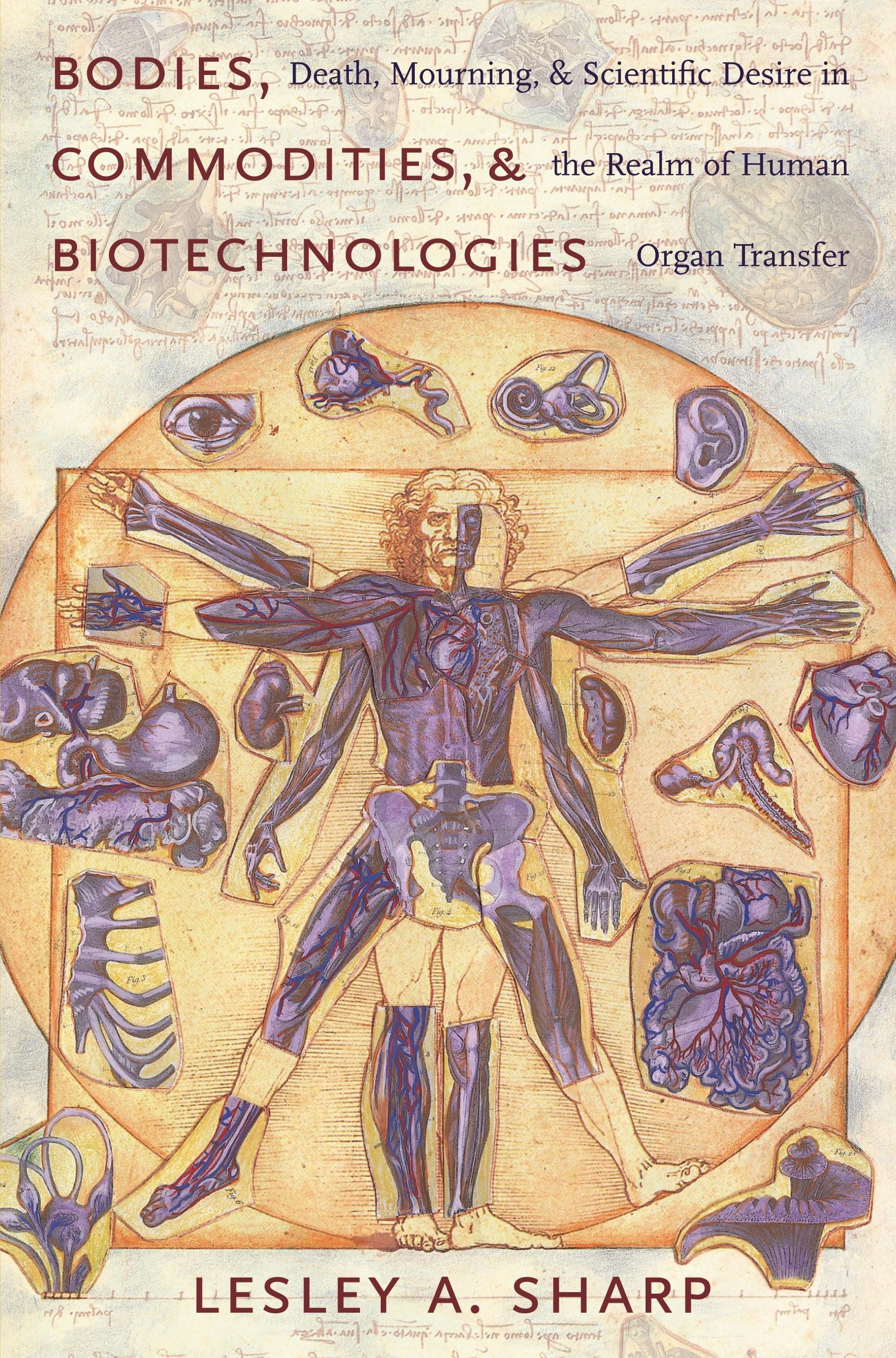
In the United States today, the human body defines a lucrative site of reusable parts, ranging from whole organs to minuscule and even microscopic tissues. Although the medical practices that enable the transfer of parts from one body to another most certainly relieve suffering and extend lives, they have also irrevocably altered perceptions of the cultural values assigned to the body.
Organ transfer is rich terrain to investigate—especially in the American context, where sophisticated technological interventions have significantly shaped understandings of health and well-being, suffering, and death. In Bodies, Commodities, and Biotechnologies, Lesley Sharp probes the ideological assumptions underlying the transfer of body parts, the social significance of donors' deaths, and the medico-scientific desires surrounding complex forms of body repair. Sharp also considers the experimental realm, in which nonhuman species and artificial devices present further opportunities for recovery and for controversy.
A compelling scientific investigation and social critique, Bodies, Commodities, and Biotechnologies explores the pervasive, and at times pernicious, practices shaping American biomedicine in the twenty-first century.
Betal nemt med kort, Klarna, Apple Pay eller Google Pay. Ikke tilfreds? Du har altid 14 dages fortrydelsesret. Læs mere i vores vilkår. Har du spørgsmål, så send os en mail på hello@memmo.org.
Memmo gør det nemmere at studere – uanset hvor du er i verden. Hos os samler du dine kursusbøger og smarte studieværktøjer ét sted: resuméer, quizzer, podcasts og flashcards. Og så er der Ted, din studieven, der svarer på alt, du undrer dig over. Over 50 000 studerende studerer allerede her – bygget til at hjælpe dig med at lære hurtigere og stresse mindre.