
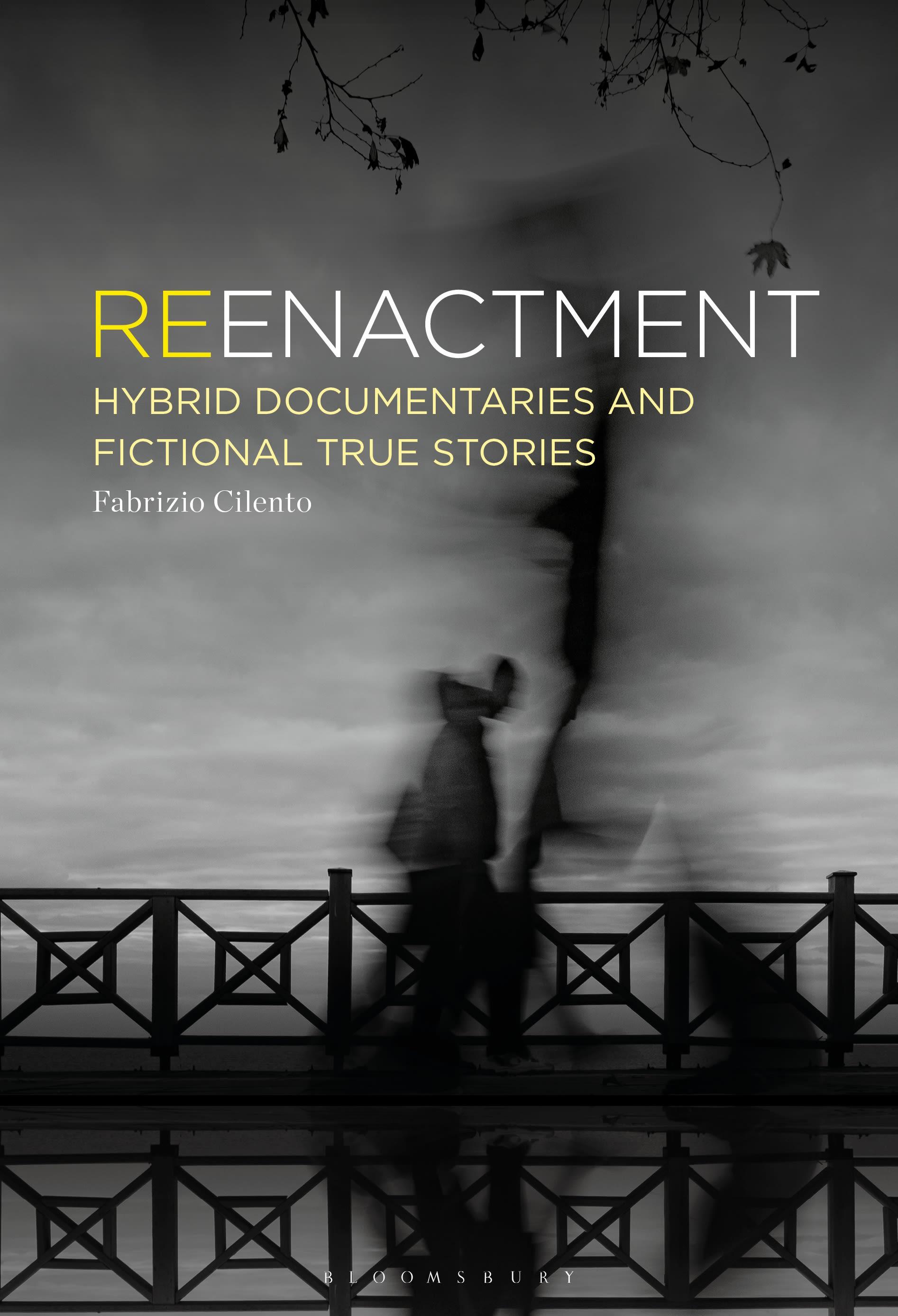
In an era of misinformation, synthetic media, and the collapse of boundaries between truth and fiction, moving images have become one of our most contested spaces of belief. Reenactment: Hybrid Documentaries and Fictional True Stories offers the first comprehensive study of how filmmakers around the world reenact recent history to confront political violence, reimagine evidence, and reassert the unstable meaning of “the real.”
From the Pablo Escobar era in Colombia and the Romanian Revolution of 1989 to the Indonesian mass killings of 1965-66 and the conflict in Israel and Palestine, hybrid documentaries and fictionalized true stories have evolved into a global aesthetic tendency. Works by Corneliu Porumboiu, Radu Muntean, Errol Morris, Werner Herzog, Joshua Oppenheimer, Ra'anan Alexandrowicz, Agnès Varda, Justine Triet, and Iranian auteurs such as Abbas Kiarostami, Jafar Panahi, and Mohammad Rasoulof reveal how reenactment has become a tool for reckoning with trauma, authorship, and state power.
Combining André Bazin's realist ontology with Friedrich Nietzsche's perspectivism and integrating them into contemporary media theories, the book argues that cinema today no longer seeks to record reality but to rebuild it. Reenactment emerges as a creative and ethical force, one that exposes the mechanisms of memory and mediation while challenging viewers to evaluate evidence in an age when fact and fabrication dangerously coexist within the same digital ecosystems.
Transnational in scope and interdisciplinary in method, Reenactment illuminates the politics of seeing, the labor of truth-making, and the desire to replay history in a moment when our collective sense of reality, memory, and historical consciousness is being reshaped by the screens that mediate it. For scholars of film, media, philosophy, and contemporary culture, this book offers a new framework for understanding how images shape and reshape our world.
From the Pablo Escobar era in Colombia and the Romanian Revolution of 1989 to the Indonesian mass killings of 1965-66 and the conflict in Israel and Palestine, hybrid documentaries and fictionalized true stories have evolved into a global aesthetic tendency. Works by Corneliu Porumboiu, Radu Muntean, Errol Morris, Werner Herzog, Joshua Oppenheimer, Ra'anan Alexandrowicz, Agnès Varda, Justine Triet, and Iranian auteurs such as Abbas Kiarostami, Jafar Panahi, and Mohammad Rasoulof reveal how reenactment has become a tool for reckoning with trauma, authorship, and state power.
Combining André Bazin's realist ontology with Friedrich Nietzsche's perspectivism and integrating them into contemporary media theories, the book argues that cinema today no longer seeks to record reality but to rebuild it. Reenactment emerges as a creative and ethical force, one that exposes the mechanisms of memory and mediation while challenging viewers to evaluate evidence in an age when fact and fabrication dangerously coexist within the same digital ecosystems.
Transnational in scope and interdisciplinary in method, Reenactment illuminates the politics of seeing, the labor of truth-making, and the desire to replay history in a moment when our collective sense of reality, memory, and historical consciousness is being reshaped by the screens that mediate it. For scholars of film, media, philosophy, and contemporary culture, this book offers a new framework for understanding how images shape and reshape our world.
Pagine: 216
Categoria: Film- & Medievetenskap
e-ISBN: 9798765137925
Peso di spedizione: 1.2 kg
Spedito in: 1-2 giorni
Paga facilmente con carta, Klarna, Apple Pay o Google Pay. Non sei soddisfatto? Hai sempre 14 giorni per il rimborso. Leggi di più nei nostri termini. Per qualsiasi domanda, scrivici a hello@memmo.org.
Memmo rende lo studio più facile, ovunque tu sia nel mondo. Qui trovi i tuoi libri di testo e strumenti di studio intelligenti, tutto in un unico posto: riassunti, quiz, podcast e flashcard. E poi c'è Ted, il tuo compagno di studio che risponde a ogni tua domanda. Oltre 50.000 studenti studiano già qui: è stato creato per aiutarti a imparare più velocemente e a stressarti meno.