
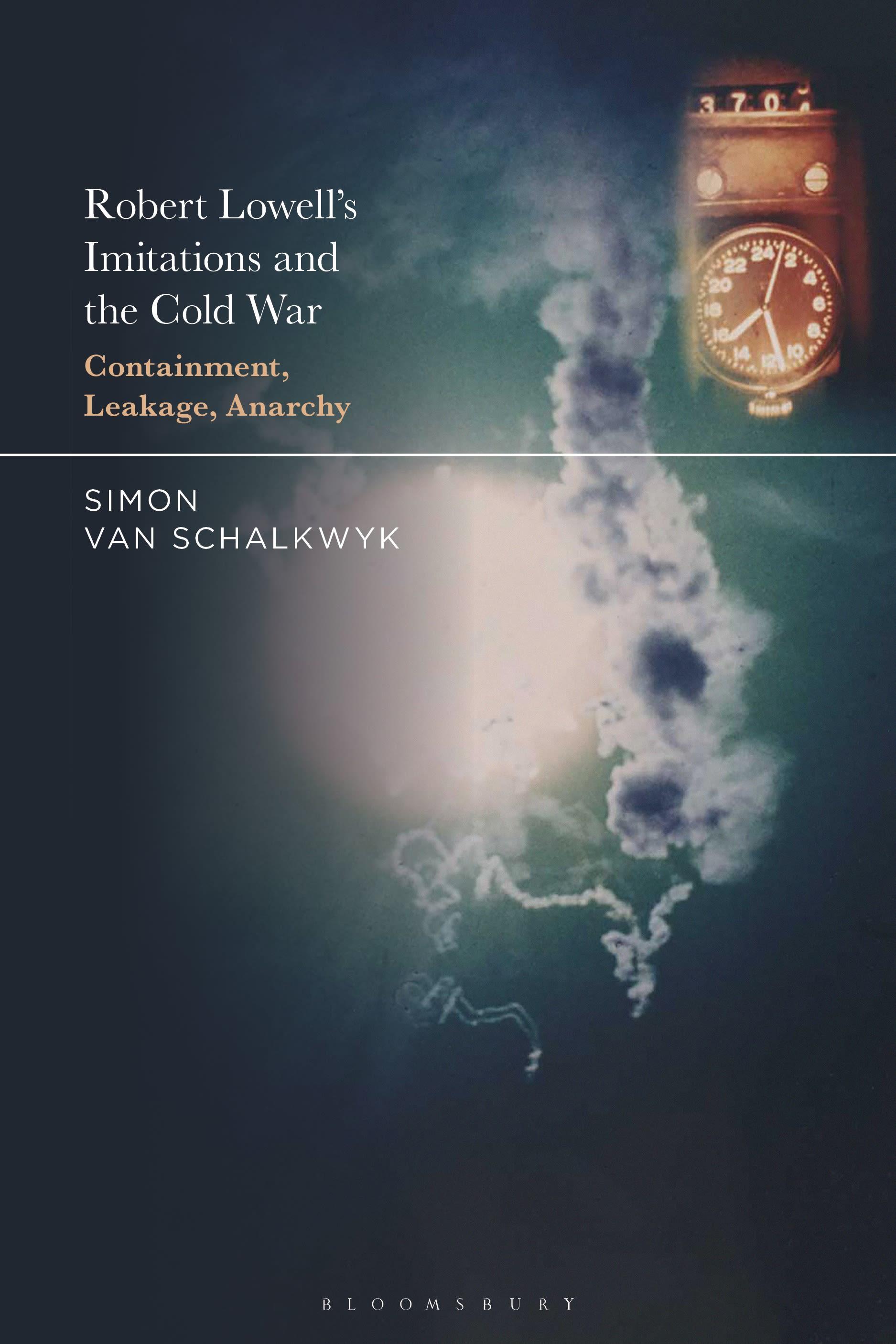
The first book-length study focusing on Robert Lowell's career-long preoccupation with the liberal mode of translational adaptation known as imitation.
Robert Lowell's Imitations and the Cold War argues that Lowell's imitations are simultaneously symptomatic of and critically responsive to familiar nodes of Cold War ideology such as containment and contamination, secrecy and security, post-imperial U.S. expansion and Empire. It departs from studies focused solely on Imitations (1961), Lowell's book-length collection of translational adaptations, by demonstrating how imitation shadows Lowell's work from his earliest collections, Land of Unlikeness (1944) and Lord Weary's Castle (1946), through his celebrated mid-career collections, Life Studies (1959) and For the Union Dead (1964), and to later works such as Near the Ocean (1969) and his contributions of adaptations from the Russian of Anna Akhmatova and Osip Mandelstam collected in Olga Carlisle's anthology, Poets on Street Corners (1967).
Simon van Schalkwyk excavates the imitational substrate undergirding and informing Lowell's compositional method and poetic imagination throughout the course of his career. In so doing, he shows how imitation enacts, at the level of form, Lowell's restless investment in Cold War geopolitics and literary networks in ways that inform, develop, and complicate his more conventional canonization as an unquestionably 'American' poet preoccupied solely and simplistically with personal or autobiographical modes of poetic 'confession'.
As literary sites at which containment's dualities, porosities, leakages, and contaminants are most clearly displayed, Lowell's imitations simultaneously challenge and develop our understanding of confession's presumably strict preoccupation with the personal, regional and national frameworks through which Lowell has commonly been understood.
Robert Lowell's Imitations and the Cold War argues that Lowell's imitations are simultaneously symptomatic of and critically responsive to familiar nodes of Cold War ideology such as containment and contamination, secrecy and security, post-imperial U.S. expansion and Empire. It departs from studies focused solely on Imitations (1961), Lowell's book-length collection of translational adaptations, by demonstrating how imitation shadows Lowell's work from his earliest collections, Land of Unlikeness (1944) and Lord Weary's Castle (1946), through his celebrated mid-career collections, Life Studies (1959) and For the Union Dead (1964), and to later works such as Near the Ocean (1969) and his contributions of adaptations from the Russian of Anna Akhmatova and Osip Mandelstam collected in Olga Carlisle's anthology, Poets on Street Corners (1967).
Simon van Schalkwyk excavates the imitational substrate undergirding and informing Lowell's compositional method and poetic imagination throughout the course of his career. In so doing, he shows how imitation enacts, at the level of form, Lowell's restless investment in Cold War geopolitics and literary networks in ways that inform, develop, and complicate his more conventional canonization as an unquestionably 'American' poet preoccupied solely and simplistically with personal or autobiographical modes of poetic 'confession'.
As literary sites at which containment's dualities, porosities, leakages, and contaminants are most clearly displayed, Lowell's imitations simultaneously challenge and develop our understanding of confession's presumably strict preoccupation with the personal, regional and national frameworks through which Lowell has commonly been understood.
Pagine: 224
Categoria: Litteraturvetenskap & Teori
e-ISBN: 9798765132562
Peso di spedizione: 1.2 kg
Spedito in: 1-2 giorni
Paga facilmente con carta, Klarna, Apple Pay o Google Pay. Non sei soddisfatto? Hai sempre 14 giorni per il rimborso. Leggi di più nei nostri termini. Per qualsiasi domanda, scrivici a hello@memmo.org.
Memmo rende lo studio più facile, ovunque tu sia nel mondo. Qui trovi i tuoi libri di testo e strumenti di studio intelligenti, tutto in un unico posto: riassunti, quiz, podcast e flashcard. E poi c'è Ted, il tuo compagno di studio che risponde a ogni tua domanda. Oltre 50.000 studenti studiano già qui: è stato creato per aiutarti a imparare più velocemente e a stressarti meno.